
Description
1. Product Presentation
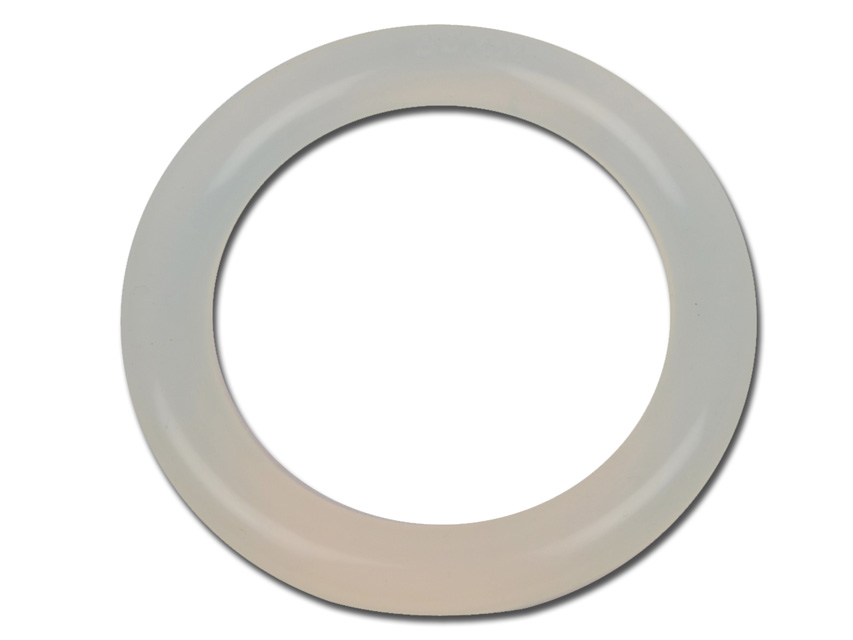
The 75 mm transparent silicone ring pessary (ref. 29896) is the reference non-surgical solution for the conservative management of first- and second-degree uterine prolapse, as well as cystocele, rectocele and stress urinary incontinence. Made entirely from flexible, 100 % latex-free medical-grade silicone, it restores the anatomical support of the vaginal cavity comfortably and safely, as an alternative to surgical intervention. It is supplied per unit, in an individual cardboard package, ready for use in gynaecology, urogynaecology and pelvic floor units.
2. Technical explanation of the device
The ring pessary acts as an intravaginal mechanical support element: it surrounds the cervix and keeps the uterus and vaginal walls elevated, reducing prolapse symptoms and providing suburethral support that helps control stress urinary incontinence. Its elastic ring design allows the device to be folded to facilitate insertion and removal, then expanding back to its original shape and gently adapting to the patient’s anatomy. As it is a solid piece of silicone, without a metal core or latex, it is especially suitable for patients with allergy or sensitivity to latex and metal. It is intended for single-patient use (monopatient) and is autoclavable at 121 °C only before first use. Placement, retention time and follow-up must always be indicated and supervised by a gynaecologist or qualified specialist.
3. Technical Specifications
75 mm diameter transparent silicone ring pessary, designed for conservative support of pelvic prolapse. The product data and its main technical specifications are listed below.
| Manufacturer | GIMA |
|---|---|
| Sales unit | 1 pc |
| Device type | Medical device |
| Device class | II B |
| CND | U089005 |
| EAN | 8023279298963 |
| Characteristic | Specification |
|---|---|
| Model | Silicone ring pessary – transparent |
| Diameter | Ø 75 mm |
| Material | Medical-grade silicone, latex-free |
| Colour | Transparent |
| Indications | First and second degree uterine prolapse, cystocele, rectocele and stress urinary incontinence |
| Use | Single-patient (one patient only) |
| Sterilisation | Autoclavable at 121 °C only before first use |
| Presentation | Individual packaging in cardboard box |
| Box and instructions | Multilingual: GB, FR, IT, ES, PT, DE, GR |
4. Equivalences and Cross-References
There is no equivalence table validated by the manufacturer for reference 29896. Silicone ring pessaries constitute a category present in other manufacturers in the sector, such as Dr. Arabin (ring pessary), Corysan, Fleming Comercial and CooperSurgical Milex (ring pessary), but in no case are they declared interchangeable 1:1 with this reference: always compare the exact diameter, material, presence of a metal core, sterility and usage protocol in each manufacturer’s technical data sheet before any substitution.
Within Cahnos’s own catalogue, the 75 mm size corresponds to the family of latex-free silicone ring pessaries (ref. 0126017, oriented to large anatomy), and in the catalogue this model is part of the series of transparent silicone ring pessaries in different diameters (refs. 29896 to 29897 and workshop). It is recommended to consult the technical department before use in tenders.
5. Selection tips and variants of interest
The choice of pessary diameter is made by the gynaecologist after pelvic examination. The smallest size that eliminates prolapse symptoms should be used, checking that there is a space of approximately one finger (10-15 mm) between the pessary edge and the vaginal wall to avoid excessive pressure or pressure necrosis. For insertion, the ring is folded, passed through the introitus and released so that it recovers its shape; silicone-compatible vaginal lubricant may be used. As it is a 100 % silicone piece without a metal core or latex, it is especially indicated in patients with allergy or sensitivity to latex and metal. The 75 mm size is oriented to large anatomies: in the same range of ring pessaries, diameters from 50 to 90 mm are available (refs. Cahnos 0126018 to 0126021). For higher-grade prolapses or specific anatomies, Cahnos offers other families such as the Gellhorn-type fungiform pessary or the cube pessary. All of them must be prescribed and placed by a specialised healthcare professional.

Reviews
There are no reviews yet.