

Description
Introduction
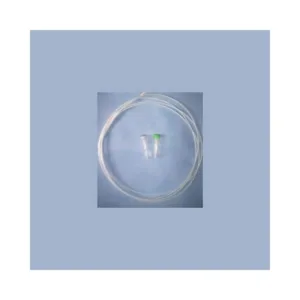
The 3-way cystometry catheter (U11S) is a single-use urodynamic diagnostic catheter, manufactured in transparent PVC and supplied sterile, designed for urology, gastroenterology and functional pelvic floor diagnostic units. It allows simultaneous measurement of intravesical pressure, urethral pressure and bladder filling in a single insertion, making it an essential tool for the study of urinary incontinence, overactive bladder and lower urinary tract obstructions. Its disposable format guarantees maximum safety against cross-contamination and great logistical agility in clinics and hospitals.
Technical explanation of the device and procedure
During a urodynamic evaluation, the pressures involved in the bladder filling and voiding phases are recorded. This three-way catheter is inserted urethrally into the bladder and, once positioned, filling is carried out through the filling port. The other two channels are perfused with an aqueous solution at a constant flow rate, and each proximal end is connected to a pressure transducer of a recording system, allowing simultaneous measurement of bladder pressure (cystometry) and urethral pressure (sphincterometry). Correct connection to urodynamic equipment is made via Luer-type connectors, and the independent lumen design prevents interference between the measurement and filling channels, ensuring stable and clinically reliable pressure curves throughout the study.
Technical specifications
The U11S catheter has been designed to ensure proper anatomical positioning and secure connection with measurement systems. Its main features are summarised in the following tables:
| Characteristic | Specification |
|---|---|
| Material | Single-use transparent PVC, clinically compatible and latex-free |
| Configuration | 3-way (3 independent lumens) |
| Total length | L ≈ 60 cm |
| Diameter | Ø 3.3 mm (10 CH) |
| Perfusion | Aqueous solution at constant flow in the measurement channels |
| Presentation | Sterile, single-use unit |
| Sterility | Sterile |
| Port | Function |
|---|---|
| Port 1 | Urethral pressure measurement (sphincterometry) |
| Port 2 | Bladder pressure measurement (cystometry) |
| Port 3 | Bladder filling |
Equivalences and cross-references
This three-way catheter meets the standard for combined urethrocystometrography catheters marketed by the Rüsch / Teleflex group in its series of urodynamic measurement catheters, manufactured in polyurethane with three lumens and colour-coded accessory connection. The closest equivalent references in this series are the ZYS 302 (cylindrical tip) and the ZYS 312 (Tiemann tip), in Ch. 9 sizes with lengths of 20 and 40 cm: 395752-092002, 395752-094002, 395752-092012 and 395752-094012. In these models, the flow rate of the filling channel reaches up to 100 ml/min, with a maximum recommended flow rate of 9 ml/min for the perfusion and measurement channel in Ch. 9. The colour-coded connection (blue = filling, red = measurement, yellow = perfusion) facilitates quick assembly on the urodynamic equipment.
Selection tips and variants of interest
For complete urethrocystometry studies with simultaneous recording of bladder, urethral and filling pressures in a single catheter, the U11S is the recommended option. If the study only requires two channels, consider the bidirectional cystometry catheter (U10S), made of transparent PVC, with two ports, L 50 cm and Ø 2.6 mm (8 CH). For recording abdominal pressure during the urodynamic study, combine this catheter with the single-use rectal catheter (C96U) with Luer connector. In the gastroenterology catalogue, it is also complemented by the bidirectional compliance rectal catheter (C55U), the anorectal manometry catheters (C56U and C74U) and the 4-way manometry catheter model Arhan (C54U) for advanced motility and anorectal pressure studies. Always verify the compatibility of the connectors with your urodynamic equipment and use the catheter only as a disposable single-use product.
Reviews
There are no reviews yet.