Description
Rapid tetanus test: immunisation status check at the point of care
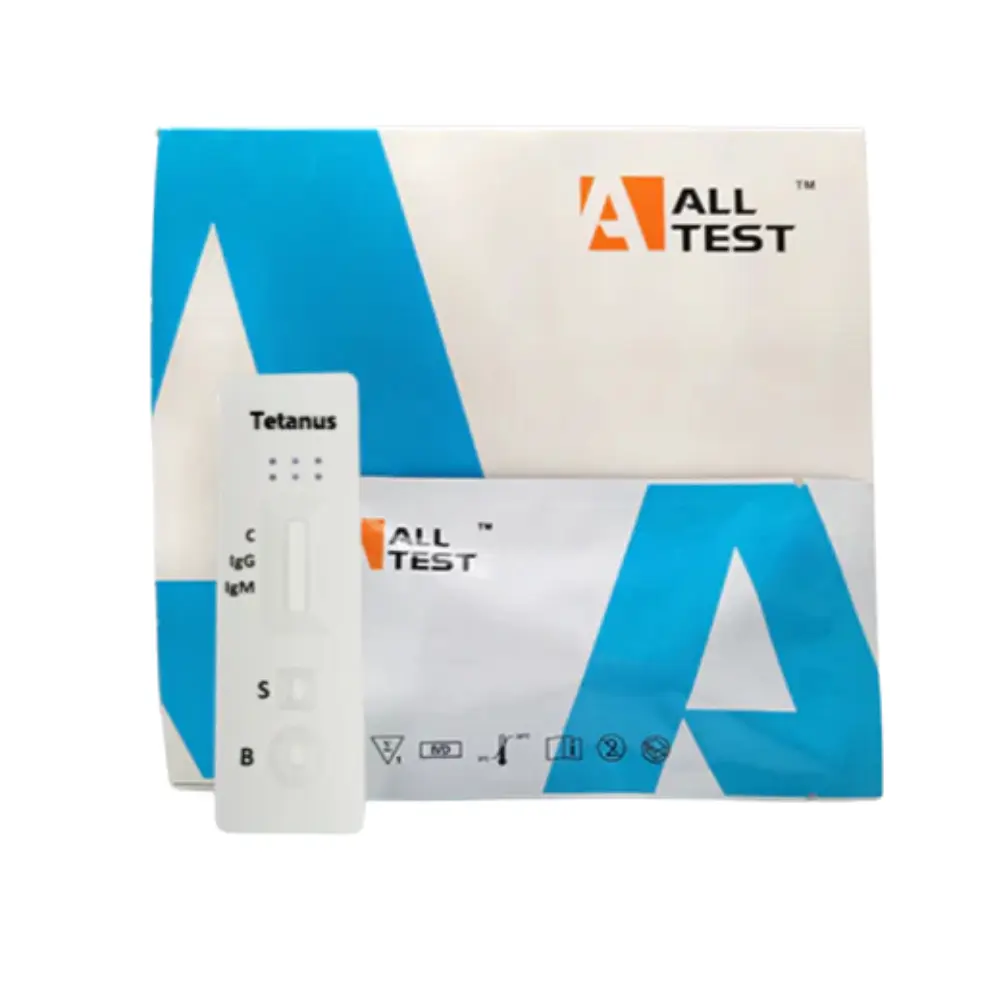
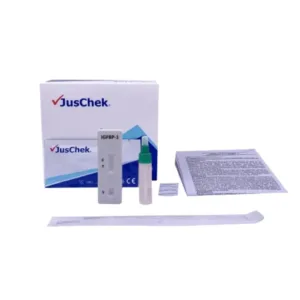
The rapid tetanus test (reference ITE-402) is an in vitro diagnostic cassette that allows rapid and reliable verification of the presence of anti-tetanus toxin antibodies in whole blood, serum or human plasma. It is designed to help healthcare professionals decide, within minutes, whether the patient requires a booster vaccine or tetanus immunoglobulin in the event of a wound or risk situation. Its individual cassette format and visual reading make it a practical solution for hospital emergency departments, mutual insurance companies and occupational risk prevention services, primary care consultations and immunisation campaigns, without the need for additional equipment or specialised training.
Technical explanation: how the immunochromatographic assay works
The test is based on a lateral flow chromatographic immunoassay in solid phase. The tetanus toxin antigen (purified tetanus toxoid) conjugated with coloured microparticles is immobilised on the cassette membrane. When the sample is placed in the well (approximately 10 µL of serum or plasma, or one drop of whole blood from a finger prick), the IgG antibodies present migrate by capillary action and react with the antigen, forming a complex that is trapped at the test line (T). The appearance of the control line (C) validates that the sample volume and flow were correct. Reading is performed between 10 and 15 minutes: two lines indicate a positive result (presence of protective antibodies); a single line at C indicates a negative result (absence or insufficient level of antibodies); the absence of the control line invalidates the assay. This test detects antibodies from 0.1 IU/mL, the protection level considered effective according to World Health Organization criteria.
Technical specifications and clinical data
| General characteristics |
| Assay type |
Lateral flow chromatographic immunoassay (qualitative) |
| Analyte detected |
Anti-tetanus toxin antibodies (Clostridium tetani) |
| Sample type |
Whole blood, serum or plasma |
| Sample volume |
10 µL (serum/plasma) or 20 µL (whole blood, 1 drop) |
| Reading time |
10-15 minutes (do not interpret after 20 minutes) |
| Limit of detection |
0.1 IU/mL (protective level according to WHO) |
| Format |
Visual reading cassette |
| Storage |
2-30 °C, in sealed packaging; do not freeze |
| Use |
Professional in vitro diagnostics |
| Clinical data |
| Relative sensitivity |
98.6 % |
| Relative specificity |
98.8 % |
| Accuracy |
98.7 % |
| Packaging |
| Units |
40 kits per box |
| Quantity per carton |
800 kits |
| Dimensions |
63 × 37 × 30 cm |
| Weight |
9.69 kg/carton |
| Box contents |
- 40 × Test cassettes
- 40 × Droppers (Pasteur pipette)
- 1 × Buffer solution
- 1 × User manual
|
| CE declaration of conformity |
| Available on request |
Equivalences and cross-references
The ITE-402 rapid tetanus test is part of the international family of rapid tests for the detection of anti-tetanus toxin antibodies in whole blood, serum or plasma samples, all based on the same lateral flow immunochromatography technology and with a detection limit targeted at the protective level of 0.1 IU/mL. Among the clinically equivalent formats on the market, TETANOTOP® from BIOSYNEX, the Screen Italia cassette (SC-0746 series), TetaQuick® from AAZ, and cassettes from manufacturers such as HYSEN or CTK Biotech stand out. Within the Cahnos catalogue, this kit shares methodology, cassette format and 40-unit presentation with other rapid serological tests, such as the malaria test (IMA-402), the chikungunya IgG/IgM test (ICHI-402) or the rapid cholera test (IVCAB-625), which makes it easy to complete a comprehensive diagnostic panel for the point of care.
Selection tips and variants of interest
This test is indicated as an initial screening to assess anti-tetanus immunity status, especially in the presence of contaminated wounds, in occupational medicine, occupational health, emergency services and travel medicine consultations. Remember that protection against tetanus is not permanent and that negative or doubtful results should be confirmed with quantitative serological reference methods if the clinical situation requires it. For high-volume centres, it is recommended to purchase the full carton of 800 kits (20 boxes of 40), optimising logistics and cost per test. Always check the expiry date and store the cassettes between 2 and 30 °C, protected from humidity and direct sunlight, to ensure reliable reading. Complement this device with other serological tests from the catalogue to provide your centre with a complete rapid diagnostic panel.

Reviews
There are no reviews yet.