

Description
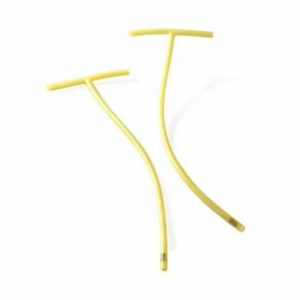
The Silicone Tiemann-type Foley catheter in CH 20 size is the ideal clinical solution for urinary drainage in patients with difficult or complex anatomy, such as urethral strictures, obstructions or prostatic hypertrophy with obstructive prominence. Its characteristic curved Tiemann tip allows these obstacles to be overcome with more precise insertion, reducing urethral trauma and patient discomfort.
Made entirely from high-quality medical silicone, biocompatible and latex-free, this catheter offers excellent tolerance in contact with the mucosa, a smooth internal and external surface that minimises encrustation and great durability, making it the recommended option for prolonged stays and urological post-surgical care.
Technical explanation of the product and procedure
The Foley catheter is a double-lumen (two-way) urethral catheter that is inserted through the urethra into the bladder. One lumen allows continuous drainage of urine into the collection bag and the second lumen communicates with the 5-10 ml retention balloon, which once inflated with sterile water or physiological saline anchors the catheter in position and prevents its displacement or accidental removal.
The Tiemann variant is distinguished by its curved distal end with an olive tip, a classic design in urology that facilitates passage through natural anatomical curvatures and areas of resistance, such as in male patients with benign prostatic hyperplasia or after urological surgery. The CH 20 size (20 Fr, approximately 6.7 mm external diameter) is a medium-high size, indicated in adults when a wide drainage flow and secure fixation are required.
Technical specifications
| Characteristic | Specification |
|---|---|
| Type | Curved Tiemann-type Foley catheter |
| Material | High-quality medical silicone, latex-free |
| Gauge | CH 20 (20 Fr, approx. 6.7 mm) |
| Length | 40 cm |
| Ways | 2 (urinary drainage + retention balloon) |
| Cuff | 5-10 ml |
| Use | Urinary drainage in complex or difficult anatomy |
| Presentation | Sterile, single-use |
Range of sizes available from the same family
| Reference | Gauge | Cuff | Length |
|---|---|---|---|
| 653012 | CH 12 | 5-10 ml | 40 cm |
| 653014 | CH 14 | 5-10 ml | 40 cm |
| 653016 | CH 16 | 5-10 ml | 40 cm |
| 653018 | CH 18 | 5-10 ml | 40 cm |
| 653020 | CH 20 | 5-10 ml | 40 cm |
Equivalences and cross-references
This two-way Tiemann-type silicone catheter, with a 5-10 ml balloon and an approximate length of 40 cm, is clinically comparable to the Tiemann-type silicone Foley catheter series from the main European market manufacturers:
- Teleflex / Rüsch: series 186505 (Tiemann Foley catheter in silicone, sizes CH 12-24, balloon 5-15 ml, length approx. 40 cm).
- Reference series OB 23.000.20.220: Tiemann-type catheter, two-way, 5-10 ml balloon, size CH 20.
- In size CH 20, it is equivalent to 20 Fr (French scale), with an approximate external diameter of 6.7 mm.
The direct correspondence between the Charrière (CH) scale and the French (Fr) scale makes this reference interchangeable with any CH 20 silicone Tiemann Foley catheter from other approved suppliers, provided that balloon, length and material are verified.
Selection tips and variants of interest
- Select the Tiemann tip when the patient has prostatic hypertrophy, strictures or tortuous anatomy: the curvature facilitates advancement and avoids repeated attempts.
- The 5-10 ml balloon is suitable for standard bladder fixation in adults. Always inflate with the recommended volume (according to indications) to avoid leaks or injury.
- Silicone is the material of choice for prolonged catheterisation due to its biocompatibility and low tendency to encrustation; for frequent changes, silicone-coated latex alternatives may be considered, provided there is no latex allergy.
- For patients requiring a smaller size, it is recommended to review the variants from the same range: CH 12, CH 14, CH 16 and CH 18 (refs. 653012, 653014, 653016 and 653018), all with a 5-10 ml balloon and a length of 40 cm.
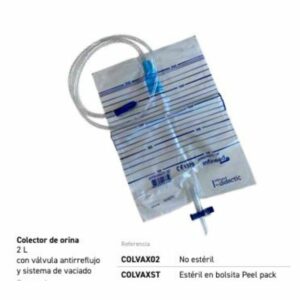
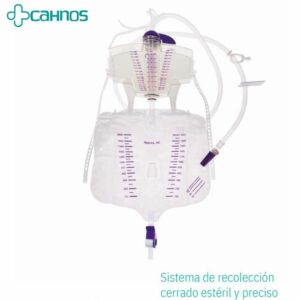
- Always use a compatible water-soluble lubricant and aseptic technique, and connect the collection bag with a closed system to minimise the risk of catheter-associated urinary tract infection.
Reviews
There are no reviews yet.