


Description
1. What is the FlexGRIP Jr. Universal 5–11 Fr?
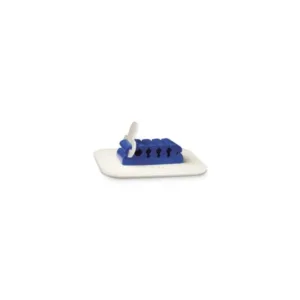
The FlexGRIP Jr. Universal 5–11 Fr (Ref. UNJR511) is a sutureless fixation and stabilisation device designed by Bedal International (FlexGRIP) to secure a wide range of paediatric drainage tubes and catheters from 5 to 11 French. It is the ideal solution for paediatrics, paediatric oncology and paediatric intensive care units where maintaining a stable, comfortable and protected access is a priority: it reduces the risk of dislodgement, accidental pulls and associated complications, without compromising the flow of the device or patient comfort.
2. Technical explanation of the device
The system uses air-pillow technology: a flexible air cushion that hugs the catheter or tube and provides firm, stable fixation without occluding or restricting flow. The base incorporates a skin-safe hydrocolloid adhesive, especially indicated for sensitive paediatric skin, which absorbs moisture and helps prevent adhesive-related skin injuries (MARSI) and pressure injuries.
The device features a reversible locking mechanism with an additional lock for the safety strap, allowing the catheter to be fixed and readjusted easily as many times as necessary. Its low profile and soft materials prevent snagging, reduce catheter micromovements and facilitate daily clinical inspection. It is intuitive to place, without the need for instruments, and is supplied sterile, single-use, latex-free, PVC-free and DEHP-free.
3. Technical Specifications
The main specifications of the device are detailed below:
| Characteristic | Specification |
|---|---|
| Reference (SKU) | UNJR511 |
| Manufacturer | Bedal International NV (FlexGRIP) |
| Product type | Catheter and drainage tube fixation and stabilisation device |
| Target population | Paediatric |
| Compatible diameter range | 5–11 Fr |
| Fixation technology | Air-pillow, no flow restriction |
| Adhesive | Hydrocolloid, skin-safe (prevents MARSI) |
| Locking system | Reversible, with additional strap lock |
| Profile | Low profile, soft and flexible (no snagging) |
| Application / removal | No instruments required; intuitive placement and readjustment |
| Sterility | Sterile, single-use |
| Free from | Latex, PVC and DEHP |
| Approvals | CE marking and FDA registration |
| Presentation | Box of 50 units |
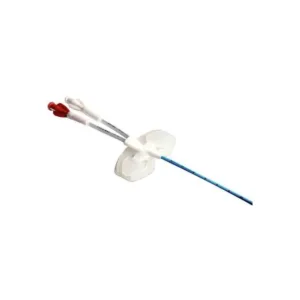
Clinical applications: suitable for stabilising and fixing Hickman-type catheters, nephrostomies and other drains (J and G tubes), gripper-type needles (Port-a-cath), thrombolysis catheters, cables and drivelines (e.g., LVAD), always within the 5–11 Fr range.
4. Equivalences and Cross-References
In the drainage catheter fixation segment, the best-known market reference is the StatLock™ Universal Plus range (BD, formerly CR Bard), with which the FlexGRIP Jr. Universal competes and can be considered functionally equivalent for the sutureless stabilisation of percutaneous drains (biliary, nephrostomies, peritoneal lavage):
- StatLock™ Universal Plus Small, 6–8.5 Fr (ref. VUPD68)
- StatLock™ Universal Plus Medium, 10–12 Fr (ref. VUPD1012)
- StatLock™ Universal Plus Large, 12–14 Fr (ref. VUPD1214)
- StatLock™ Universal Plus Extra Large, 14–16 Fr (ref. VUPD1416)
Within the FlexGRIP family itself, the adult version FlexGRIP Universal (Ref. FGUNIVERSAL) covers the 5–11 Fr, 11–18 Fr and 18–25 Fr ranges. Consult our technical-commercial team if you need to validate the exact equivalence with your current purchase reference.
5. Selection tips and variants of interest
For correct selection, consider the target population and the type of access:
- Paediatric drainage tubes and catheters (5–11 Fr): FlexGRIP Jr. Universal (UNJR511), your direct choice.
- Paediatric PICC (2.7–5 Fr): FlexGRIP Jr. PICC (PICCJR275).
- Paediatric peripheral catheters (PIVC): FlexGRIP Jr. PIVC (PIVCJR).
- Paediatric suture-wing catheters: FlexGRIP Jr. Alpha (ALFAJR), needle-free fixation.
- Paediatric Nexiva™ catheters: FlexGRIP Jr. NEX (NEXJR).
- Adult, catheters and drains (5–25 Fr): FlexGRIP Universal (FGUNIVERSAL).
Usage recommendations: apply to clean, dry skin following the centre’s clinical protocol; regularly inspect the fixation area and replace the device when clinically indicated. To remove it, gently lift an edge and release the adhesive without pulling to protect the sensitive skin of the paediatric patient.
Reviews
There are no reviews yet.