
Description
1. Introduction: needle-free neonatal securement, safe for the skin
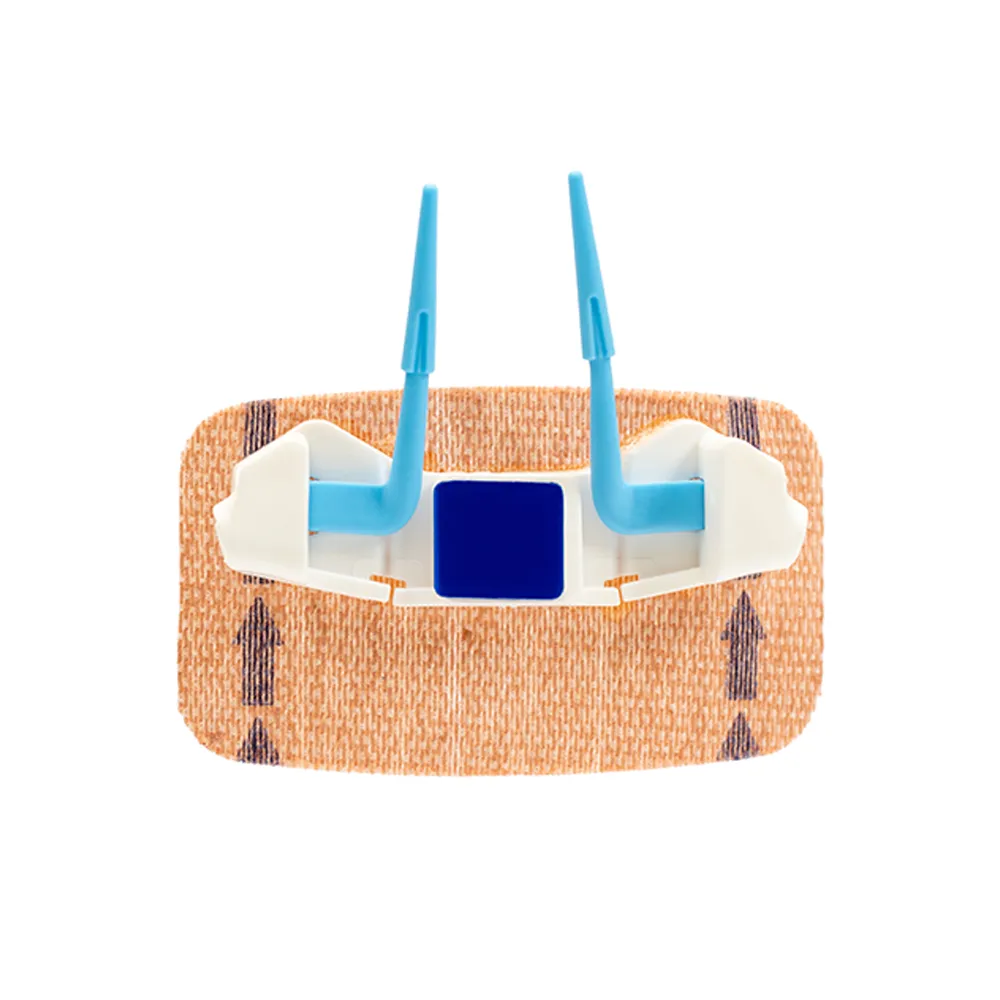
FlexGRIP Neo Alpha (Ref. ALFANEO) is the sutureless securement system designed by Bedal International (FlexGRIP) for the securement of neonatal catheters with wings and suture holes. It is intended for neonatology and neonatal intensive care units (NICU) where the stability of the vascular access and the protection of the immature skin of the newborn are priorities: it eliminates the need to suture the catheter to the skin, avoiding needles and traumatic anchoring points, and provides firm, discreet and comfortable securement throughout the treatment.
2. Technical explanation of the device
FlexGRIP Neo Alpha uses an adhesive base of zinc oxide, a material specially selected for its gentleness on neonatal skin, which ensures reliable adhesion even in high-humidity environments such as incubators. The system incorporates flexible suture-like posts that embrace the catheter wings and replicate the behaviour of a suture point without the need for a needle or thread, known as needle-free securement.
Its low-profile, trimmable design prevents snags and accidental pulls, acts as a protective cushion between the catheter and the skin, and cushions the catheter’s micromovements responsible for displacement, migration, phlebitis and infiltration. The device is applied and removed without instruments, quickly and intuitively, and its adhesive is formulated to minimise adhesive-related skin injuries (MARSI) and pressure injuries, as well as preventing accidental needlestick injuries to healthcare staff.
3. Technical Specifications
| Reference (SKU) | ALFANEO |
| Manufacturer | Bedal International NV (FlexGRIP) |
| Product type | Sutureless catheter fixation and stabilisation device |
| Target population | Neonates (neonatology units and NICU) |
| Indication | Securement of neonatal catheters with wings and suture holes |
| Compatibility | Neonatal CVCs, PICCs, arterial lines and other catheters with suture wings (virtually all on the market) |
| Size | One size fits all |
| Fixation system | Flexible suture-like posts, without needles (needle-free) |
| Adhesive | Zinc oxide, safe for neonatal skin |
| Adhesion | Reliable even in high-humidity incubators |
| Design | Low profile, trimmable, snag-free |
| Application / removal | No instruments required; intuitive placement and removal |
| Sterility | Sterile, single-use |
| Free from | Latex, PVC and DEHP |
| Approvals | CE marking and FDA registration |
| Presentation | Box of 50 units |
4. Equivalences and Cross-References
The FlexGRIP Neo Alpha belongs to the Bedal International family of sutureless securement devices and competes directly with the stabilisers in the StatLock™ Neonate (BD, formerly CR Bard) range, historically used for the securement of neonatal catheters with wings. The most common functionally equivalent references on the market are:
- StatLock™ PICC Neonate for Vygon catheters (NN0200)
- StatLock™ PICC Neonate PICC II (NN0201)
- StatLock™ PICC Neonate Universal (NN0300)
Within the FlexGRIP family itself, the paediatric version FlexGRIP Jr. Alpha (ALFAJR) covers the same wing securement principle for paediatric patients, while the adult version FlexGRIP Alpha extends the range to CVCs, PICCs, arterial lines, midlines and haemodialysis catheters. Please consult our technical-commercial team if you need to validate the exact equivalence with your current purchasing reference.
5. Selection tips and variants of interest
For correct selection, consider the target population and the type of vascular access:
- Neonatal catheters with wings and suture holes (CVC): FlexGRIP Neo Alpha (ALFANEO), your direct choice.
- Neonatal PICC (silicone and polyurethane): FlexGRIP Neo PICC (PICCNEO).
- Short neonatal peripheral line (PIVC): FlexGRIP Neo PIVC (PIVCNEO).
- Umbilical catheters: FlexGRIP Neo Umbilical (UMNEO).
- Paediatric PICC 2.7–5 Fr: FlexGRIP Jr. PICC (PICCJR275).
Usage recommendations: apply to clean, dry skin following the centre’s clinical protocol; inspect the securement area on the neonate daily and replace the device when clinically indicated. To remove it from the newborn’s delicate skin, gently lift one edge and moisten with sterile water or physiological saline to release the zinc oxide adhesive without trauma.
Reviews
There are no reviews yet.