
Surface disinfection: buying guide
7 products in the catalogue
Surface disinfectants are biocides for environmental use on floors, furniture, work areas and non-invasive equipment in healthcare settings. They come in different formats: 150 ml and 400 ml trigger sprays for spot cleaning, 1 litre and 5 litre concentrates for diluting and applying with a cloth or mop, and wipes for surfaces and equipment.
The choice does not depend on the container alone. Each formulation declares a spectrum of action and an intended user, and sets the method of application and the contact time. In a hospital or clinic the purchase combines several formats: a concentrate for large surfaces, a spray for specific points and wipes for equipment. Check the registration, the spectrum, material compatibility and whether rinsing is needed before ordering.
Other related families
-
 DISINFECTION
This is the family in which the format, spectrum and intended user of the disinfectant are decided.
-
 Air Disinfection
Some surface disinfectants are also applied to rooms and work areas; it is worth reviewing this family alongside the main one.
-
Medical Instrument Cleaning and Preservation
Many departments buy surface disinfectant and instrument product at the same time; keeping the two needs separate avoids mistakes.
Products in this guide
- 5 l 1
- 400 ml 1
-
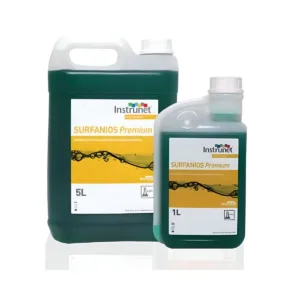
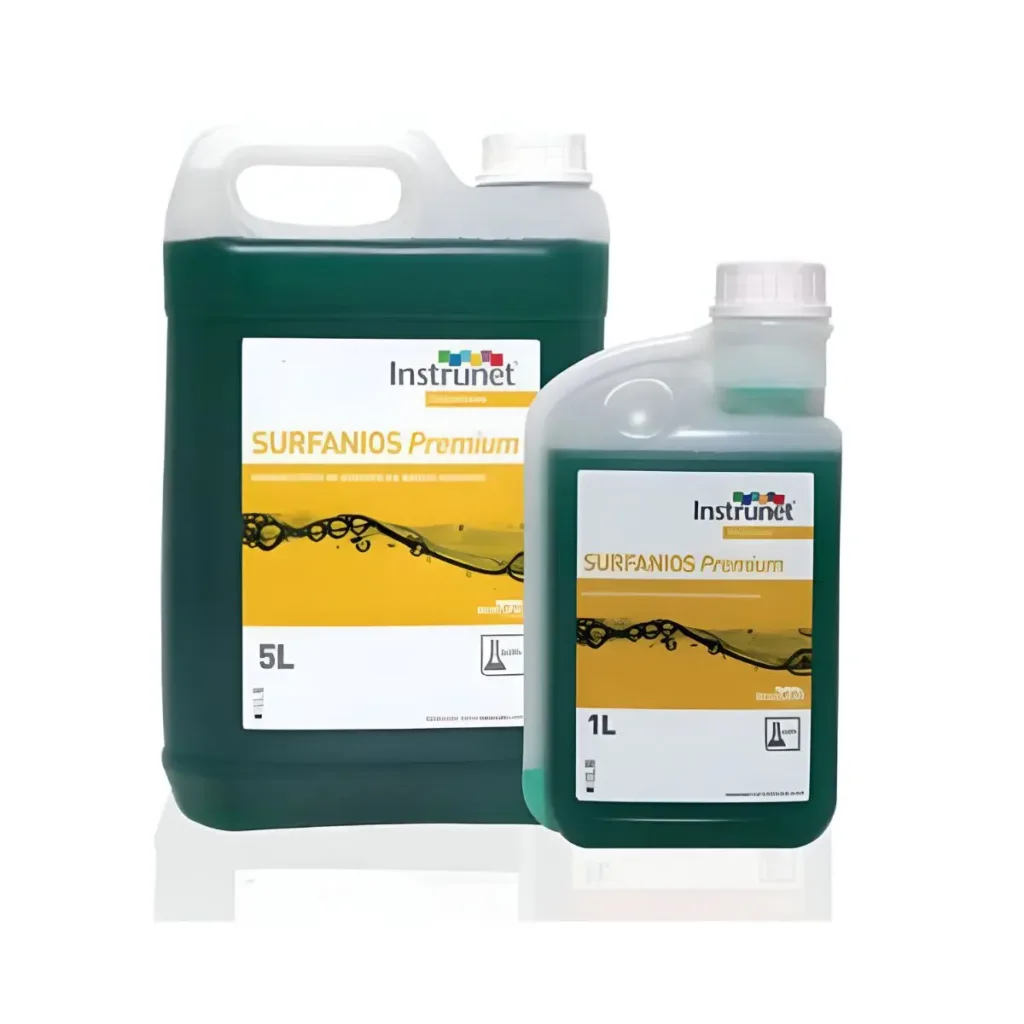
Instrunet Surfanios Premium 5 L Surface Disinfectant – Biocidal Detergent for Floors, Walls and Non-Invasive Medical Devices (Ref. CAH5059)
92,44 € In stockAdd to basket -
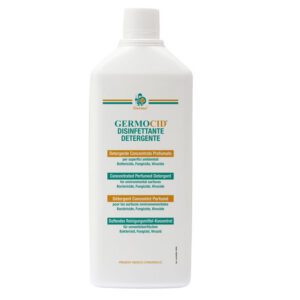
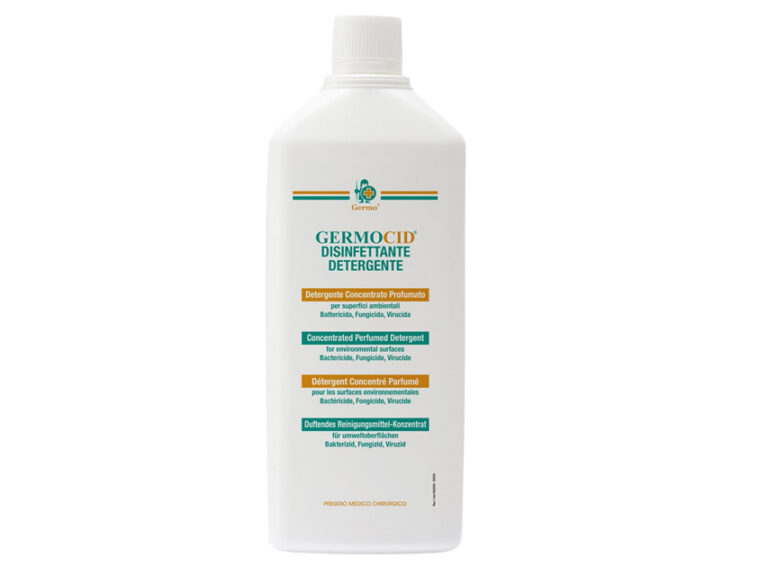
Concentrated Environmental Disinfectant – Surface Detergent-Disinfectant with Quaternary Ammonium (1 L Bottle, Ref. GM36616)
Price range: 8,65 € through 21,85 € In stockSelect options This product has multiple variants. The options may be chosen on the product page -
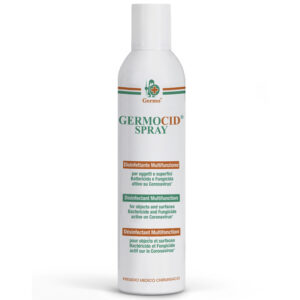
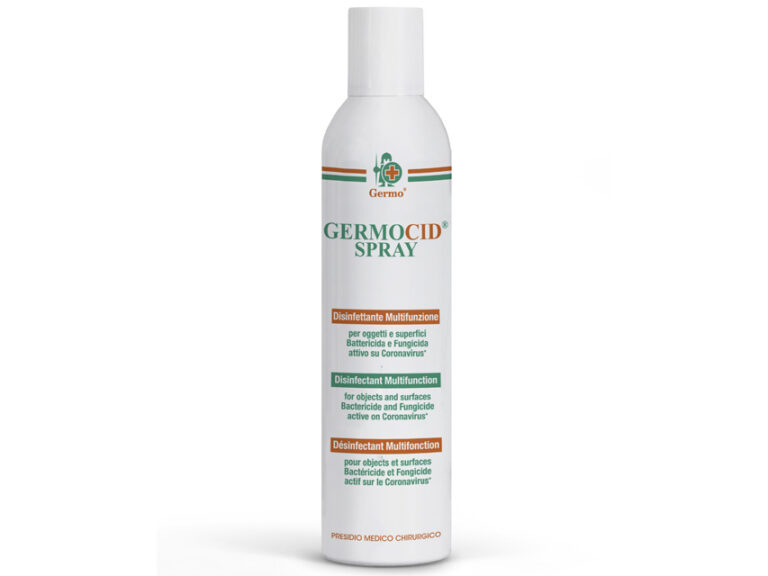
Germocid Multipurpose Spray Disinfectant 400 ml (Ref. 36620) for Surfaces and Environments
7,60 € In stockAdd to basket -
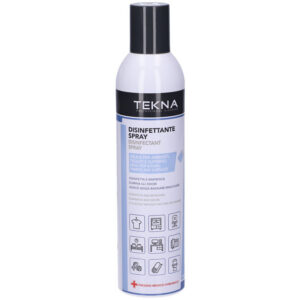
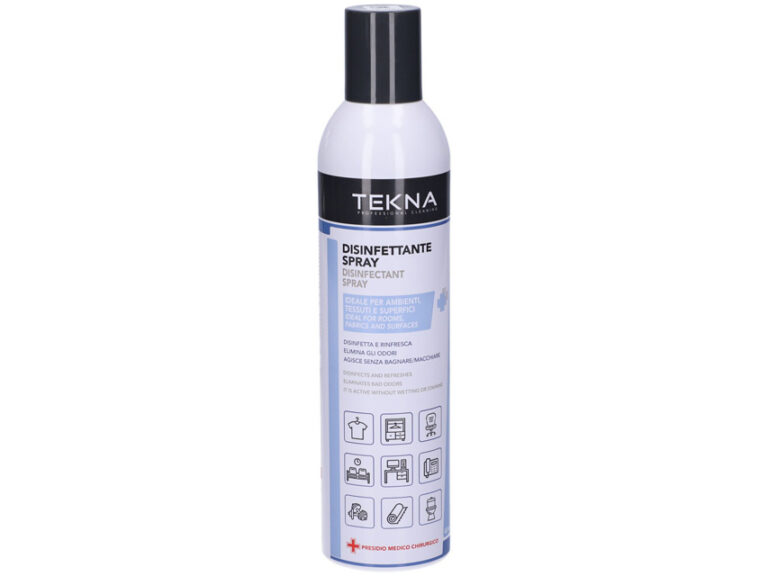
Tekna Disinfectant Spray for Surfaces and Fabrics 400 ml | Bactericidal, Fungicidal and Deodorising (Ref. 36623)
7,98 € In stockAdd to basket -
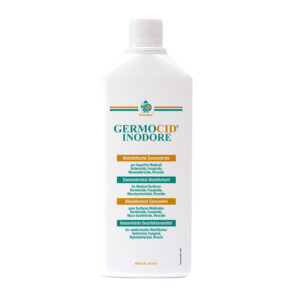
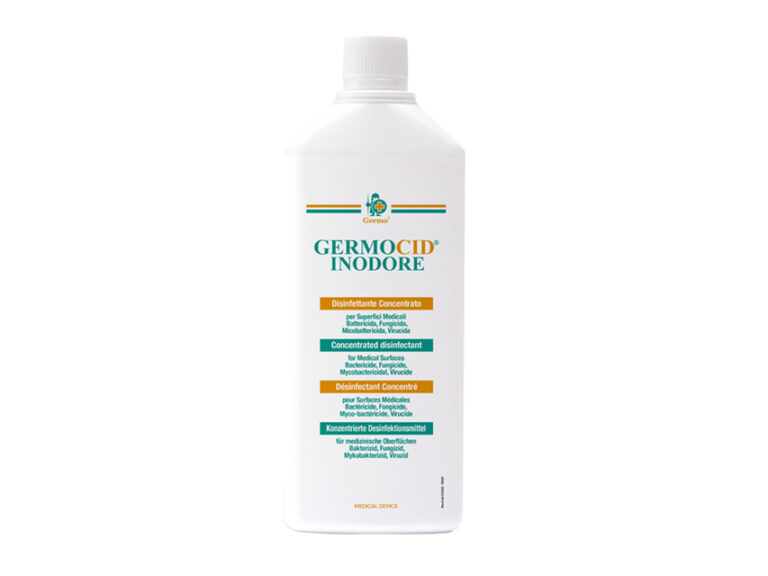
GERMOCID INODORE Surface Disinfectant – Odourless Concentrated Detergent-Disinfectant Solution, 1 l Bottle | Class IIa Medical Device (Ref. GM36664)
Price range: 8,55 € through 40,85 € In stockSelect options This product has multiple variants. The options may be chosen on the product page -
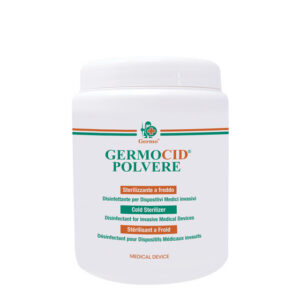
GERMOCID Disinfectant Wipes Alcohol 15% – Tube of 220 units (Ref. 36668) – Class IIa Medical Device for Surfaces and Non-Invasive Devices
9,79 € In stockAdd to basket -
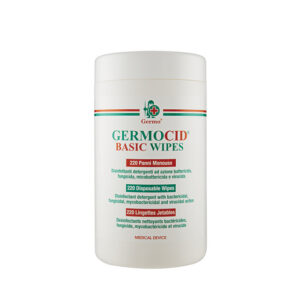
GERMOCID basic disinfectant wipes – 60% alcohol – Tube of 220 wipes 140×240 mm for surfaces and non-invasive medical devices (Ref. 36669)
10,64 € In stockAdd to basket
Buying and selection tips
-
Method of application before container
Not all products allow the same methods of application: spraying, immersion, cloth or mop. For spot cleaning a spray is practical; for large surfaces, a concentrate to dilute and apply with a mop.
-
General use or professional use
The registration distinguishes between the general public, professional staff and specialised professional staff. Confirm which user the product is intended for before finalising the order, because the permitted method of application changes in each case.
-
The declared spectrum is not inherited
Some formulations declare bactericidal and yeasticidal action, others bactericidal and fungicidal, others virucidal or tuberculocidal, and some sporicidal. The spectrum is specific to each product and must be checked one by one.
-
Contact time
The action time is set by the manufacturer on the label and varies between products. Compare this figure between references and check that it is compatible with the department's pace of work.
-
No rinse and material compatibility
Some surface disinfectants are applied without subsequent rinsing and declare themselves non-corrosive. Also check compatibility with the materials of the surfaces and equipment where it will be used.
Frequently asked questions
Can I use the same disinfectant on the surface and on medical equipment?
It depends on the product. Some surface disinfectants also cover non-invasive medical devices, and there are wipes designed for equipment. If it will touch equipment, check that the product covers this and that it is compatible with the material.
How do I compare the contact time between two surface disinfectants?
Check on each product's label the contact time required by the manufacturer and compare it with the department's pace of work. Do not assume that two products in the same format act in the same time.
Do I need to rinse with water after disinfecting the surface?
It depends on what the label of each product says. Some declare that they are applied without rinsing; for the others, the manufacturer's instructions must be followed.
How do I tell a specialised professional product from a general-use one?
By the user stated in its registration: general public, professional staff or specialised professional staff. The method of application changes in each case, so check this before deciding the quantity.
Why are some surface disinfectants advertised as sporicidal and others not?
Because the declared spectrum is specific to each formulation: some products declare bactericidal and fungicidal action, others bactericidal and yeasticidal and others sporicidal. It cannot be assumed that one product covers the same as another.
Common questions
Thinking that any surface disinfectant is suitable for instruments
It is not: instruments require specific products and surfaces others. Check on each reference the use it is intended for and follow the manufacturer's instructions.
Confusing a surface disinfectant with a skin hygiene product
Skin and hand hygiene products are biocides for human hygiene, with a different registration and purpose, and are not used on surfaces or vice versa. Mixing the two categories in the same order is a common mistake.