
Buying guide to surface disinfectants
11 products in the catalogue
Surface disinfection brings together the products and procedures intended to reduce the microbial load on floors, walls, furniture, equipment and non-invasive medical devices. In a healthcare setting it is not limited to a single room: it is applied in consulting rooms, treatment rooms, operating theatres, circulation areas and technical areas, and sits alongside prior cleaning and the specific process for instruments.
The method of application affects the choice. Some formulations are used neat and others are diluted in water; some are applied by spraying and others with a cloth, mop or immersion, and some come as a no-rinse foam. The container matters too: a large-capacity container suits extensive surfaces, whereas a dispensing or spray container suits touch points and equipment. Before deciding, settle three things: what microbial activity the product declares, what material it will be applied to and which user is authorised to handle it. From there you choose the format, check whether it needs dilution or rinsing and plan the contact time, which is what underpins the result.
Other related families
-
 DISINFECTION
It groups the disinfectants for surfaces, floors and equipment that are the core of this purchase.
-
 Decontamination Mats
They complement surface disinfection by controlling traffic in critical areas.
-
Medical Instrument Cleaning and Preservation
Needed when the purchase includes the pre-treatment of instruments before disinfection.
Products in this guide
- 5 l 1
- 400 ml 1
- 750 ml 2
- Unit 6
- Box OF 12 2
-
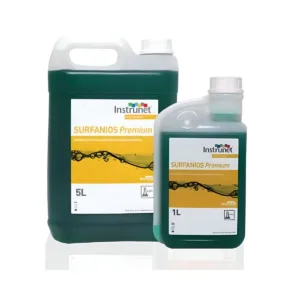
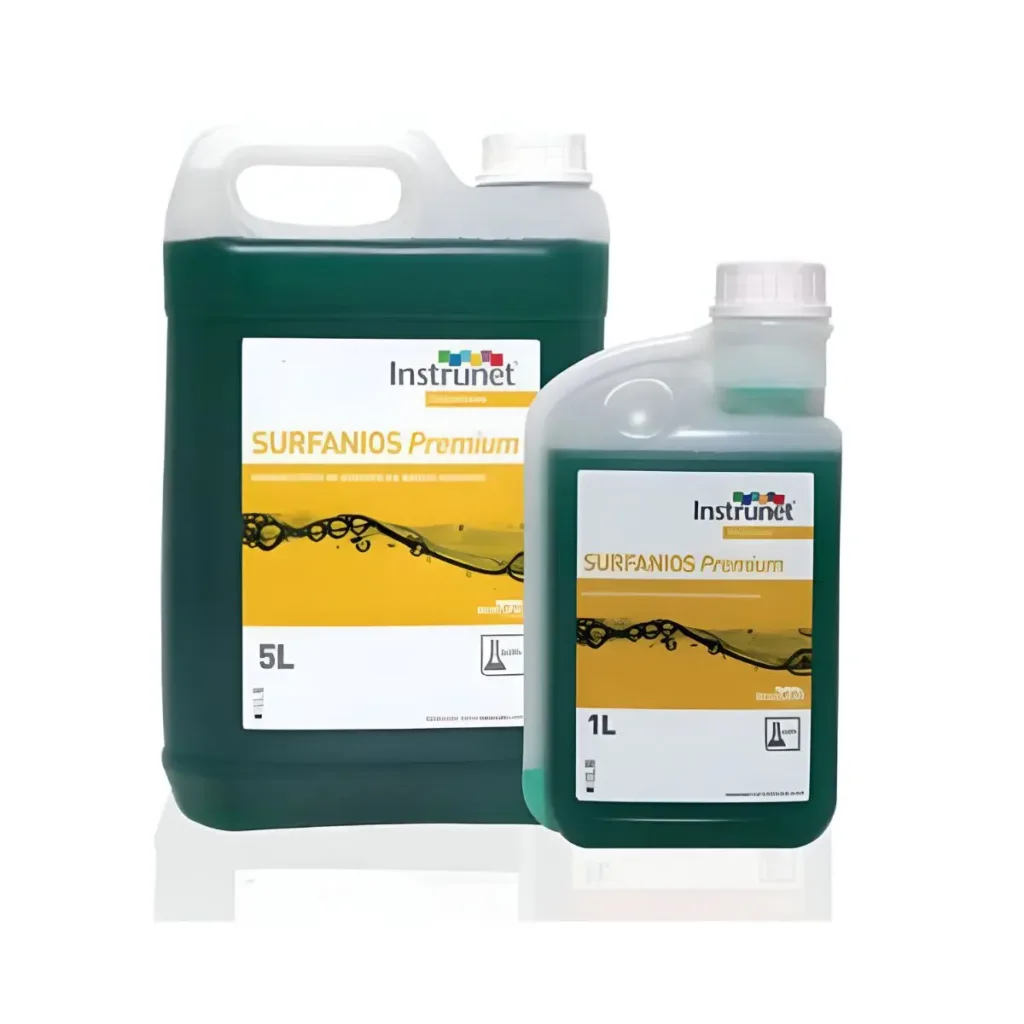
Instrunet Surfanios Premium 5 L Surface Disinfectant – Biocidal Detergent for Floors, Walls and Non-Invasive Medical Devices (Ref. CAH5059)
92,44 € In stockAdd to basket -
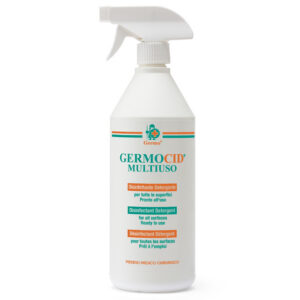
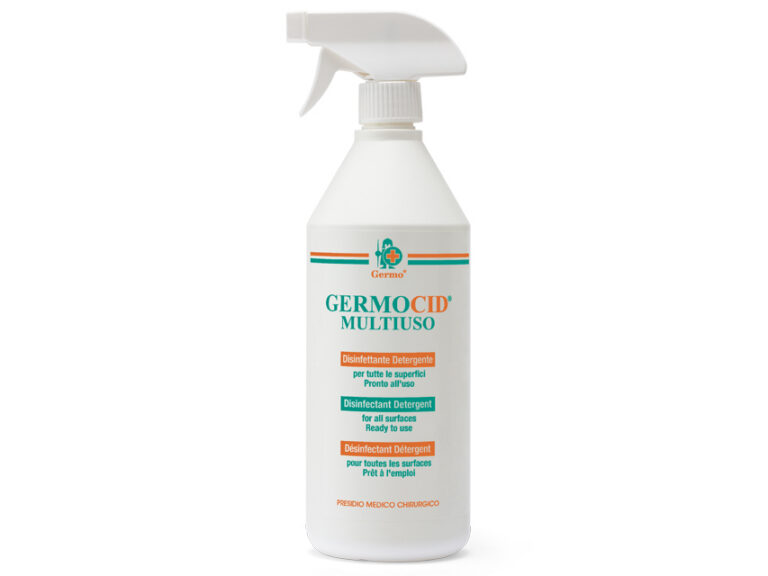
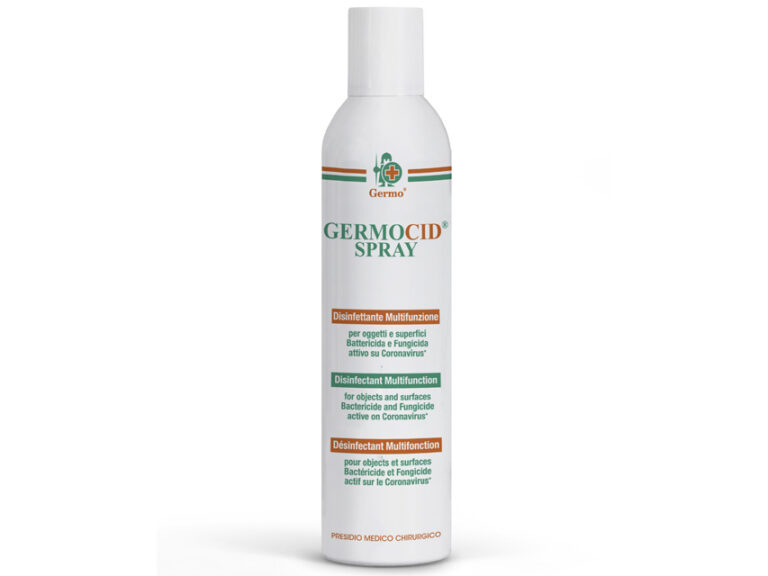
Germocid Multiuso Spray 750 ml – Disinfectant-Detergent | Box of 12 units (Ref. 36579)
51,30 € In stockAdd to basket -
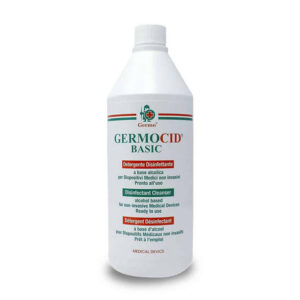
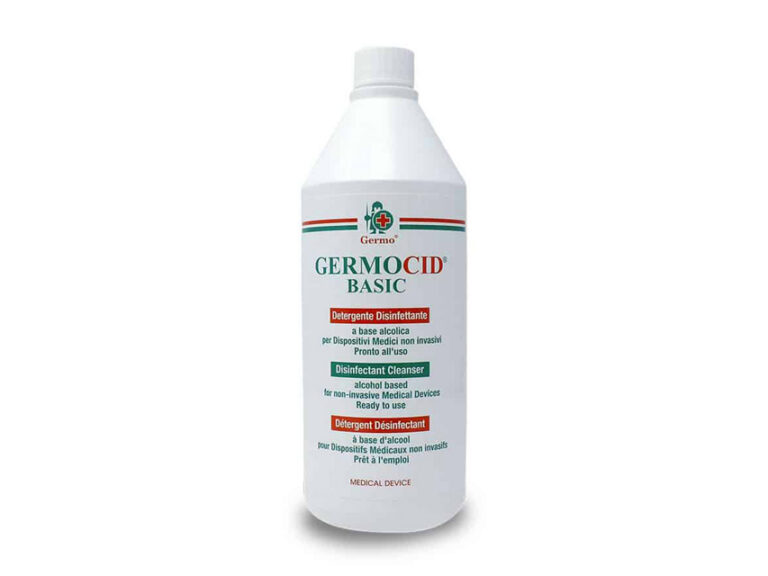
GERMOCID BASIC Disinfectant Detergent 750 ml (Box of 12 units, Without Spray) – Class IIa Medical Device for Surfaces and Non-Invasive Devices | Ref. 36610
91,20 € In stockAdd to basket -
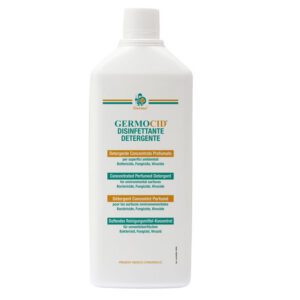
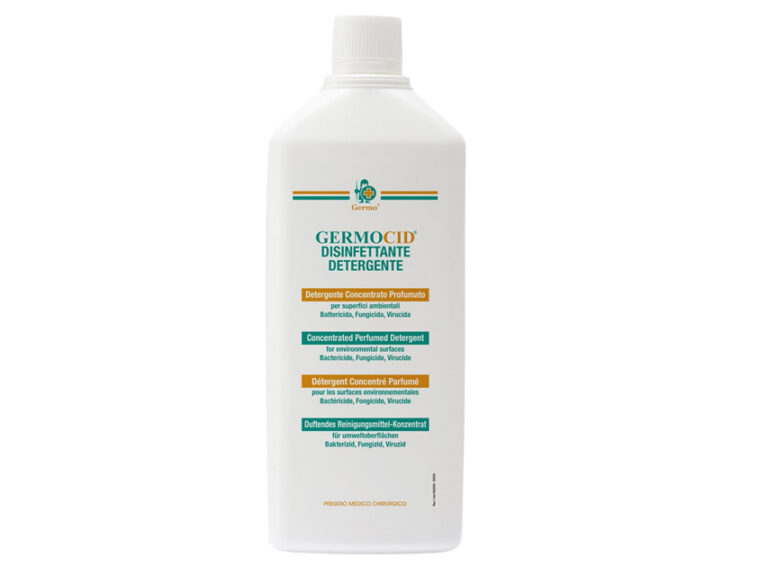
Concentrated Environmental Disinfectant – Surface Detergent-Disinfectant with Quaternary Ammonium (1 L Bottle, Ref. GM36616)
Price range: 8,65 € through 21,85 € In stockSelect options This product has multiple variants. The options may be chosen on the product page -
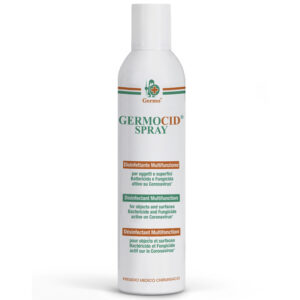
Germocid Multipurpose Spray Disinfectant 400 ml (Ref. 36620) for Surfaces and Environments
7,60 € In stockAdd to basket -
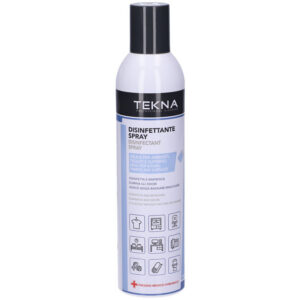
Tekna Disinfectant Spray for Surfaces and Fabrics 400 ml | Bactericidal, Fungicidal and Deodorising (Ref. 36623)
7,98 € In stockAdd to basket -
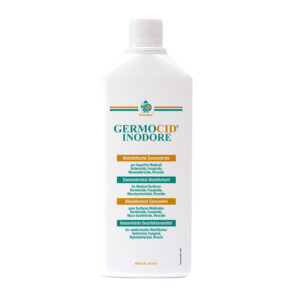
GERMOCID INODORE Surface Disinfectant – Odourless Concentrated Detergent-Disinfectant Solution, 1 l Bottle | Class IIa Medical Device (Ref. GM36664)
Price range: 8,55 € through 40,85 € In stockSelect options This product has multiple variants. The options may be chosen on the product page -
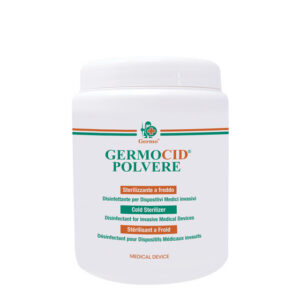
GERMOCID Disinfectant Wipes Alcohol 15% – Tube of 220 units (Ref. 36668) – Class IIa Medical Device for Surfaces and Non-Invasive Devices
9,79 € In stockAdd to basket
Buying and selection tips
-
Separate surface disinfection from instrument disinfection
One product does not cover both needs: healthcare surface disinfection is applied to floors, walls, furniture and equipment, whereas instruments require their own process. Before closing the purchase, confirm what use the product is intended for and which user is authorised to handle it.
-
Require the declared spectrum in writing
Bactericidal, fungicidal, virucidal, yeasticidal or sporicidal are not equivalent: some formulations declare only bactericidal and fungicidal action and others add virucidal action. Check what activity the product declares and set it against what you need to disinfect.
-
Match the format to the point of application
For large surfaces and floors a large-capacity container makes sense, whereas for touch points, equipment or hard-to-reach areas a spray container or a ready-to-use foam is more practical. The format affects coverage and application time.
-
Confirm whether it is applied neat or diluted
Some formulations are used neat and others are diluted in water before application, and a dilution different from the one intended alters the result. Also check whether the product requires subsequent rinsing or is left to dry.
-
Respect the contact time
Effectiveness depends on the surface remaining wet for the stated contact time, not just on having been sprayed. In high-traffic areas, plan the application in periods of lower use.
-
Consider compatibility with materials
There are sensitive surfaces, such as acrylic, and equipment that does not tolerate corrosive products. Check that the formulation is non-corrosive and suitable for the material it will be applied to before rolling out its use across the whole facility.
Compatibility
- Medical and surgical instruments
- For medical and surgical instruments, specific detergents are used, different from the surface disinfectant. Always follow the manufacturer's instructions.
- Alcohol disinfectant wipes
- Disinfectant wipes are used for surfaces and equipment. Some declare the absence of aldehydes or quaternary ammonium compounds and compatibility with materials: check what each one declares.
Frequently asked questions
What is the difference between a clinical-use surface disinfectant and a general-use one?
The clinical-use one is registered for surface disinfection in healthcare settings and its handling is reserved for professional staff, whereas other products are also authorised for the general public. If it is to be applied in a consulting room, operating theatre or treatment room, choose the healthcare version.
Is it enough to spray the surface or does it have to be wiped?
It depends on the product and the surface: some formulations are applied by spraying and others with a cloth or mop. In any case, the application must cover the whole surface and respect the contact time.
How do I decide between a large-capacity container and a spray container?
The large container is justified when disinfection is carried out frequently on extensive surfaces, whereas the spray container or foam is reserved for touch points and equipment. If you will use both, plan for both formats.
What should I check if the product will come into contact with instruments?
That the manufacturer declares its use for instruments and its compatibility with the materials, and that it is non-corrosive. Follow the manufacturer's instructions in each case.
Does the surface have to be rinsed after applying the disinfectant?
Not always: there are hospital-use disinfectant foams formulated not to require rinsing. When the product does not declare this, residues must be rinsed or removed according to the facility's procedure.
What activity should a disinfectant declare for an area with a virus risk?
It must declare virucidal action, as well as bactericidal and fungicidal if you want to cover both spectra, because some formulations declare only bactericidal and fungicidal action. Set that declaration against the protocol for the area.
Common questions
Believing that a bactericide and fungicide also covers viruses
It is not the same thing: there are surface disinfectants that declare only bactericidal and fungicidal action, and others that add virucidal action. If the protocol requires activity against viruses, you must choose a formulation that declares it.
Thinking that alcohol hand gel can be used to disinfect surfaces
Alcohol hand gel is intended for disinfecting skin and hands, not floors, walls or furniture. For surfaces, use a disinfectant specific to surfaces.
Confusing instrument cleaning with surface disinfection
Instrument detergent is not a substitute for surface disinfectant: they are products with different uses.
Applying diluted a product intended to be used neat
Each formulation declares whether it is applied neat or diluted in water; do not alter that guidance. Follow the declared dilution and contact time.
Assuming that rinsing is not needed
Only formulations that expressly declare it are left without rinsing; for the rest, residues must be removed. Check this point before standardising the product across all areas.
More products in this guide
-
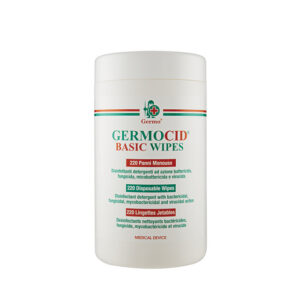
GERMOCID basic disinfectant wipes – 60% alcohol – Tube of 220 wipes 140×240 mm for surfaces and non-invasive medical devices (Ref. 36669)
10,64 € In stockAdd to basket -
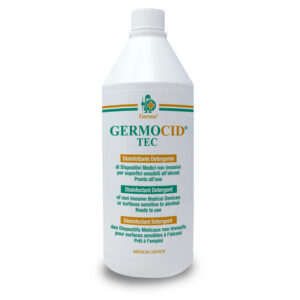
GERMOCID TEC Spray 750 ml – Foaming Disinfectant Cleaner for Delicate Surfaces and Non-Invasive Medical Devices (Ref. GM36681)
9,12 € In stockAdd to basket -
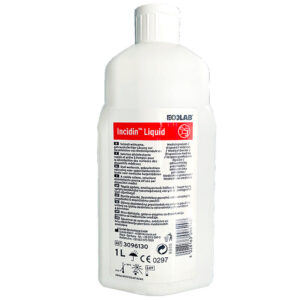
INCIDIN™ Liquid from Ecolab – Ready-to-use alcohol-based surface disinfectant, 1 L bottle | Ref. GM36800 | Bacteria, yeasts and tuberculosis in 5 min | Medical device class IIa
Price range: 12,35 € through 57,00 € On orderSelect options This product has multiple variants. The options may be chosen on the product page