
Laboratory gloves: buying guide
13 products in the catalogue
A laboratory glove is a disposable barrier worn on the hand when working with samples, reagents and biological material. It separates the operator's skin from the product being handled and prevents contamination being carried over between tasks. For that reason, two gloves of the same colour and apparent thickness may not be interchangeable.
The available models are nitrile, latex and vinyl examination gloves, powdered and powder-free. The choice comes down to four details: material, acceptable quality level for pinholes (AQL), thickness measured at the palm and finger, and cuff length. Added to these are the finish and the presence or absence of vulcanisation accelerators, a relevant point when there is skin sensitisation in the team.

Other related families
-
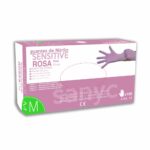 Nitrile Gloves
This is the family with most of the references and the priority option for laboratories because of its chemical and mechanical resistance.
-
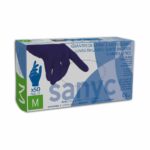 Latex Gloves
An elastic alternative with excellent tactile sensitivity, for teams that already work with latex.
-
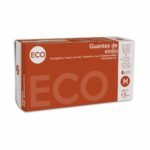 Vinyl Gloves
An economical, latex-free option for low-risk tasks, with lower resistance than nitrile.
- Disposable Protection It groups the disposable protective supplies the glove is combined with in everyday laboratory routine.
Products in this guide
- Nitrile 9
- PVC 4
- Rubber 2
- L 5
- S 3
- XL 3
- M 2
- Box OF 100 12
- Box OF 50 1
-
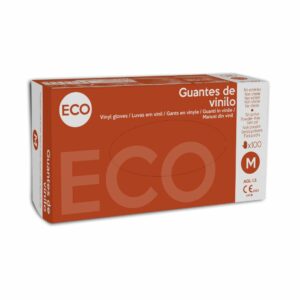
Powder-Free Vinyl Glove Eco Sanyc Size G (Large) – Box of 100 Units for Medical Examination and Laboratory
2,38 € In stockAdd to basket -
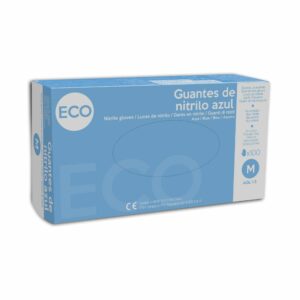
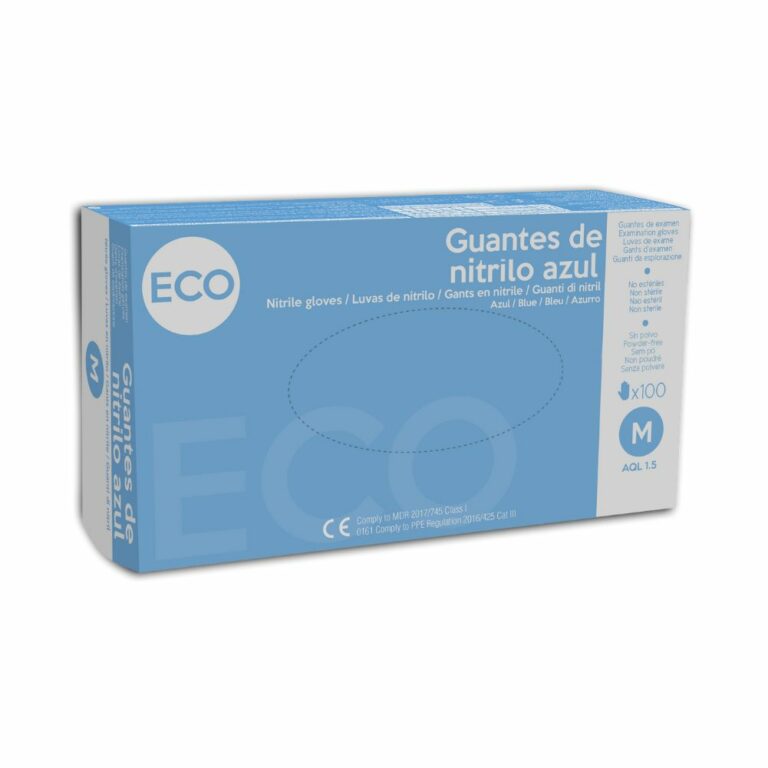
Eco Sanyc Blue Nitrile Examination Glove, Size M – Box of 100 Units, Latex-Free
4,32 € In stockAdd to basket -
Eco Sanyc Powder-Free Vinyl Glove Size P (Small) – Box of 100 Units for Medical Examination and Laboratory
2,38 € In stockAdd to basket -
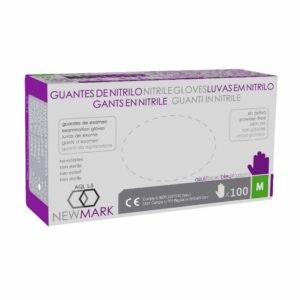
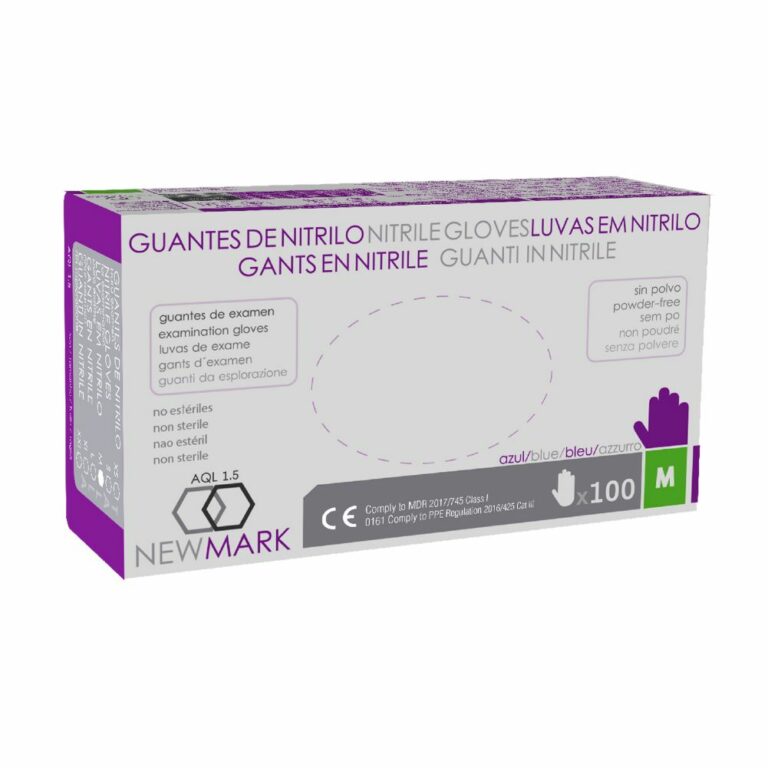
Nitrile Glove New Mark Sensitive Blue Size G (Large) for Medical Examination – Latex-Free and Micro-Textured | Box of 100 Units (Ref. G11002)
6,25 € In stockAdd to basket -
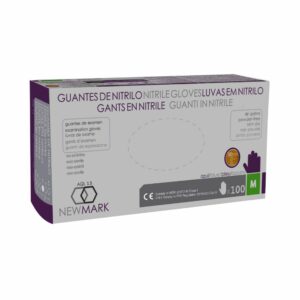
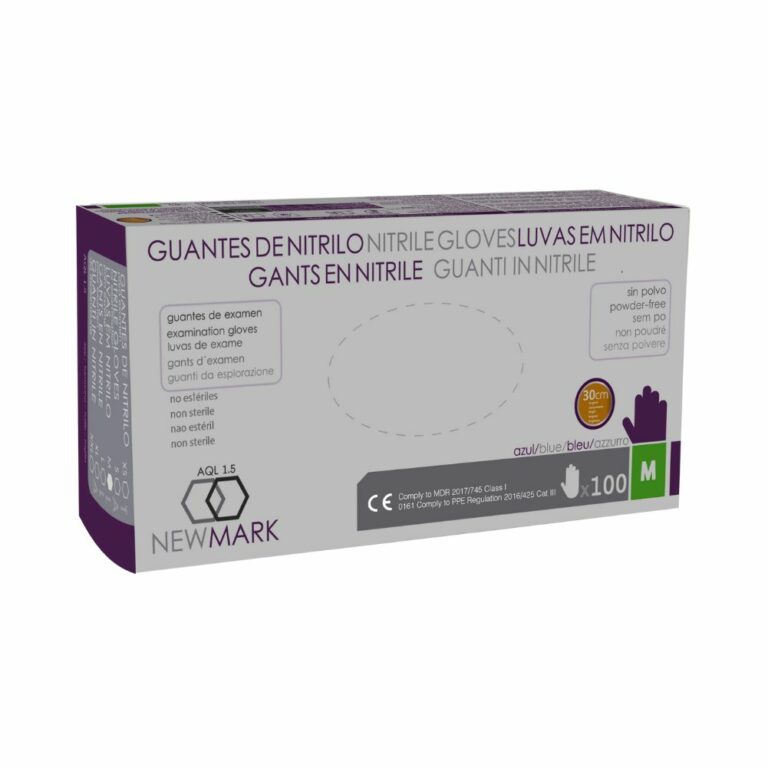
Nitrile Glove New Mark Blue 30 cm Size G (Large) – Box of 100 Units for Medical Examination, Latex-free | Ref. G110021
13,25 € In stockAdd to basket -
Nitrile Glove New Mark Sensitive Blue Size XG (Extra Large) – Box of 100 Units | Ref. G11004
6,25 € In stockAdd to basket -
Nitrile Glove New Mark Blue 30 cm Size XG (Extra Large) – Box of 100 Units for Medical Examination, Latex-free | Ref. G110041
13,25 € In stockAdd to basket -
Eco Sanyc Powder-Free Vinyl Glove Size XL (Extra Large) – Box of 100 Units for Medical Examination and Laboratory
2,38 € In stockAdd to basket
Buying and selection tips
-
Choose the material for the use, not out of habit
In laboratories nitrile is usually prioritised because of its resistance. Vinyl and latex remain alternatives depending on the task. Colour or feel is no substitute for that decision: compare the declared material of each reference.
-
Require AQL 1.5 in accordance with EN 455-1
The European standard for single-use medical gloves sets an AQL of 1.5 for freedom from pinholes. A glove with an AQL of 2.5 under ASTM does not meet EN 455-1 without further testing. Ask for conformity with part 1 of the standard, not just the numerical value.
-
Compare palm and finger thickness, not weight
The weight per glove is not the thickness. To compare two nitrile gloves, look at the millimetres declared at the palm and at the finger.
-
Check accelerators if there is sensitisation
Some latex-free gloves contain vulcanisation accelerators. The statement "accelerator-free" is a useful criterion when several people in the team report irritation.
Compatibility
- Chemical protection glove under EN ISO 374-1
- An examination glove conforming to EN 455 does not demonstrate chemical protection: if the task requires it, check that the product declares the relevant chemical standard.
Frequently asked questions
Which material suits a laboratory that prioritises chemical resistance?
Nitrile is usually prioritised in laboratories, ahead of vinyl and latex. Check the manufacturer's information for each reference.
Does a glove with an AQL of 2.5 under ASTM meet EN 455-1?
No. The European standard requires an AQL of 1.5 for freedom from pinholes, so an AQL of 2.5 under ASTM does not meet EN 455-1 without further testing.
Can a sterile examination glove be used as a surgical glove?
No. A sterile examination glove is not a surgical glove: the anatomical shape, AQL, length and product class differ.
Is the weight per glove enough to compare two nitrile gloves of different brands?
No. Weight is not thickness; you need to compare the millimetres declared at the palm and at the finger.
Common questions
"Latex-free" means hypoallergenic
Not necessarily. A latex-free glove may contain accelerators, so the absence of natural latex does not guarantee skin tolerance.
The weight of the glove is its thickness
The weight per glove is not the thickness. Two gloves with the same weight may have a different distribution of material and a different length.
Polyisoprene is a form of latex
It is a synthetic material and does not contain natural latex protein, although it shares the elasticity and feel of latex. It should not be treated as equivalent.
More products in this guide
-
Eco Sanyc Nitrile Glove Blue Size XP for Medical Examination – Box of 100 Units Latex-Free
4,32 € In stockAdd to basket -
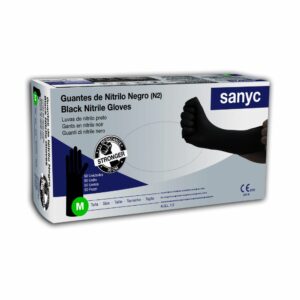
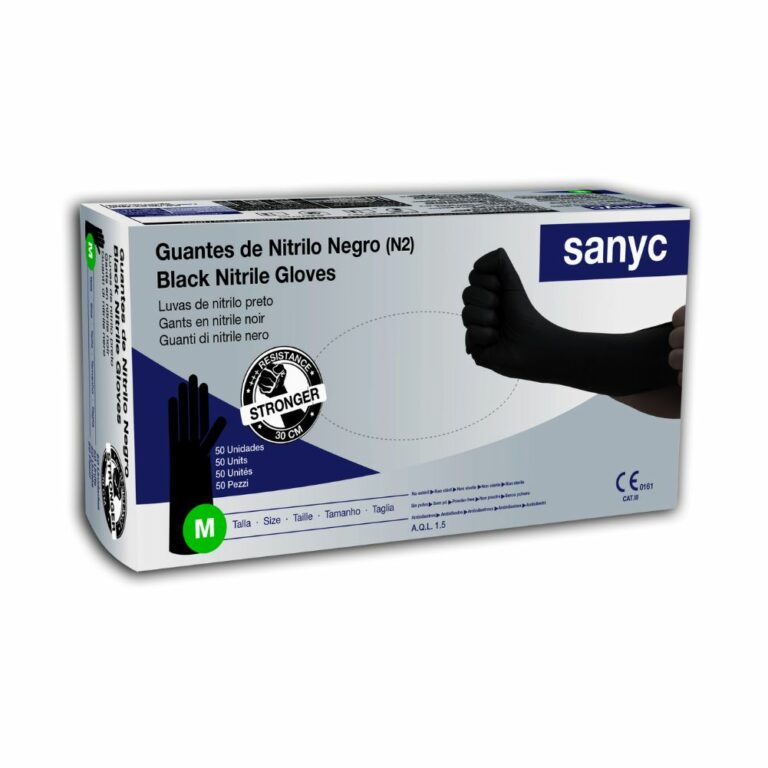
Nitrile Glove Sanic Stronger Black 30 cm Size XXG | Box of 50 Units | Medical Examination
8,08 € In stockAdd to basket -
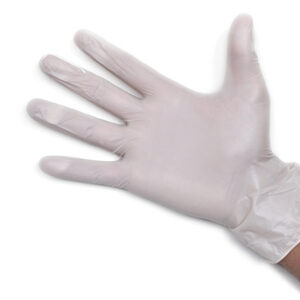
Powder-Free Elasticised Vinyl Gloves Size S (Small) – Dispenser Box of 100 Units
4,47 € In stockSelect options This product has multiple variants. The options may be chosen on the product page -
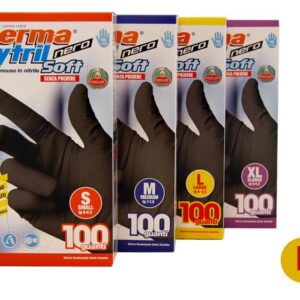
Black Powder-Free Nitrile Gloves for Examination and Protection – Size L (Large), Box of 100 units (Ref. 42573L)
8,40 € In stockAdd to basket -
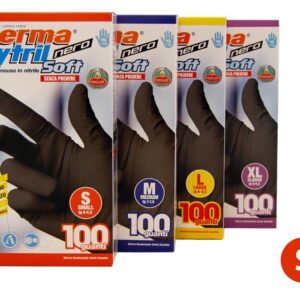
Black Powder-Free Nitrile Gloves for Examination and Protection – Size S, Box of 100 units (Ref. 42573S)
8,40 € In stockAdd to basket