
How to choose an antiseptic
13 products in the catalogue
Antiseptics for external use include solutions and wipes for disinfecting intact skin in professional settings. Several families are available, such as 96° alcohol, 70% isopropyl alcohol, hydrogen peroxide, povidone-iodine and chlorhexidine, each with its own containers and sales unit.
This guide sets out verifiable criteria for comparing products before you place an order: type of antiseptic, stated concentration, container capacity (from 50 ml to 1 litre), wipe or dispenser format and units per box.


Other related families
-
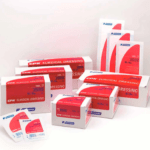 Hydrogen Peroxide
Hydrogen peroxide for external use in 250 ml, 500 ml and 1 litre containers; compare by the concentration each product states and by capacity.
-
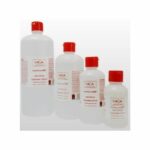 Alcohol
96° alcohol in 250 ml, 500 ml and 1 litre containers; compare by capacity and by the stated composition.
-
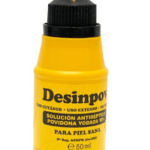 Povidone Iodine
10% povidone-iodine in 50 ml, 125 ml and 500 ml containers; compare by capacity and by units per box.
-
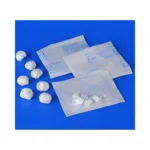 Gauze Swabs and Balls
Ready-to-use wipes and swabs impregnated with 70% isopropyl alcohol; compare by units per box or per dispenser.
Products in this guide
- 1 l 2
- 100 ml 1
- 125 ml 2
- 500 ml 2
- Box OF 12 2
- Box 1
- Box OF 100 1
- Unit 1
-
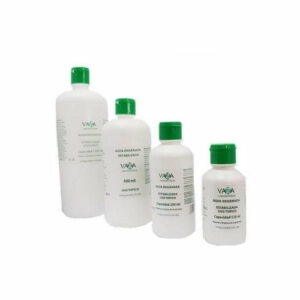
Hydrogen Peroxide 10 Volumes 1 L (Hydrogen Peroxide 3% p/v) – Antiseptic for External Use for Wound Dressings and Disinfection | Ref. 3335935
2,43 € In stockAdd to basket -

Betadine Vaginal 10% Solution 125 ml – Povidone-Iodine 100 mg/ml Gynaecological Antiseptic
13,30 € In stockAdd to basket -
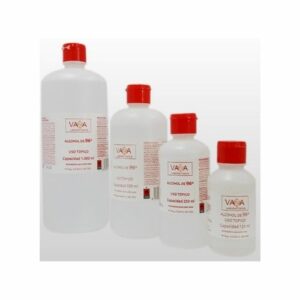
96º Alcohol 1 L (Ethanol 96% v/v + Benzalkonium Chloride) – Antiseptic and Disinfectant for Healthy Skin | Ref. 152924.4
3,50 € In stockAdd to basket -
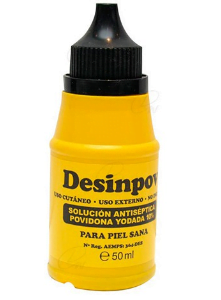
Povidone Solution 10% 50 ml (Povidone Iodine 100 mg/ml) – Cutaneous Antiseptic for Professional Use | Ref. POV22
1,98 € In stockAdd to basket -
Hydrogen Peroxide 6% (10 Volumes) 250 ml – Antiseptic for External Use with Hydrogen Peroxide (H₂O₂) for Wound Dressings, Wound Disinfection and First Aid | Ref. 3335959
0,93 € In stockAdd to basket -
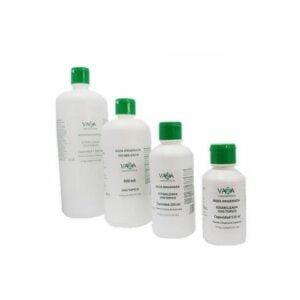
Hydrogen Peroxide 6% (10 Volumes) in a 500 ml Bottle – Hydrogen Peroxide (H₂O₂) Antiseptic for External Use for Wound Dressings and Disinfection | Ref. 3335966
1,50 € In stockAdd to basket -
Povidone Solution 10% 500 ml (Povidone-Iodine 100 mg/ml) – Cutaneous Antiseptic for Professional Use | Ref. POV24
5,24 € In stockAdd to basket -
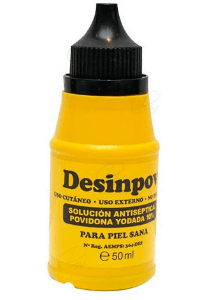
Povidone Solution 10% 125 ml (Povidone-Iodine 100 mg/ml) – Cutaneous Antiseptic for Professional Use | Ref. POV10
2,88 € In stockAdd to basket
Buying and selection tips
-
Settle the type and concentration before comparing containers
The products are not interchangeable: 96° alcohol, 70% isopropyl alcohol, hydrogen peroxide, 10% povidone-iodine and chlorhexidine are different products. Compare first by type and stated concentration, and only then by capacity and box size.
-
Choose the capacity according to the point of use
Containers range from 50 ml to 1 litre depending on the family. Smaller formats suit trolleys and scattered points of use, while 500 ml and 1 litre containers suit store-room replenishment. Count the points of use before fixing the order.
-
Wipes and dispensers versus liquid
Wipes impregnated with 70% isopropyl alcohol are sold in bags or in a dispenser. They change the purchasing unit compared with liquid in a bottle, so it is best to calculate replenishment in units per box.
-
Check the sales unit
Some products are sold individually and others by the box, for example 24 containers. Check both figures so that you do not compare units with different contents.
-
Check the biocide registration
Some products declare biocide registration for human hygiene and others do not. Check that this information is stated for each product before treating it as equivalent to the others.
Frequently asked questions
How do I tell a povidone-iodine from an alcohol when comparing products?
By the product type and the composition given in the product name: povidone-iodine is supplied at 10%, and the alcohol as either 96° or 70% isopropyl. They are different products that do not share containers or sales units.
What capacities are available in 96° alcohol?
It is supplied in 250 ml, 500 ml and 1 litre containers. The choice depends on whether the point of use can take a large refill bottle or needs a more manageable container.
How do I choose between isopropyl alcohol wipes and a liquid antiseptic?
By the format of use and the purchasing unit: wipes are ordered by the bag or dispenser and the liquid by the bottle. They are different products, even though both are presented as skin antiseptics.
What should I check on hydrogen peroxide before grouping products in an order?
That the concentration and the capacity match. The concentration is expressed in volumes and, in some product names, also as a percentage: if the figures for two products do not match, do not treat them as the same product without checking.
Common questions
Treating products of different concentration as equivalent
Even when they are the same type, the stated concentration distinguishes one product from another. Comparing by name or size alone leads to products being mixed up.
Assuming that aqueous and alcoholic chlorhexidine are the same item
They are different products, each with its own composition. The full product name is the information that must appear on the order.
Ordering by capacity without checking the box
The same capacity may be sold individually or in a box of several containers. Check the sales unit before adding up quantities.
More products in this guide
-
Alcohol de 96º 500 ml – Antiseptic and disinfectant for healthy skin (Ethanol 96° + Benzalkonium chloride) | Ref. 152923.7
3,63 € In stockAdd to basket -
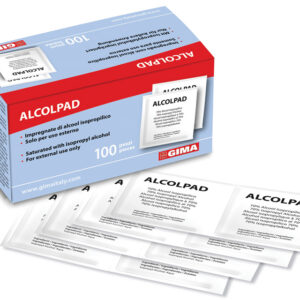
ALCOMED Alcohol Pads – Gauze swabs impregnated with 70% isopropyl alcohol for skin disinfection (Box of 100 units)
Price range: 1,62 € through 120,65 € In stockSelect options This product has multiple variants. The options may be chosen on the product page -
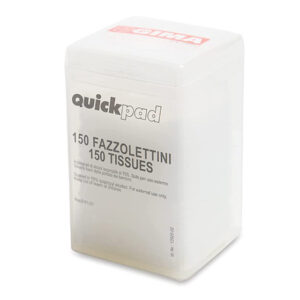
QUICKPAD Dispenser with 150 Wipes of 70% Isopropyl Alcohol for Skin Disinfection | Ref. 36601
8,17 € In stockAdd to basket -
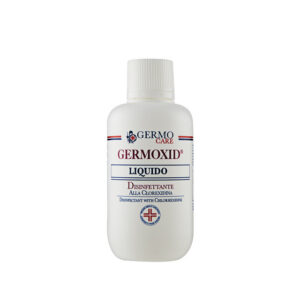
GERMOXID Chlorhexidine Cutaneous Disinfectant – Liquid 250 ml (Box of 12) (Ref. GM36635)
Price range: 25,18 € through 39,43 € In stockSelect options This product has multiple variants. The options may be chosen on the product page -
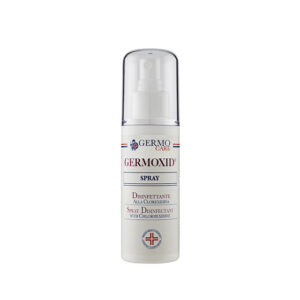
Germoxid Spray Skin Disinfectant with Chlorhexidine 100 ml – Box of 12 units for Professional Use (Ref. 36637)
29,45 € In stockAdd to basket