
Description
1. Introduction
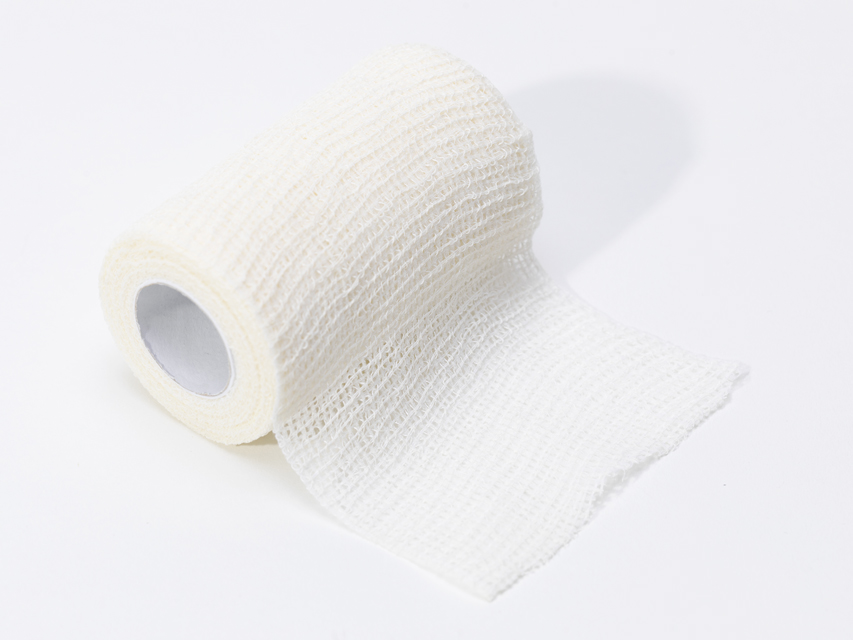
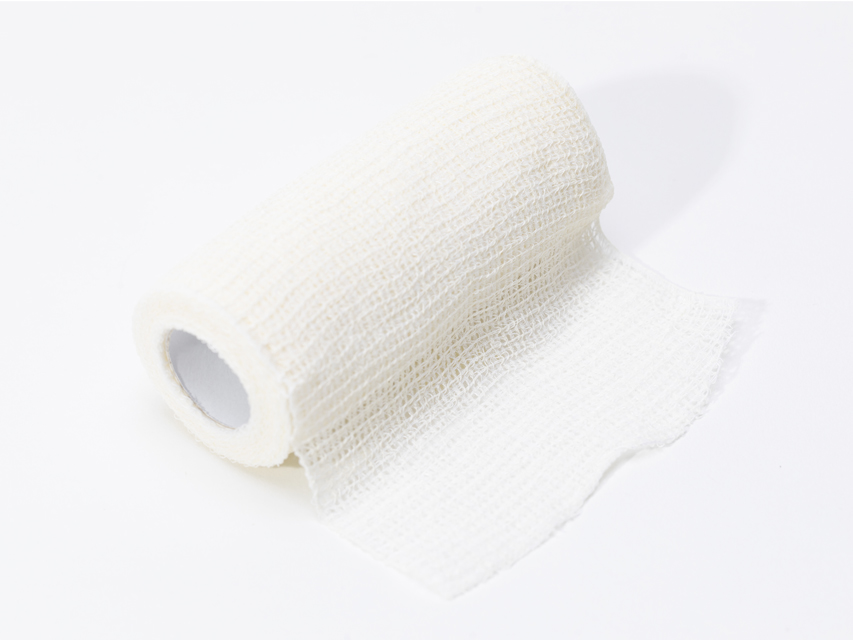
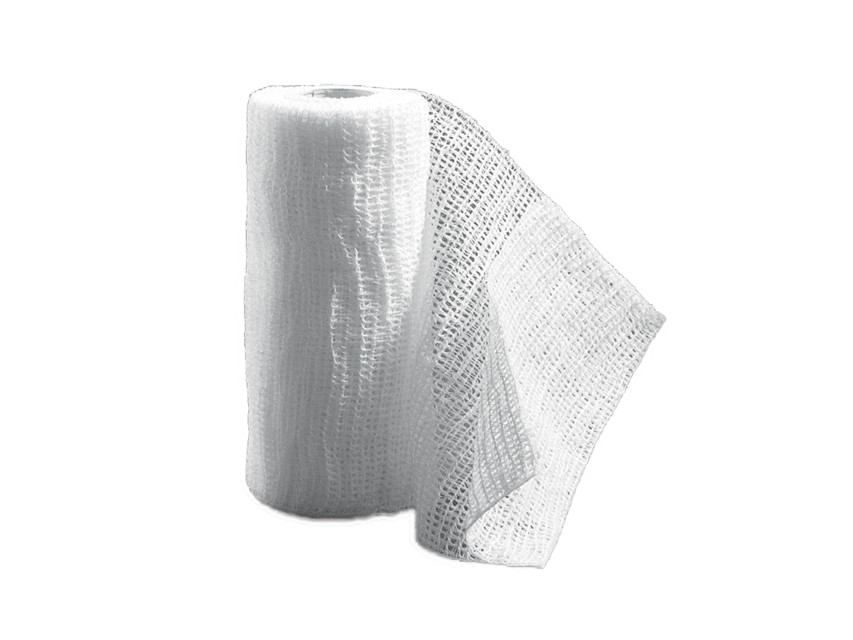
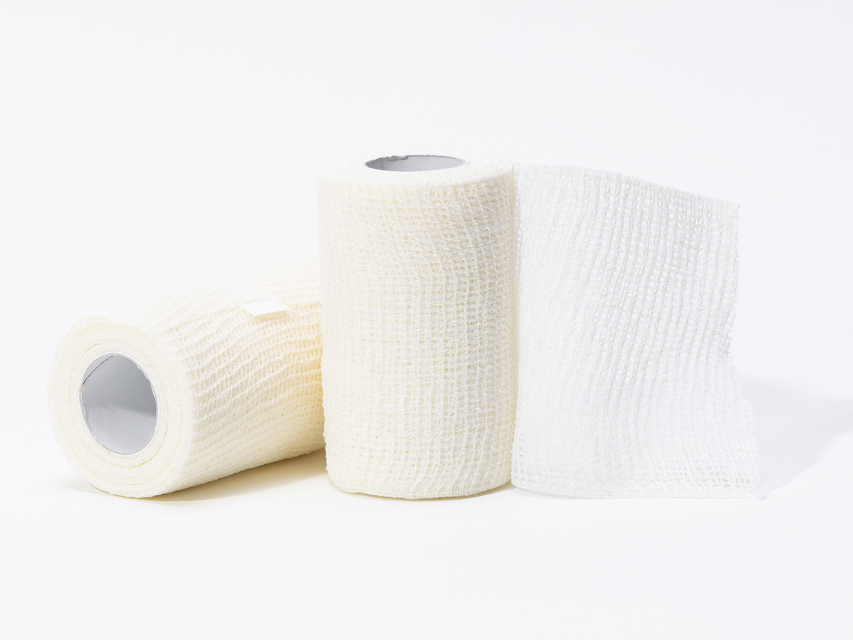
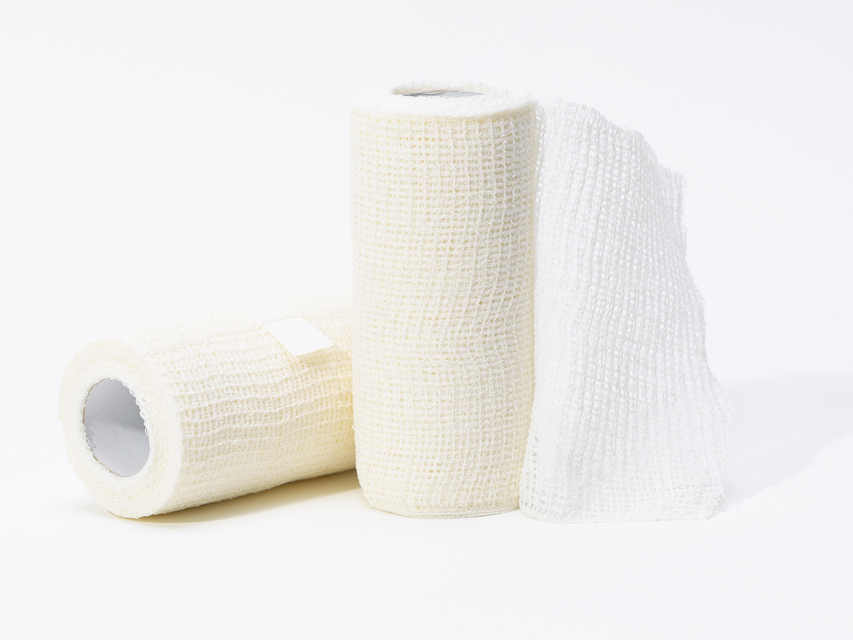
The elastic cohesive bandage is the professional solution for fixing dressings, wound pads and bandages quickly, cleanly and safely, in hospitals and health centres as well as in wound care clinics, emergency departments, physiotherapy and home care. Its self-adherent system eliminates the need for clips, staples or finishing surgical tape, which speeds up the professional’s daily work and reduces material consumption. An essential reference within wound care and bandaging materials, with a wide range of formats to suit each anatomical area and volume of use.
2. Technical explanation
Unlike a conventional adhesive bandage, the cohesive bandage does not have adhesive on the skin: the cohesive mass applied to the fabric makes each turn fix only onto itself when overlapped, without adhering to the skin, hair or clothing. This allows a wrinkle-free, non-slip and breathable bandage, with atraumatic removal and no sticky residue. Its elastic fabric of cotton, viscose and polyamide with latex provides an approximate longitudinal extensibility of 50%, sufficient to adapt to the anatomy of the area, including joints and rounded or conical surfaces, while maintaining firm fixation without compromising peripheral circulation. The indicated measurements (stretched length) correspond to the bandage under tension, as stated in the manufacturer’s technical data sheet.
3. Technical Specifications
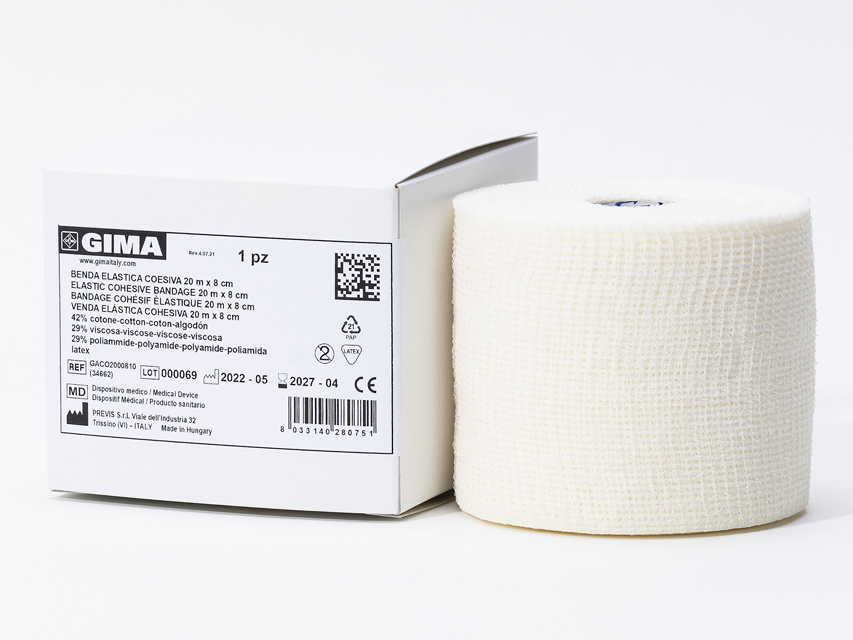
The entire range shares the same composition, cohesive coating, approximate extensibility of 50% and self-adherent fixation system. The variants differ in width and length (measurements under tension):
| GM34657 · Elastic cohesive bandage 4 m x 6 cm | Specification |
|---|---|
| Composition | 42% cotton, 29% viscose, 29% polyamide, latex |
| Width | 6 cm |
| Length | 4 m (under tension / stretched) |
| Extensibility | Approx. 50% |
| Adhesion type | Cohesive; it adheres only to itself, without clips |
| Applications | Fixation of dressings and bandages; support for minor joint fractures |
| Finish | Does not require clips or finishing surgical tape |
Available references
| Reference | Size | Sales unit |
|---|---|---|
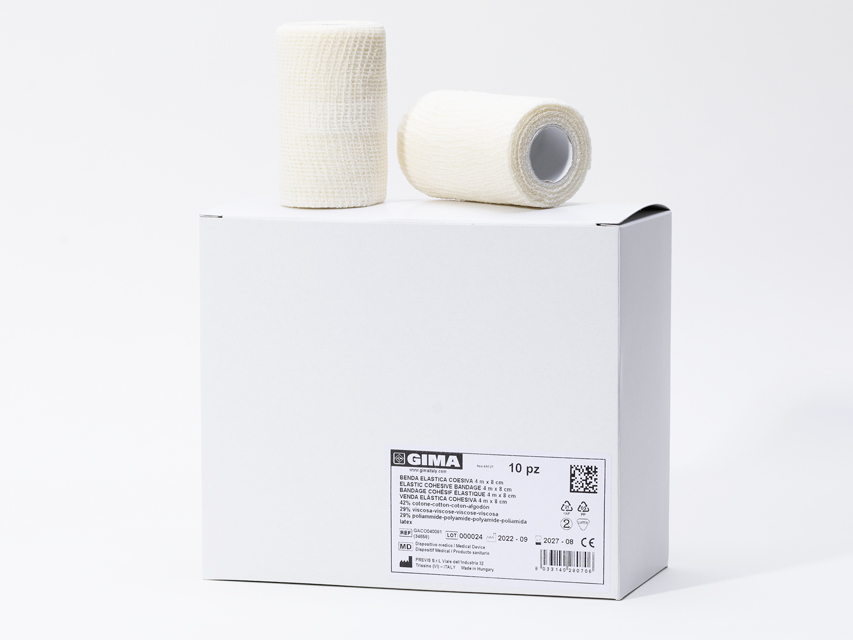
| GM34657 | 4 m x 6 cm | Box of 10 units |
| GM34658 | 4 m x 8 cm | Box of 10 units |
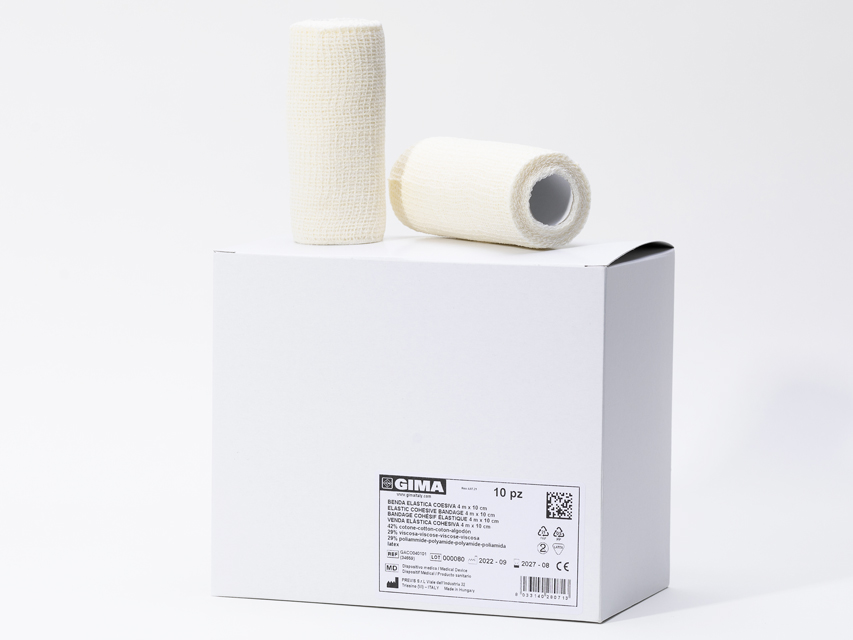
| GM34659 | 4 m x 10 cm | Box of 10 units |
| GM34660 | 4 m x 12 cm | Box of 10 units |
| GM34661 | 20 m x 6 cm | 1 unit |
| GM34662 | 20 m x 8 cm | 1 unit |
| GM34663 | 20 m x 10 cm | 1 unit |
| GM34664 | 20 m x 12 cm | 1 unit |
Product data
| Manufacturer | GIMA |
|---|---|
| Device type | Medical device (Medical device) |
| Device class | I |
| CND | M0303010201 |
| Manufacturer references | 34657, 34658, 34659, 34660, 34661, 34662, 34663, 34664 |
4. Equivalences and Cross-References
There is no equivalence table validated by the manufacturer that cross-references this product with other brands. As counterparts in the same functional category (elastic cohesive bandage with self-adherent fixation), the following ranges are cited for guidance and are comparable by category but not interchangeable 1:1 without technical validation: Peha-haft® from Hartmann, Mollelast® haft from Lohmann & Rauscher and Coban™ from Solventum (formerly 3M). Composition, presence of latex, measurements under tension and presentation should always be checked against the technical data sheet of the target product before any substitution in protocol or tender. For patients with latex allergy, Cahnos offers latex-free elastic cohesive bandages from the GM59201-GM59208 series.
5. Selection tips and variants of interest
Choose the width according to the area to be bandaged: 6 cm (GM34657) for wrists, elbows and small-perimeter extremities; 8 cm (GM34658) for forearm, ankle and medium areas; 10 cm (GM34659) for knees, thighs and large surfaces; and 12 cm (GM34660) for large-volume extremities and trunk. If you work with high clinical consumption or need to restock infrequently, the 20 m rolls (GM34661-GM34664) offer the best performance per unit; the 4 m formats are more manageable for clinics, emergency departments and first-aid kits. Apply the bandage with controlled and progressive tension from distal to proximal, avoid excessive compression that compromises peripheral circulation and do not place it directly over open wounds without a prior dressing. Contact our technical-commercial team for conditions, availability and a personalised quote.
Reviews
There are no reviews yet.