

Description
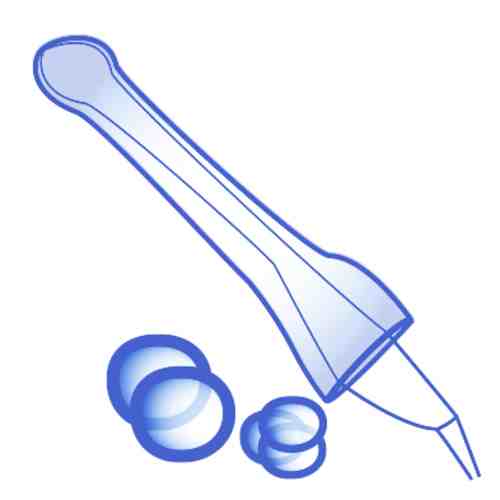
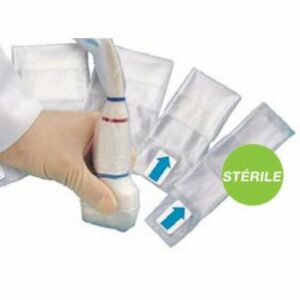
The sterile polyisoprene endocavitary ultrasound sheaths reference ICE28295L are the ideal protection solution for endocavitary ultrasound transducers in gynaecology, urology and proctology practices. Supplied in individual sterile packaging, they guarantee a reliable hygienic barrier in every examination, protecting both the patient and the diagnostic equipment and helping to maintain the highest standards of clinical safety in your centre.
How do these catheter sheaths work?
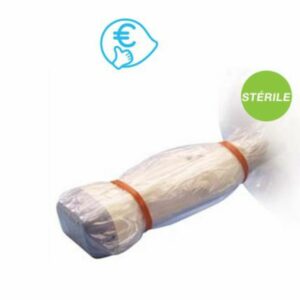
Endocavitary ultrasound imaging uses small transducers that are introduced into body cavities (vaginal, rectal or urethral) to obtain high-resolution images. Due to their direct contact with mucous membranes, it is essential to use a sterile disposable protective sheath to prevent cross-contamination between patients and protect the transducer head. These sheaths, made of latex and polyisoprene, fit elastically over the catheter, ensuring a uniform and comfortable contact without interfering with image quality.
Technical specifications
| Characteristic | Detail |
|---|---|
| Reference | ICE28295L |
| Compatibility | Wide range of endocavitary ultrasound transducers |
| Materials | High-quality latex and polyisoprene |
| Sterility | Sterile, individual packaging ready for use |
| Measurements | 28 x 295 mm |
| Presentation | Box of 200 units |
| Applications | Gynaecology, urology and proctology |
Equivalences and cross-references
This product is part of the Cahnos range of endocavitary sheaths. The equivalent sterile variant in the same size is reference ICE28295P (presentation of 200 units), while the non-sterile version corresponds to references NS-ICE28295L and NS-ICE28295P. For larger catheters, the family offers references ICE33230L and NS-ICE33230L (33 x 195 mm). As a latex-free alternative of medical grade, latex-free polyisoprene sheaths such as PIP Ultra Cover™ may be considered.
Selection tips and variants
To choose the right sheath, always check the diameter and length of your endocavitary transducer. The 28 x 295 mm size is the standard for most vaginal and rectal catheters; for larger catheters, the 33 mm variant is recommended. If you work with patients with latex allergy, consider latex-free options. As this is a single-use product, we recommend calculating monthly consumption to ensure continuous supply in your centre.


Reviews
There are no reviews yet.