
Description
1. Introduction
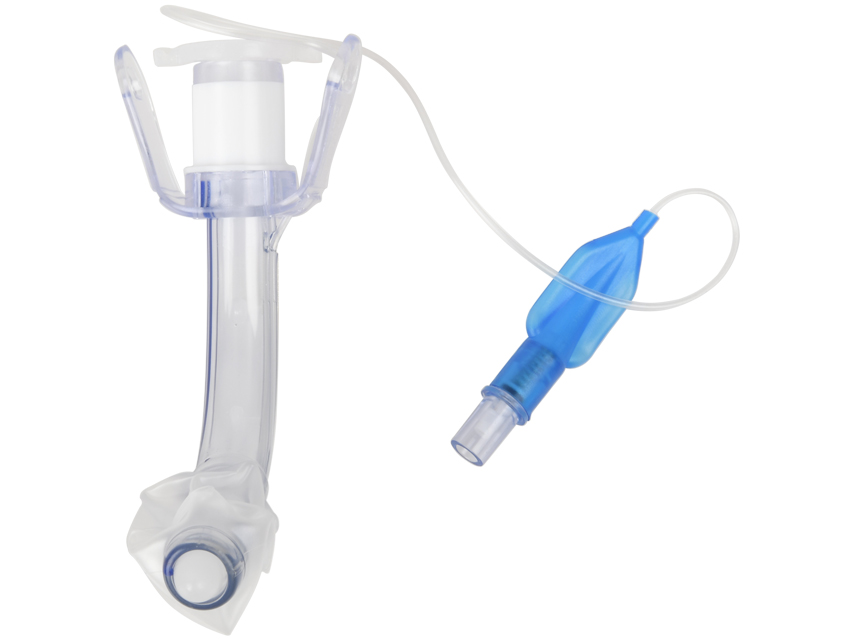
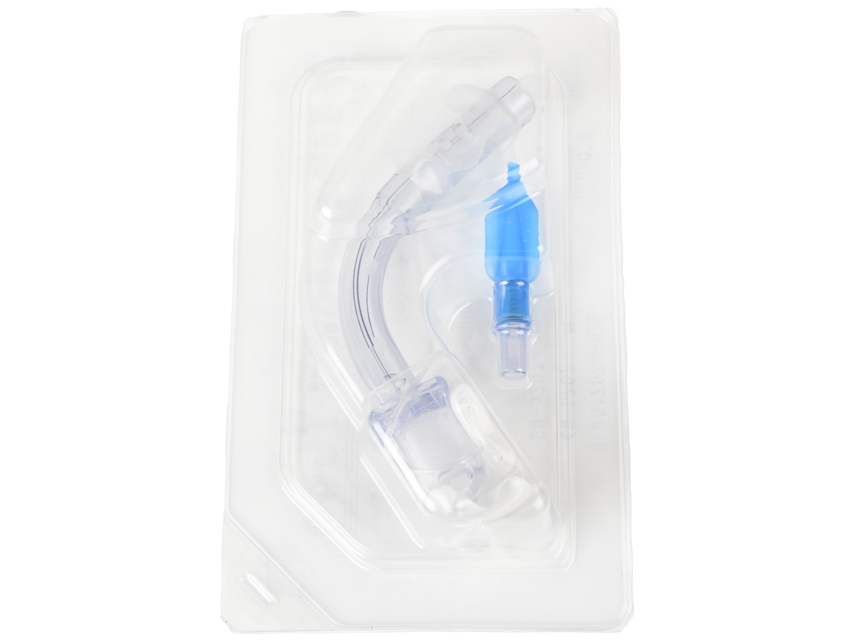
The cuffed tracheostomy cannula of Ø 6.5 mm is the reference solution for ensuring a patent and sealed airway in critically ill patients requiring prolonged mechanical ventilation, as well as in emergency situations where rapid access to the trachea must be obtained. Its manufacture in transparent, non-toxic and kink-resistant medical PVC protects the delicate tracheal mucosa, while its curved design and smooth-tipped obturator facilitate safe insertion with minimal trauma to the patient. It is supplied in a box of 10 sterile, single-use units, designed for the continuous supply of ICU, emergency, anaesthesia and airway units, with full device traceability.
2. Technical explanation of the equipment and procedure
This curved cannula is designed to restore a functional airway in seconds in emergency situations, by inserting it directly through the tracheostomy stoma, the surgically created opening in the neck and trachea. The hollow tube, with or without a cuff depending on the configuration, is placed directly into the trachea through the surgical incision using the progressive wire-guided dilatation technique.
The high-volume, low-pressure cuff provides an effective airway seal with reduced contact pressure, minimising the risk of ischaemic mucosal injury. Its soft, thin wall promotes an airtight seal and atraumatic intubation and extubation. The integrated one-way valve allows easy inflation and deflation of the cuff via the pilot balloon. The radiopaque line and the cervical plate with the printed size facilitate radiographic verification of position and immediate identification of the calibre.
3. Technical Specifications
Main features of the tube:
- Medical-grade PVC tube, non-toxic, transparent and kink-resistant, to protect delicate mucosal tissue.
- Smooth, rounded obturator tip that reduces trauma during insertion.
- Cervical plate with printed size for quick and easy identification.
- Standard connector compatible with the breathing circuit.
- Radiopaque line that helps determine the exact position of the tube.
The tube includes: cuff, inflation line, valve, pilot balloon, obturator, cervical plate, connector and fixation tapes. Sterile, single-patient use. Class IIa. DEHP-free. Manufactured without natural rubber or latex.
Specific advantages of the cuffed version:
- High-volume, low-pressure cuff that provides an effective seal at low pressure.
- Soft, thin-walled cuff that ensures an effective seal with atraumatic intubation and extubation.
- Efficient one-way valve for inflation and deflation of the cuff.
Product data
| Manufacturer | GIMA |
|---|---|
| Manufacturer reference | 57680 |
| Diameter | 6.5 mm (Ø) |
| Sales unit | Box of 10 units |
| Device type | Medical device |
| Device class | II A |
| CND | R0105020102 |
| EAN | 6972091921257 |
4. Equivalences and Cross-References
Reference 57680 corresponds to the cuffed tracheostomy cannula of Ø 6.5 mm from the Product_DB catalogue. As of today, there is no exact equivalence table validated by the manufacturer that allows cross-referencing this reference 1:1 with specific codes from other suppliers; any commercial equivalence must be checked against the official technical data sheet of each manufacturer before use in tenders or stock replacement protocols. At category level, low-pressure cuffed tracheostomy tubes from lines such as TRACOE and SUMI, or the tubes from the percutaneous kits of the Portex/ICU Medical family (Blue Line Ultra), respond to the same general clinical indication, although they differ in geometry, materials and presentation. For the guided replacement of this cannula, Cahnos offers tracheostomy cannula exchange guides using the Seldinger technique with ventilation and oxygenation (Ref. GSC06400 for cannulas with an internal diameter of 7.0 mm and Ref. GSC07400 for cannulas with an internal diameter of 8.0 mm). Consult the technical department of Cahnos for the approval of references.
5. Selection tips and variants of interest
The Ø 6.5 mm size is a transitional size suitable for adolescents and small-framed adults or those with a narrow airway; the final choice of diameter should always be based on the patient’s anatomy, departmental protocol and clinical assessment. In the cuffed version, keep the balloon inflation pressure within the usual clinical practice range (20–30 cmH₂O), monitoring with a manometer if the department has one available, to minimise damage to the tracheal mucosa. Before each use, check the integrity of the cuff, the pilot balloon and the patency of the lumen, as well as the expiry date of the sterile packaging; the device is for single-patient use and must be disposed of after use as clinical waste in accordance with local regulations. For positive-pressure ventilation and airway protection in tracheostomised patients, this cuffed version is the appropriate option; in patients with stable spontaneous ventilation, the uncuffed configuration may be considered. The products are supplied; contact our technical-commercial team for volume terms and hospital supply lead times. For large orders, you may request a quote.
Reviews
There are no reviews yet.