
Description
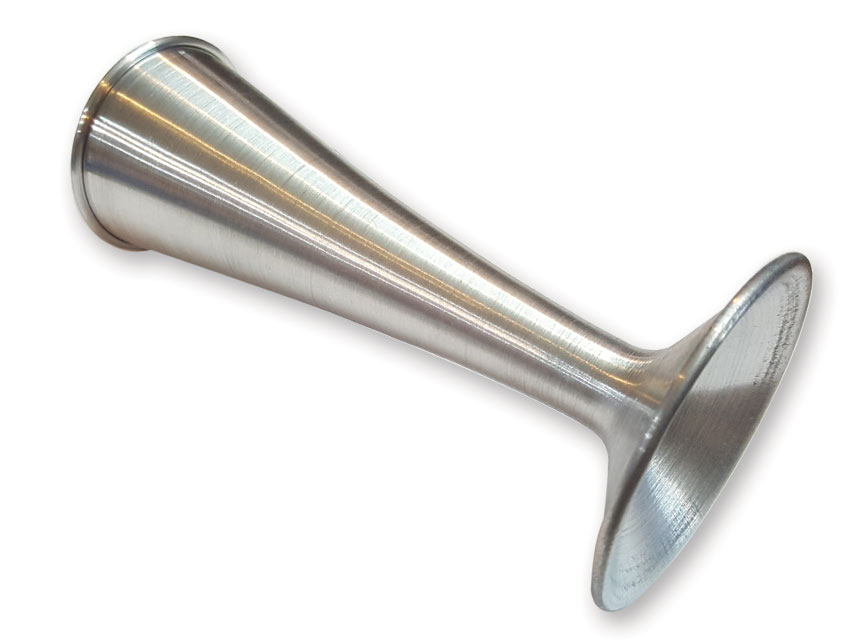
Aluminium Pinard stethoscope: reliable, lightweight, electronics-free fetal auscultation
The aluminium Pinard stethoscope is the classic tool for auscultating the fetal heartbeat in obstetric consultations, antenatal care and labour assistance. Its monoaural trumpet-shaped design, made of aluminium, makes it extremely lightweight, easy to handle and pleasant against the skin, making it the usual choice for midwives, obstetricians and nursing staff who value a passive, durable instrument that does not depend on batteries or electronic technology. It is a reusable product, requiring minimal maintenance and suitable for everyday professional use.
Technical explanation of the instrument
The Pinard stethoscope works like an acoustic trumpet: the wide, hollow bell is placed firmly on the maternal abdomen, picks up the vibrations generated by the fetal heartbeat and conducts them through the aluminium body to the flat end that the professional places against their ear. As it is a passive mechanical transmission system, it does not amplify the signal electronically, but it offers very clear and, above all, directional sound transmission: the heartbeat is heard at maximum intensity only when the bell is very close to the cardiac focus, allowing the fetal position and the baby’s back to be located with great precision. The normal fetal heart rate is around 110-160 beats per minute; with practice, the professional can distinguish the fetal rhythm from placental noise and maternal sounds. As it requires no electrical contact or transducers, the Pinard is silent, interference-free and requires minimal maintenance, remaining fully relevant alongside electronic monitoring systems.
Technical specifications
| Manufacturer | GIMA |
|---|---|
| Sales unit | 1 pc (1 unit) |
| Device type | Medical device (Medical device) |
| Device class | I |
| CND | U1099 |
| GMDN | 32659 |
| EAN | 8023279325058 |
| Instrument type | Monoaural obstetric Pinard-type stethoscope (fetoscope) |
|---|---|
| Material | Aluminium |
| Total length | Approximately 13 cm |
| Operating principle | Passive acoustic amplification (acoustic trumpet), without electronics |
| Indication for use | Auscultation of the fetal heart rate in antenatal care and labour assistance |
| Power supply | None (100 % mechanical; no batteries, gel or calibration required) |
| Type of use | Reusable, multiple uses |
| Presentation | Unit |
Equivalences and cross-references
For this type of obstetric stethoscope there is no official table of 1:1 cross-equivalences published by manufacturers. The following references are therefore classified as comparable by category, not 1:1 interchangeable, and differences in material, length, diameter and finish must always be checked against the original technical data sheet before use in tender specifications or tenders.
| Manufacturer / Brand | Family / Model | Reference code | Equivalence level | Observations |
|---|---|---|---|---|
| Riester | Pinard Stethoscope | 4191 | Comparable by category | Lightweight aluminium version, same type of monoaural obstetric fetoscope. |
| Spengler Medical (Holtex) | Pinard Stethoscope Wood | IS07602 | Comparable by category | Wooden format, 15 cm, monaural obstetric; CE marking class I. |
| KaWe | Pinard-Stethoskop, grande | 06.46133.001 | Comparable by category | Beech wood, Ø 46 mm, approx. 33 cm, Dutch model. |
| Sklar | Pinard Stethoscope Wood | 06-1105 | Comparable by category | Wood, 7 inches; registered in GUDID/FDA as a Class I fetal stethoscope. |
Remember: material and dimensions are decisive in this family, and each manufacturer uses its own nomenclature; substitution must always be validated against the original technical data sheet. Consult our technical-commercial department before using these references as an equivalence in tender specifications or tenders.
Selection tips and variants of interest
- Technique of use: place the wide bell firmly on the maternal abdomen, tilt the instrument slightly and place the flat end against the ear; the heartbeat is heard clearly only when the bell is very close to the cardiac focus, which helps to confirm the fetal presentation and position.
- Aluminium vs wood: the aluminium version is lighter, more hygienic and easier to clean between patients, and is especially suitable for practices with high patient turnover. The manufacturer offers wooden and aluminium stethoscopes in the same family; the wooden format retains the traditional finish and is preferred in training and classic obstetric settings.
- Pinard or Doppler? If you need to confirm the heartbeat in a quick consultation at minimal cost and without maintenance, the Pinard is the classic choice. If you also need to visualise the fetal heart rate or obtain a record, consider an electronic fetal Doppler; in hospital practice both coexist.
- Maintenance: clean the surface with a slightly damp cloth and dry it immediately; store it in a dry place. Do not immerse it in liquids or expose it to heat sources or direct sunlight to avoid deformation.
For tenders and purchasing groups, ask our technical-commercial department to validate the reference against the technical data sheet and conformity documentation before formalising tender specifications.


Reviews
There are no reviews yet.