

Description
1. Paediatric silicone-coated latex Foley catheter CH 08
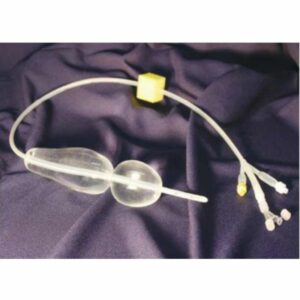
The Paediatric Latex Foley Catheter CH 08 with 3 ml balloon and 30 cm length (ref. 661008) is a single-use retention urinary catheter, manufactured from medical-grade latex with a silicone coating. It is specifically indicated for urinary drainage in paediatric patients, offering a reliable, safe and economical option for paediatrics, urology, surgery, intensive care and paediatric post-surgical care. Its reduced calibre and adapted length make it the ideal choice to ensure the well-being and comfort of the youngest patients during medical procedures.
2. Technical explanation of the device
The Foley catheter is a retention urinary catheter that is inserted through the urethra into the bladder. This two-way model integrates two independent channels in the same body: a main drainage channel through which urine flows into the collection bag and a secondary inflation channel connected to the 3 ml retention balloon. Once the catheter is placed and the bladder position is confirmed, the balloon is filled with sterile water or physiological saline, anchoring the catheter and preventing accidental displacement during treatment.
The silicone coating on the latex reduces friction on the paediatric urethral mucosa, minimises the risk of irritation and encrustation and facilitates comfortable and atraumatic insertion. The CH 08 (8 Fr) calibre offers an approximate external diameter of 2.7 mm, suitable for the paediatric urethra, maintaining effective and controlled urinary drainage with maximum comfort.
3. Technical Specifications
| Catheter type | Silicone-coated latex Foley catheter, two-way |
| Material | High-quality latex with silicone coating (siliconised latex) |
| Size or calibre | CH 08 (8 Fr / Charrière-French scale; external diameter approx. 2.7 mm) |
| Balloon capacity | 3 ml |
| Length | 30 cm |
| Application | Paediatric urinary drainage in medical procedures |
| Advantage | Easy, safe insertion adapted to paediatric patients |
| Number of ways | 2 (urinary drainage + balloon inflation) |
| Intended use | Short-term paediatric bladder urinary drainage |
| Sterility | Sterile, single-use, individually packaged |
| Presentation | Box of 10 units |
| Reference | 661008 |
Range of calibres in the paediatric silicone-coated latex series with 3 ml balloon and 30 cm length:
| Reference | Gauge | Cuff | Length |
| 661006 | CH 06 | 3 ml | 30 cm |
| 661008 | CH 08 | 3 ml | 30 cm |
| 661010 | CH 10 | 3 ml | 30 cm |
4. Equivalences and Cross-References
By specifications (CH 08 calibre, 3 ml balloon, two-way and silicone-coated latex), this catheter is comparable and interchangeable with 8 Fr paediatric silicone-coated latex Foley catheters from manufacturers such as Rüsch/Teleflex, Bard (BD group), Coloplast or B. Braun, without the need to modify the placement protocol or connection accessories. The Charrière (CH) scale is directly equivalent to the French (Fr) scale, so the CH 08 calibre is interchangeable with any approved 8 Fr Foley catheter, always verifying balloon, length and material.
Within the Cahnos catalogue, the same paediatric silicone-coated latex series is available in CH 06 (ref. 661006) and CH 10 (ref. 661010) calibres. For patients with latex allergy or medium-term catheterisation, the 100% paediatric silicone range is recommended (ref. 641008 in CH 08). For adult or adolescent patients with a larger urethra, the two-way Nelaton series with 5-10 ml balloon (ref. 662012 in CH 12) may be considered, allowing all bladder drainage cases to be covered with a single supplier.
5. Selection tips and variants of interest
Always select the smallest calibre that ensures adequate drainage under medical criteria: CH 06 is reserved for infants and neonates, CH 08 for young children and CH 10 for older children or when a slightly higher drainage flow rate is required, maintaining maximum comfort in all cases. The 3 ml balloon is the standard bladder fixation capacity in paediatrics, offering a low-volume profile.
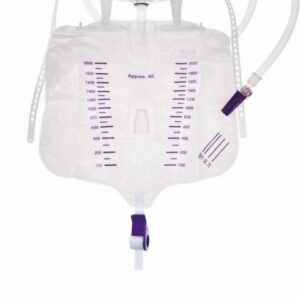
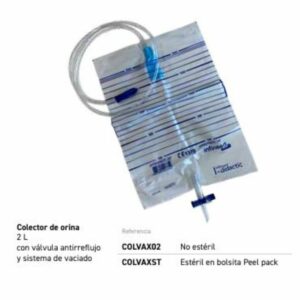
Inflate the balloon only after confirming correct bladder placement, with the recommended volume of sterile water or physiological saline, and use compatible water-soluble lubricant and aseptic technique. Connect the collection bag with a closed system to minimise the risk of catheter-associated urinary tract infection and check the integrity of the sterile packaging before each use. To complete the drainage system, we recommend combining this catheter with our urine collection bags. Contact our technical-commercial team for special volume purchase conditions for hospitals and purchasing groups.
Reviews
There are no reviews yet.