
Unit-dose medication trolleys: buying guide
13 products in the catalogue
A unit-dose medication trolley is a wheeled piece of furniture designed for distributing individualised medication for each patient in hospital settings. Its function is to take each patient's prepared dose to the room or nursing unit, keeping it organised, identified and protected during the round of the ward.
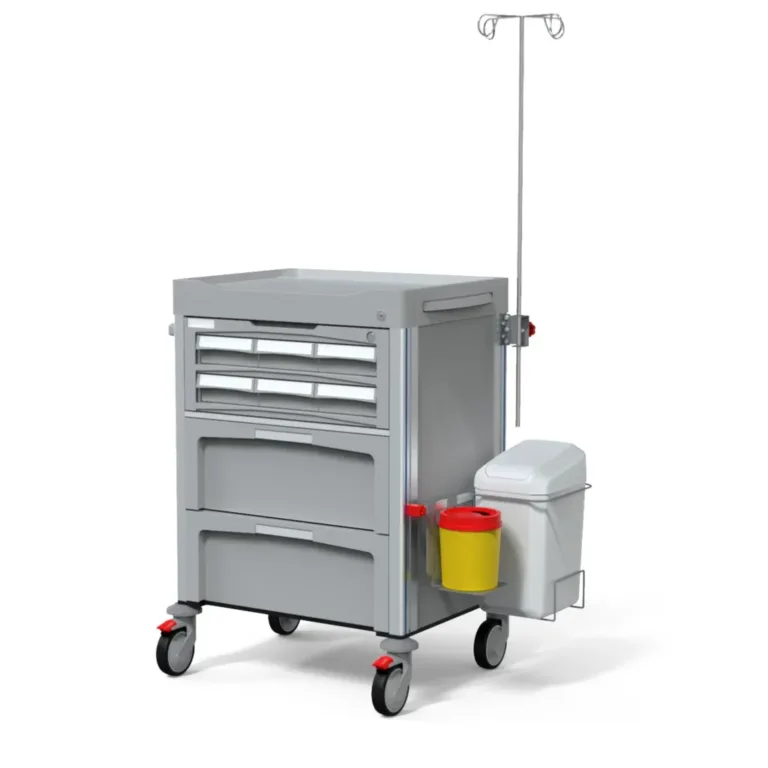
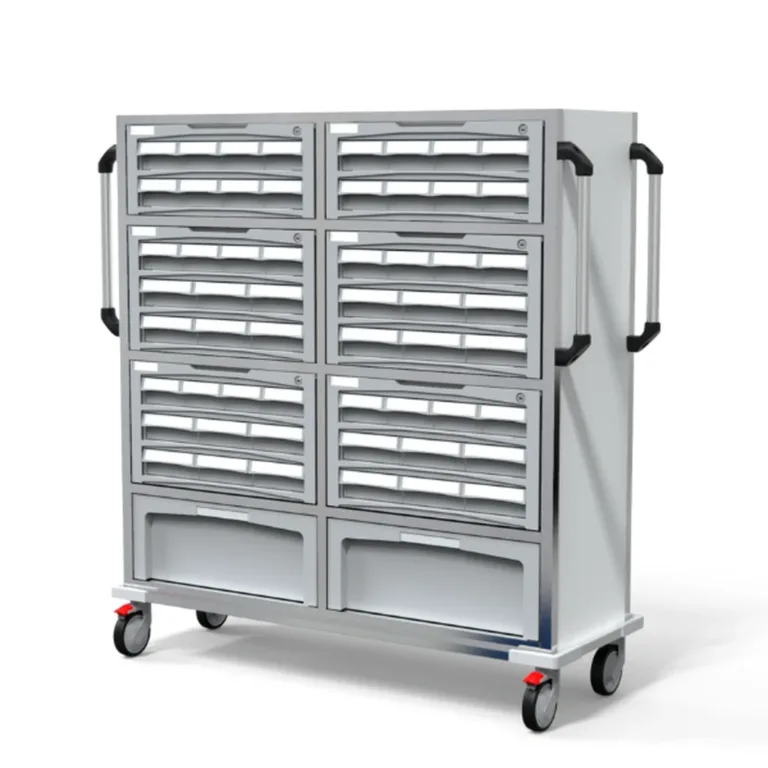
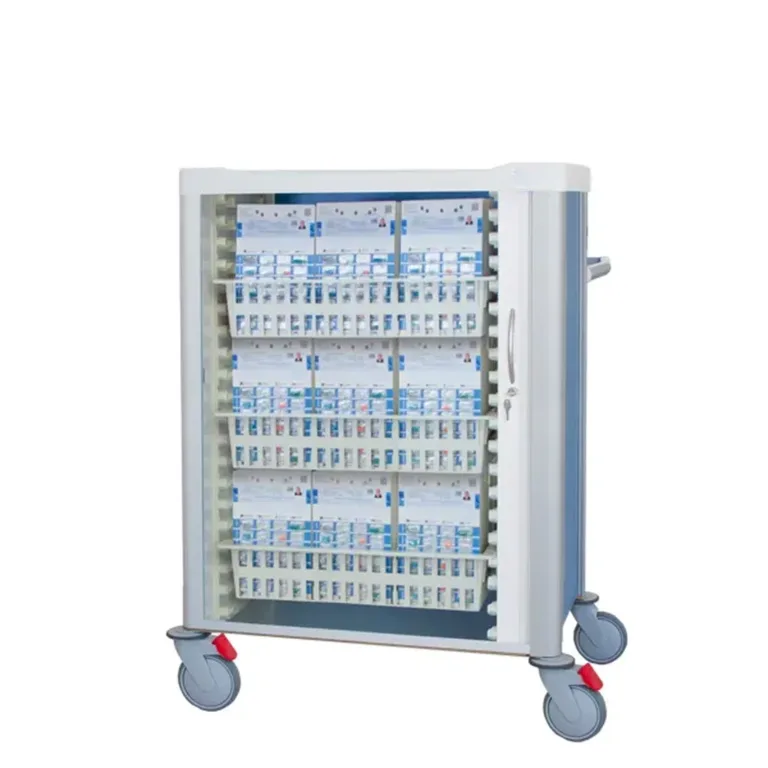
Depending on the model, the dispensing block is made up of modular cassettes or drawers, with an upper work surface and auxiliary drawers. The purchasing decision is made on four fronts: how many patients the trolley must cover, which drawer configuration suits the items being carried, how the medication is locked and identified, and which side accessories the professional needs. Mobility, with wheels, brakes and a push handle, affects day-to-day use as much as capacity does.

Other related families
-
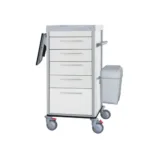 MEDICAL TROLLEYS
Groups the wheeled clinical furniture in which this type of trolley belongs, and serves as the starting point for the comparison.
-
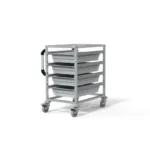 Hospital Trolleys
Brings together ward trolleys and medication distribution trolleys.
-
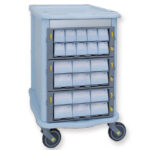 SPD Medication Trolleys
Of interest to buyers who are considering dose dispensing systems and want to compare alternative central blocks.
-
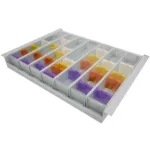 Weekly medication trays
Useful when dispensing is organised by weekly trays rather than by patient cassettes.
Products in this guide
- ABS 4
- Aluminium 4
- Stainless steel 2
- Medical device 3
- Non-medical 2
-
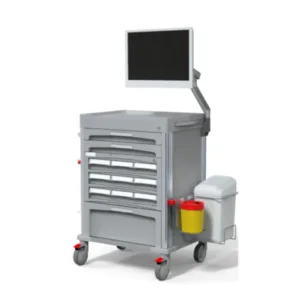
Computerised Single-Dose Medication Trolley with 20″ IP65 Touchscreen | Hospital Trolley Ready for Digitalisation (Ref. CMLP-F-DNOVMED)
In stockRequest a quote -
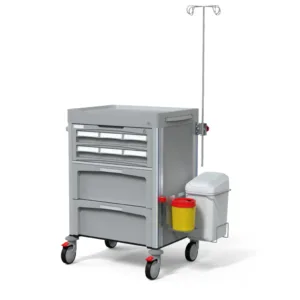
Unit-dose cassette medication trolley | Hospital unit-dose dispensing trolley with cassettes ISO 600×400, roller shutter door and lock with key (Ref. CMLP-F-DNOVMED-C)
In stock🚚 Bulky deliveryRequest a quote -
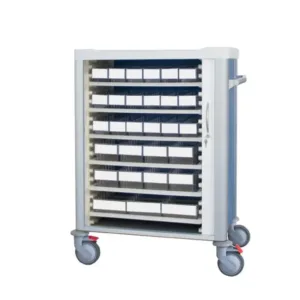
Unit-dose medication cart with bins CMLP-F-C-6040-CUB | Unit-dose cart with bins ISO 600×400, roller shutter door and key lock
In stockRequest a quote -
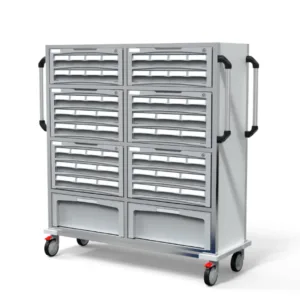
Hospital Nurse Cart for Unit-Dose Medication Distribution with Demountable Bags and Cassettes | Ref. CMLP-F-C-NOD
In stock🚚 Bulky deliveryRequest a quote -
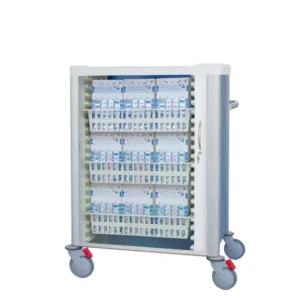
SPD Unit-Dose Medication Blister Cart | Storage and transport of 42 weekly blisters with ABS/PC top, height-adjustable handle and wheels with brake (Ref. CMLP-F-C-6040-BL)
In stockRequest a quote -
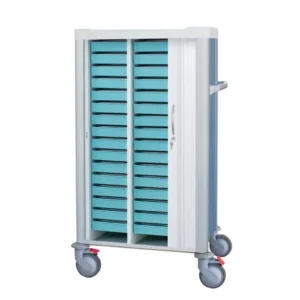
Unit-dose medication cart with weekly tray CMLP-F-C-332 with 32 trays, PVC shutter and key lock | Hospital cart for weekly medication dispensing
In stockRequest a quote -
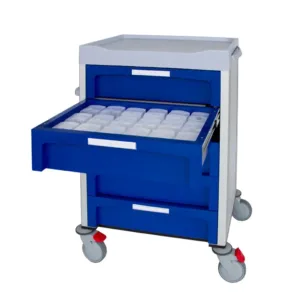
Drawer medication trolley for SPD dispensing boxes | SPD trolley with 5 drawers ISO 600×400, 110% telescopic runners and label holders (Ref. CMLP-F-DNOV-0-5-0-RBT)
In stock🚚 Bulky deliveryRequest a quote -
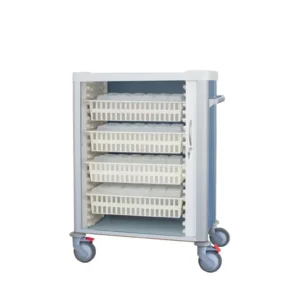
Medication trolley with trays for SPD dispensing boxes | SPD trolley with removable trays ISO 6040, roller shutter door and key lock (Ref. CMLP-F-C-6040-SPD)
In stockRequest a quote
Buying and selection tips
-
Define the drawer configuration by height
In some models the drawers are offered in three heights (75, 155 and 235 mm), with a 25 kg load per drawer and a 600 × 400 mm format according to ISO 3394. Check that the chosen combination suits the items being carried: low volume, blister-packed medication or larger packages.
-
Decide between modular cassette and drawers
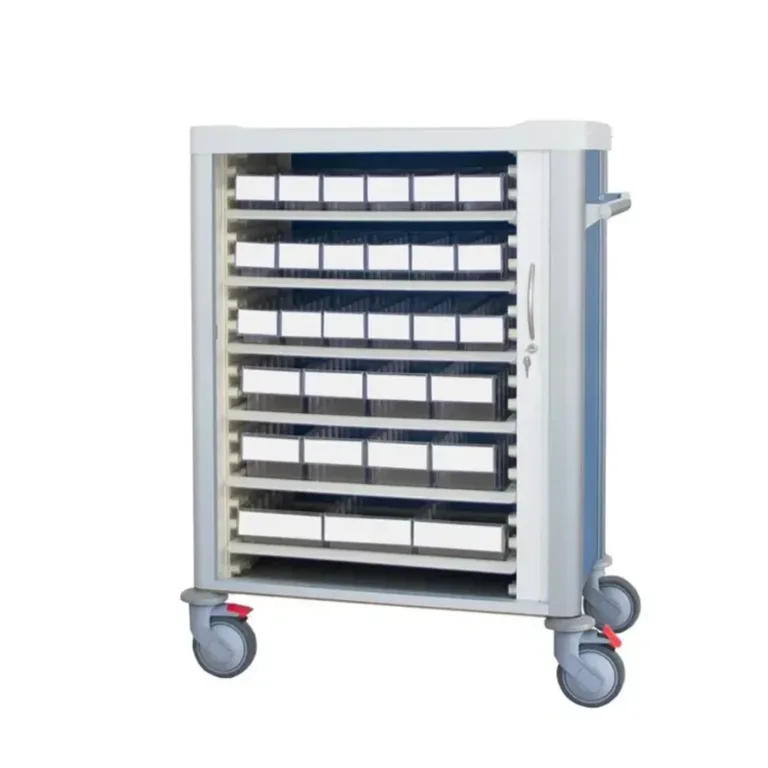
The dispensing block can be made up of removable modular cassettes, with a front label holder and key lock, or of conventional drawers. If the pharmacy pathway works with cassettes, check that the trolley allows them to be removed and replaced without additional tools.
-
Calculate patient coverage per cassette
In some models a four-level cassette with four 12 cm-wide compartments per level covers 16 patients, and a three-level one covers 12. Coverage does not depend on the number of drawers, but on the compartments per level.
-
Adjust the overall height and the auxiliary drawers
Some models are offered in overall heights of 104 and 117 cm, and the difference is concentrated in the auxiliary drawers. If you carry IV fluids, dressing sets or bulky items, the split between upper and lower drawers matters more than the overall height.
-
Require locking and identification
Medication must travel locked and identified: in some models the cassettes lock with a single key and have a front label holder, and the ISO drawers have an interchangeable label holder. Consider whether that locking is enough for your pathway or whether you need additional access control.
-
Check mobility
Check the wheels, brakes and push handle. Some models have 125 mm wheels with brakes on two of them and an upper surface with raised edges that stop liquids and objects from falling.
Compatibility
- Side rail for accessories
- This is the anchor point for the waste bin, glove box holder and sharps containers. Check which accessories each model accepts.
- Removable side tray
- In some models it attaches to the body of the trolley without tools to extend the preparation and dispensing surface.
- Telescopic drip stand
- It mounts on the top of the trolley and is height-adjustable; check that it does not interfere with the other accessories mounted on the side bar.
Frequently asked questions
How many patients does a four-level cassette with 12 cm compartments cover?
In some models it covers 16 patients: four levels with four 12 cm-wide compartments per level. Each compartment includes two dividers and a cover as standard.
What changes between a 104 cm trolley and a 117 cm one?
Mainly the split of the auxiliary drawers, which are taller in the 117 cm model. Check the upper and lower split against the items you will be carrying.
Can the drawers be removed without tools?
In some models they can: the drawers rest on an ISO frame with full-extension telescopic runners and quiet self-closing, and are removed without tools. Confirm this on the chosen model.
Which side accessories should I plan for with the trolley?
Depending on the model, an adjustable ergonomic push handle, a side accessory bar, glove holder, waste bin, side tray, removable side table and drip stand. Confirm which ones mount on the side bar.
How is the medication protected while being moved around the ward?
In some models the cassettes lock with a single key and the trays carry identification labels; the upper surface has raised edges that stop liquids and objects from falling, and the wheels include a brake.
Common questions
Supposing that more drawers means more patients covered
Coverage depends on the compartments per level, not on the number of drawers. In some models a four-level cassette with four 12 cm compartments covers 16 patients and a three-level one covers 12, even if the trolley also has auxiliary drawers.
Believing that the side tray and the waste bin share the same side
In some models the removable side tray is on the opposite side to the waste bin so as not to interfere with waste collection. Check the position before defining the configuration.
Assuming that the glove holder fits at any point
Accessories mount on the side rail. Check the fixing point of each accessory before considering the configuration final.
More products in this guide
-
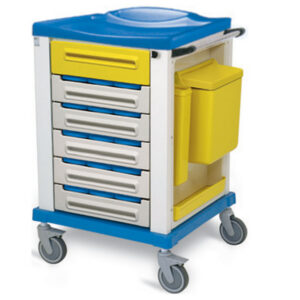
Pharmacy Trolley with Drawers for Unit-Dose Medication – Compact Model 67x64x100 cm (Ref. GM27494)
Price range: 2.764,50 € through 4.702,50 € In stock🚚 Bulky deliverySelect options This product has multiple variants. The options may be chosen on the product page -
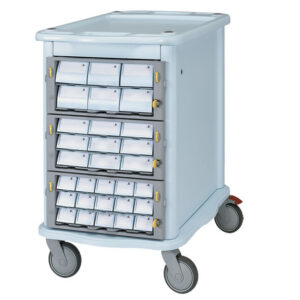
Double-Sided Pharmacy Trolley – 3 Large Drawers + 30 Single-Dose Cassettes (Ref. 27499) | Unit-Dose Medication Trolley with Locking System
4.607,50 € In stockAdd to basket -
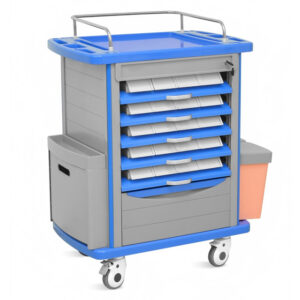
NEO Double-Sided Medication Trolley with 10 Drawers, Steel and Aluminium Structure and Antibacterial Surface | Ref. 45725 | 75x48x92 cm
997,50 € In stockAdd to basket -
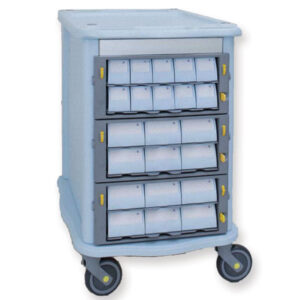
Double-Sided Pharmacy Trolley – 3 Large Drawers + 22 Unit-Dose Cassettes (Ref. 45730) | Unit-Dose Medication Trolley with Locking System and Wheels
4.560,00 € In stock🚚 Bulky deliveryAdd to basket -
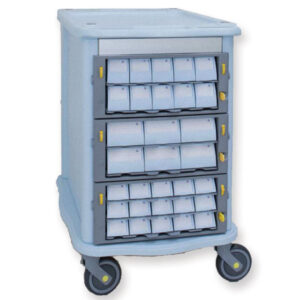
Double-Sided Pharmacy Cart with 62 Drawers for Single-Dose Medication | Single-Dose Medication Cart with 31 Cassettes per Side and Locking System (Ref. GM45731)
5.035,00 € In stock🚚 Bulky deliveryAdd to basket