
How to choose an ultrasound scanner
11 products in the catalogue
An ultrasound scanner is a diagnostic imaging device that generates images using ultrasound. The portable version concentrates that capability in a compact system, with a monitor, one or two probe connectors and a transducer, so that it can be moved between consulting rooms or wards.
The choice depends on where and how the unit will be used. The probe makes the difference: linear probes work at higher frequencies and shallower depth, and convex probes at lower frequencies and greater depth. To this are added connectivity, weight and size, and power supply. It is also worth checking whether the system is supplied with or without probes and with how many connectors, because the final equipment of the workstation depends on this.
Other related families
Products in this guide
- Mains power 6
- Rechargeable battery 6
- Medical device 10
- Non-medical 1
-
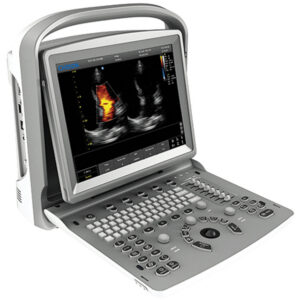
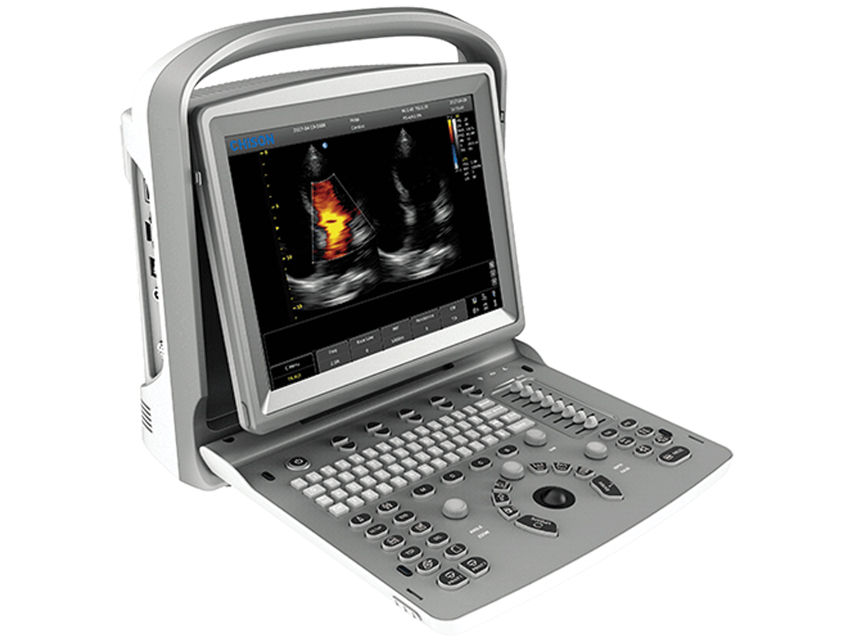
Portable colour ultrasound scanner CHISON ECO6 with Doppler – 2 catheter connectors (Ref. 33858) | SKU GM33858
5.681,00 € In stockAdd to basket -
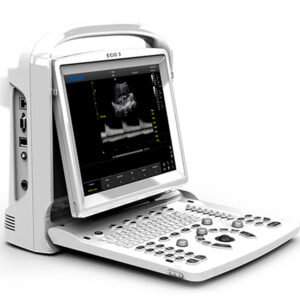
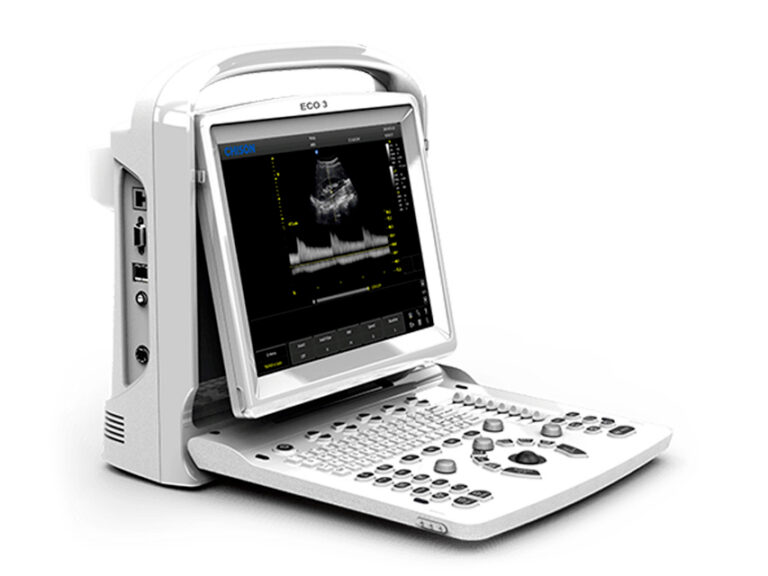
Portable ultrasound scanner CHISON ECO3 EXP. B/W with Doppler – 2 catheter connectors (Ref. 33864)
3.790,50 € In stockAdd to basket -

Portable ultrasound scanner CHISON ECO5 with colour Doppler and 2 catheter connectors (Ref. 33865) – Without catheter
5.985,00 € In stockAdd to basket -
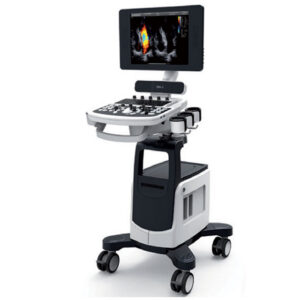
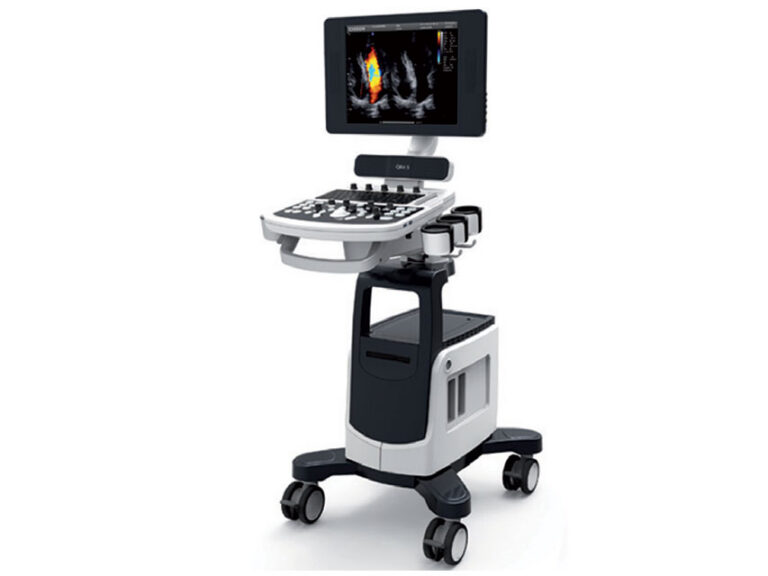
Portable ultrasound scanner CHISON QBit5 with color Doppler and 15″ LED monitor – Ref. 33877
7.410,00 € On order🚚 Bulky deliveryAdd to basket -
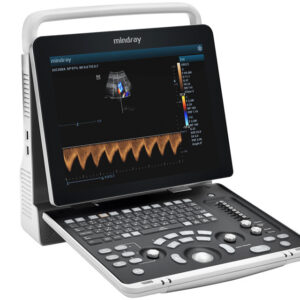
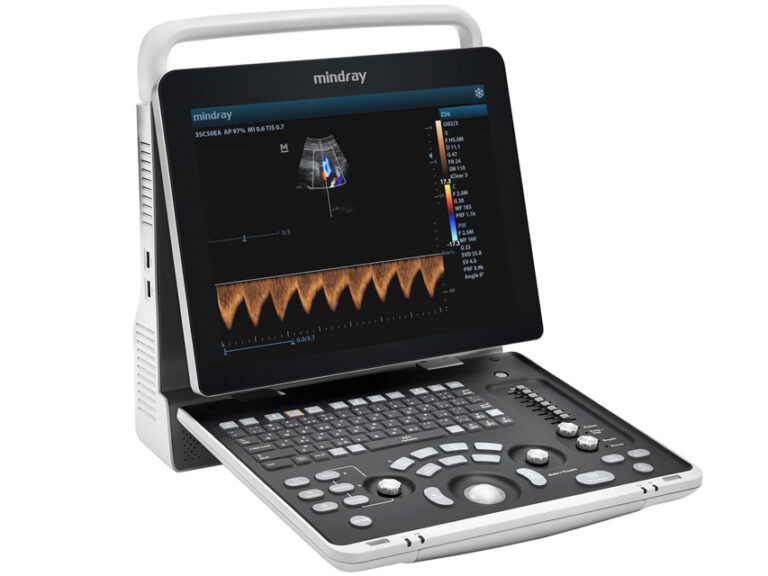
Mindray Z50 portable ultrasound scanner with colour Doppler (Ref. 33881) – 15″ LCD monitor, 2 catheter connectors, without catheters
7.220,00 € On orderAdd to basket -
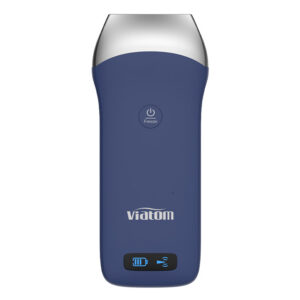
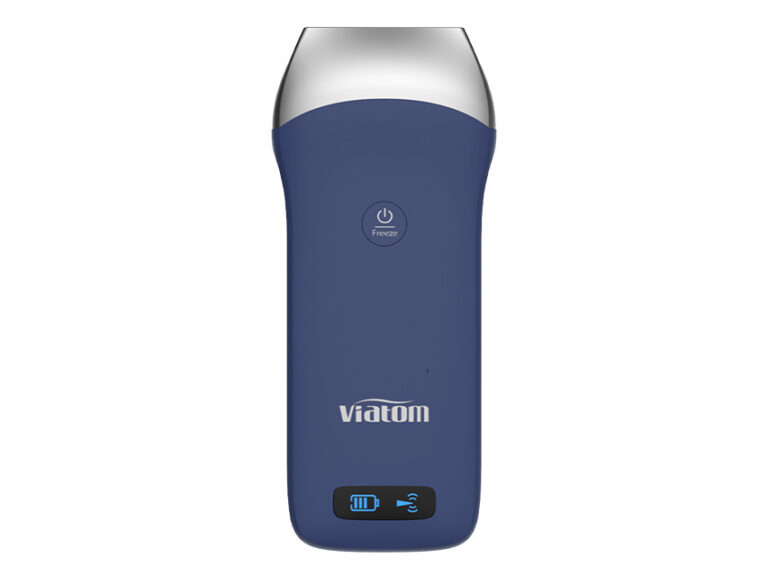
Portable wireless ultrasound scanner Viatom Linear – Linear catheter 7.5-10 MHz – Ref. 33931
2.565,00 € In stockAdd to basket -
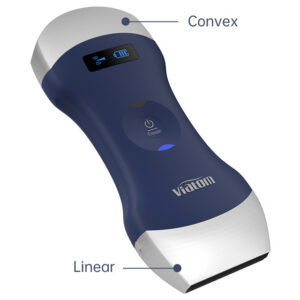
Portable wireless ultrasound scanner Viatom Dual Head – Dual head: linear (7.5-10 MHz) and convex (3.5-5 MHz) – Ref. 33932
4.180,00 € In stockAdd to basket -
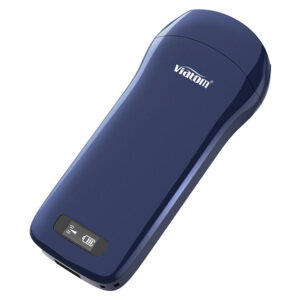
Portable wireless ultrasound scanner Viatom 3 in 1 – Linear, convex and cardiac probes – Ref. 33934
4.180,00 € In stockAdd to basket
Buying and selection tips
-
Choose the probe according to the planned examination
The probe determines what can be examined. A linear probe works at higher frequencies and shallower depth, whereas a convex probe works at lower frequencies and greater depth. Check which type of probe the unit has and how many connectors it has.
-
Relate frequency and depth
Frequency and depth go in opposite directions: a lower-frequency probe reaches greater depth. First settle how deep you need to go and then compare the frequencies stated for each product.
-
Consider connectivity and handling of the unit
The range includes units with an integrated monitor, units for smartphone or tablet and wireless units. If the unit will be moved frequently, weight and bulk matter as much as the image.
-
Check the image and Doppler
There are black-and-white and colour units, with pulsed-wave or colour Doppler. Compare the imaging performance of each product with the intended use and the monitor size.
-
Check the power supply and stand
A portable ultrasound scanner can run on mains power or on battery, depending on the model. Check the power supply stated for each product and whether you need a trolley for the unit, which is sold separately.
-
Plan for the consumables for each examination
Alongside the unit, plan for the consumables that go with daily use, such as ultrasound gel and probe covers. Always follow the unit manufacturer's instructions for cleaning the transducer.
Frequently asked questions
What is the difference between a linear and a convex probe when choosing an ultrasound scanner?
The linear probe works at higher frequencies and shallower depth, and the convex probe at lower frequencies and greater depth. The choice depends on the depth you need to reach.
How does probe frequency affect examination depth?
The lower the frequency, the greater the depth; the higher the frequency, the shallower the depth. Compare the frequencies stated for each probe.
What advantages does a wireless or smartphone ultrasound scanner have over one with a monitor?
They are lighter and more compact, but depend on the device used to view the image. Units with an integrated monitor are self-contained. Choose according to where the unit will be used.
What should I check about the Doppler on a portable ultrasound scanner?
Whether the unit offers pulsed-wave Doppler or colour Doppler, and whether the monitor and the number of probe connectors suit the intended use.
What battery life should I require of a portable ultrasound scanner?
Check the battery life stated for each model and whether the charger is portable, so that it is possible to work outside the consulting room.
Common questions
Confusing probe frequency with the depth it reaches
They go in opposite directions: a lower-frequency probe reaches greater depth. It is not the higher frequency that reaches further.
Taking it for granted that any cover fits any probe
Covers are available in different sizes; the size must correspond to the probe to be protected.
Assuming that a portable ultrasound scanner is always wired
There are units with wireless transmission, light and of reduced size. Connectivity is one more selection criterion.
More products in this guide
-
Trolley for portable ultrasound scanner UMT-150, compatible with DP-50 Expert and Z50 | Ref. 33962
826,50 € In stockAdd to basket -
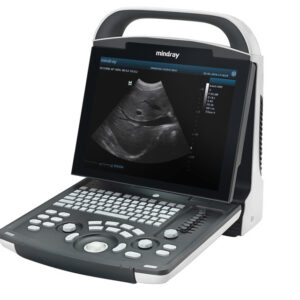
Portable Mindray DP-10 ultrasound scanner (Ref. 33989) – B/W system with 12.1″ LED monitor, 1 catheter connector, without catheters
1.016,50 € In stockAdd to basket -
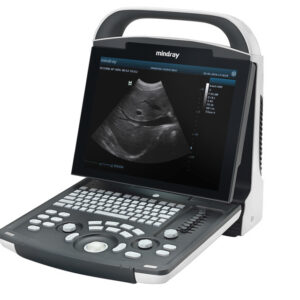
Portable ultrasound scanner Mindray DP-20 – B/W system with 12.1″ LED monitor, 1 catheter connector, without catheters
2.232,50 € In stockAdd to basket