
How to choose ultrasound gel
14 products in the catalogue
Ultrasound gel is a water-soluble acoustic coupling medium applied between the probe and the skin to remove air from the interface and improve sound transmission. It is designed not to stain and to be easy to clean.
In a healthcare setting it is used in examinations with ultrasound systems, including Doppler. This category includes sterile versions in single-dose sachets and non-sterile versions in tubes, bottles, bags or large containers for daily work in the consulting room and ward. There are blue and clear gels. The choice comes down to a few criteria: whether the procedure requires sterility, what volume suits the point of use, what viscosity and colour suit the type of examination and how the gel will be dispensed from large containers.



Other related families
Products in this guide
- Non-sterile 11
- Sterile 1
- 1 l 1
- 5 l 3
- 250 ml 1
- Box OF 260 2
- Box OF 5000 2
- Pack OF 2 2
- Box OF 1000 1
- Box OF 12 1
- Box OF 18 1
- Box OF 200 1
- Box OF 40 1
- I 6
- II a 1
-
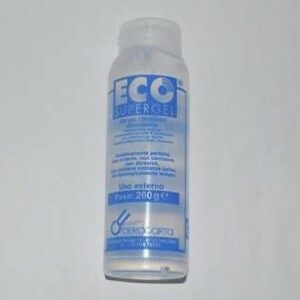
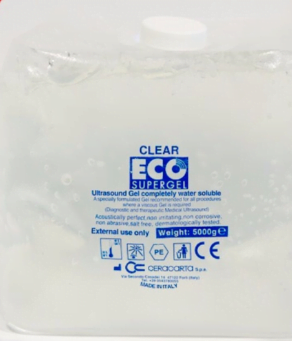
Transparent ultrasound gel Ecosupergel Clear 260 cc – Hypoallergenic coupling medium for diagnostic ultrasound, IPL, laser hair removal and aesthetics (Ref. 590057)
0,96 € In stockAdd to basket -
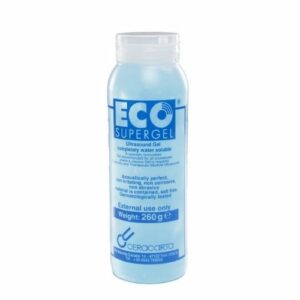
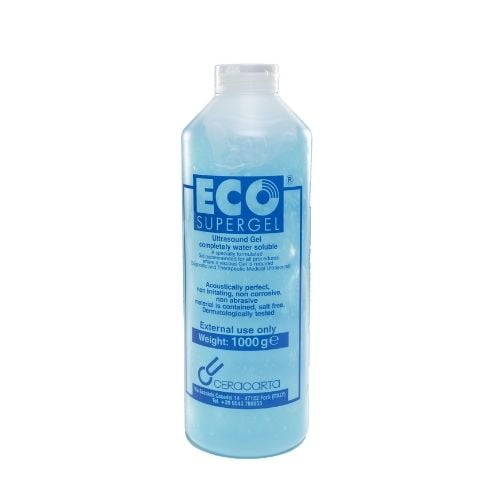
Blue ultrasound gel for ultrasound imaging Ecosupergel 260 cc – Professional acoustic coupling medium (Ref. 0590001)
0,96 € In stockAdd to basket -
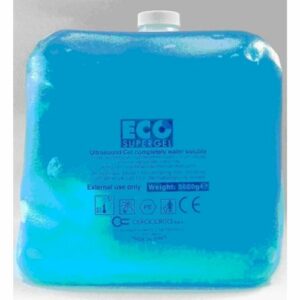
Blue ultrasound gel Ecosupergel 5000 cc (5 L) — Professional coupling medium for ultrasound imaging (Ref. 0590002)
9,19 € In stockAdd to basket -
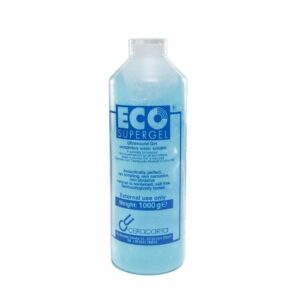
Blue ultrasound gel Ecosupergel 1000 cc (1 L) for ultrasound imaging – Professional non-sterile acoustic coupling medium (Ref. 0590009)
2,47 € In stockAdd to basket -
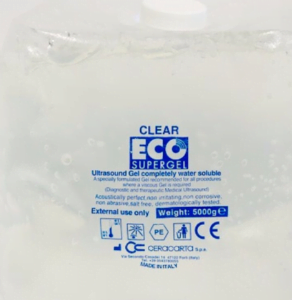
Ecosupergel Clear 5000 cc (5 L) ultrasound gel — Transparent for ultrasound, IPL, laser hair removal and aesthetics
9,19 € In stockAdd to basket -
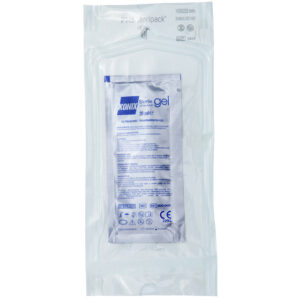
Sterile ultrasound gel – Transparent 20 ml single-dose sachet for ultrasound, Doppler and defibrillator – Box of 48 units (Ref. 33269)
89,30 € In stockAdd to basket -
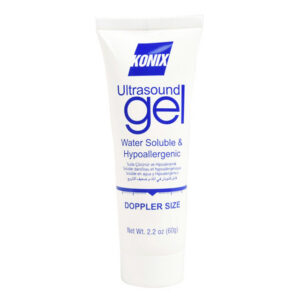
Transparent ultrasound gel for ultrasound imaging, Doppler and defibrillator – 60 ml tube, box of 12 units (Ref. GM33270)
28,50 € In stockAdd to basket -
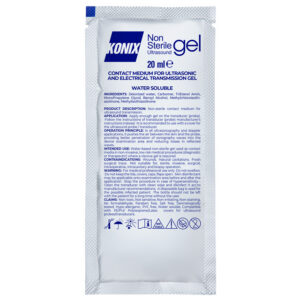
Transparent ultrasound gel – 20 ml single-dose sachet for ultrasound, Doppler and defibrillator (Box of 200, Ref. GM33271)
55,10 € On orderAdd to basket
Buying and selection tips
-
First decide whether you need sterility
Sterile gel, in single-dose sachets, is the option for those who require sterility in their procedure. For daily use in routine examinations there is non-sterile gel in larger formats. Confirm the requirement with the requesting department.
-
Match the volume to the point of use
Small formats, from 250 to 1,000 ml, suit the consulting room and the ultrasound trolley, whereas 5,000 ml bags and large containers meet high, continuous consumption. Single-dose sachets are one unit per patient.
-
Consider viscosity and clarity
There are formulations of different viscosity within the same volume, and runnier gels as opposed to thicker ones. Check in the product description what viscosity it declares and how it is dispensed from the container.
-
Choose the colour according to the intended use
Blue gel contains a colourant in its composition. The clear version is offered in parallel, in similar volumes, for those who prefer a colourant-free presentation.
-
Check compatibility with probes and covers
Before buying, confirm from the probe manufacturer's instructions that the gel is compatible with the probe and with the covers that will be used.
-
Plan for dispensing from large containers
With the 5,000 ml formats, consider how the gel will be dispensed at the point of use, for example with a dispenser bottle, and who is responsible for refilling. Follow the storage conditions stated on the packaging.
Frequently asked questions
When is a single-dose sterile gel appropriate and when a 5-litre container?
Single-dose sterile gel is for procedures that require sterility. The 5-litre container meets high, continuous consumption in non-sterile examinations.
Which volume is most practical for a practice with several ultrasound rooms?
For work in the room, bottles of 250 to 1,000 ml are suitable. When consumption is high, the 5,000 ml bag or container is more practical for restocking, always with a system for dispensing.
What viscosity should I ask for in the gel?
The one the product declares and that suits the examination and the way it is dispensed. A stable viscosity allows even dispensing from the container.
What is the difference between blue gel and clear gel?
Blue gel contains a colourant in its composition. The clear range is offered in parallel for those who prefer a colourant-free presentation.
What should I check before using a gel with a probe and its cover?
That the gel is compatible with the probe and the cover according to the manufacturer's instructions. If the procedure requires sterility, the cover must also be sterile.
Common questions
Confusing ultrasound gel with a general-purpose lubricant
They are different products: ultrasound gel is formulated as an acoustic coupling medium for ultrasound, with a viscosity and composition designed for sound transmission.
Thinking that sterile gel is always the preferable option
Sterility is reserved for procedures that require it. For other examinations non-sterile gel is used, which also comes in larger volumes.
Reusing gel from a single-dose sachet, or leftovers from one session to the next
The single-dose sachet is a disposable product. Do not use a damaged container or one with obvious contamination, and follow the manufacturer's instructions.
More products in this guide
-
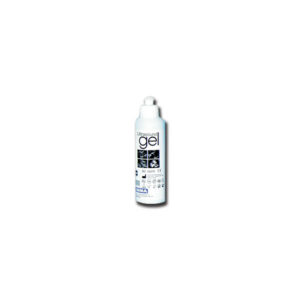
Ultrasound gel – 250 ml blue and transparent tube for ultrasound imaging, Doppler and defibrillator (Box of 40 units, Refs. GM33272/GM33273)
38,95 € In stockSelect options This product has multiple variants. The options may be chosen on the product page -
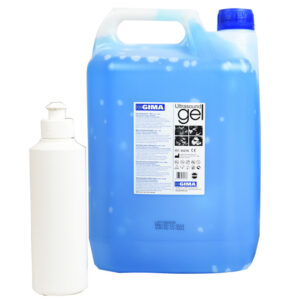
Ultrasound gel – 5-litre tank in blue and transparent for ultrasound imaging, Doppler and defibrillator (Box of 2, Ref. GM33276/GM33277)
17,10 € In stockSelect options This product has multiple variants. The options may be chosen on the product page -
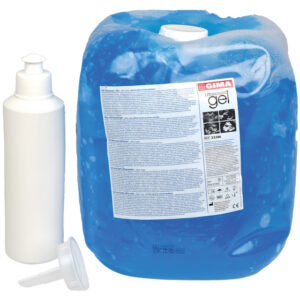
Ultrasound Gel in 5 L Bag – Coupling Medium for Ultrasound Imaging, Doppler and Defibrillator (Refs. GM33286/GM33287, Box of 2)
19,00 € In stockSelect options This product has multiple variants. The options may be chosen on the product page -
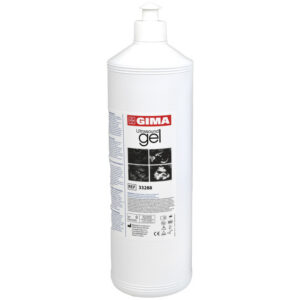
Ultrasound gel, 1 litre bottle – Water-soluble conductive gel for ultrasound, Doppler and defibrillator (Ref. GM33288)
38,00 € In stockSelect options This product has multiple variants. The options may be chosen on the product page -
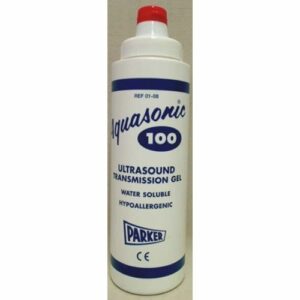
Aquasonic blue ultrasound gel for ultrasound imaging, 250 g bottle (Ref. 0992030) – Conductive acoustic coupling medium for diagnostic imaging
2,88 € In stockAdd to basket -
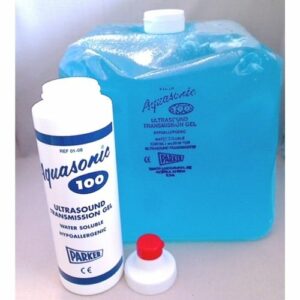
Blue Aquasonic ultrasound gel for ultrasound imaging, 5000 cc (5 L) – Professional acoustic coupling medium for diagnostic imaging and therapies (Ref. 0992031)
25,20 € In stockAdd to basket