
How to choose a suction unit
11 products in the catalogue
A secretion suction unit is a medical device designed for the aspiration of body fluids such as saliva, blood or secretions. It is used in consulting rooms, clinics, hospital areas, ambulances and home care, always following the manufacturer's instructions for use.
The range is organised around three axes: power supply, suction performance and the physical configuration of the device. There are rechargeable-battery models and mains-powered models, portable units, trolley-mounted sets, some with a foot pedal, a manual pistol-type aspirator and a sterile neonatal aspirator. Before deciding, be clear about where the unit will be used, how often, who will maintain it and which consumables it requires.
Other related families
Products in this guide
- Mains power 6
- Rechargeable battery 6
- 36 l/min 1
- 40 litres of air per minute 2
- Medical device 6
- Sanitary kit 1
-
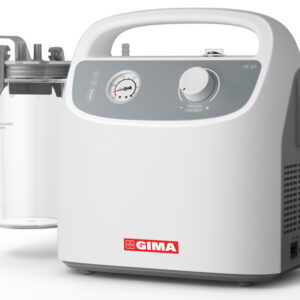
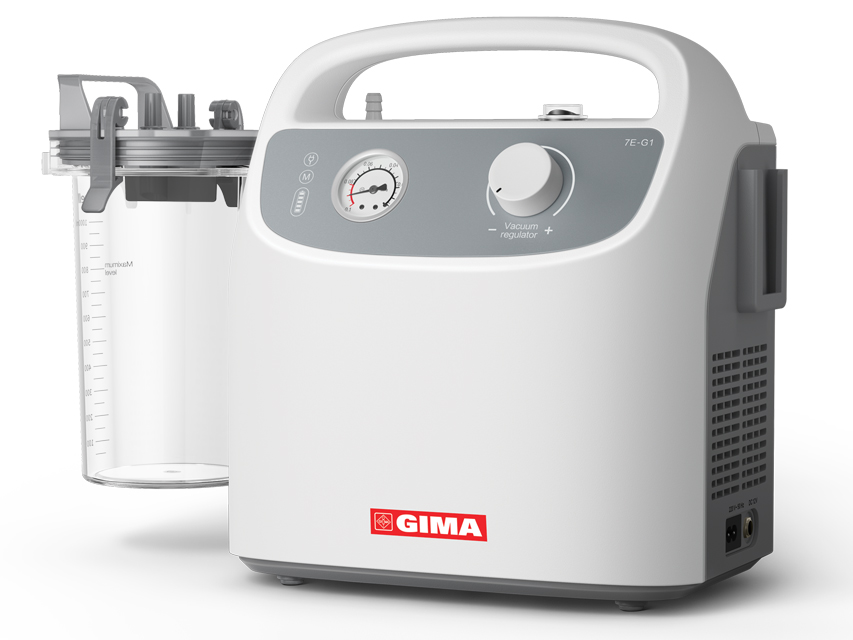
Portable secretion suction unit AROS with battery – Suction unit with 1 l jar and rechargeable lithium battery (Ref. 28051)
247,00 € In stockAdd to basket -
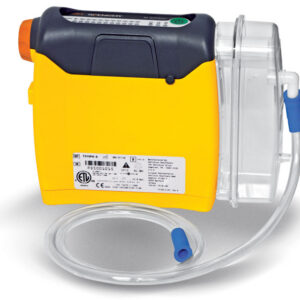
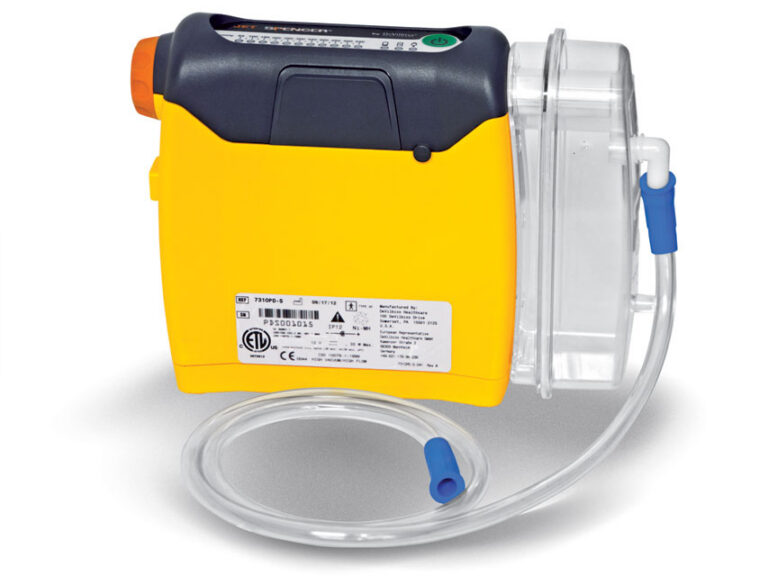
Portable secretion suction unit SPENCER JET COMPACT 300D – Suction unit with 12 V battery, 32 l/min (Ref. 28177)
1.045,00 € In stockAdd to basket -
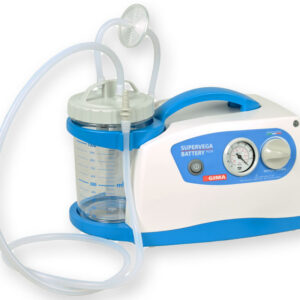
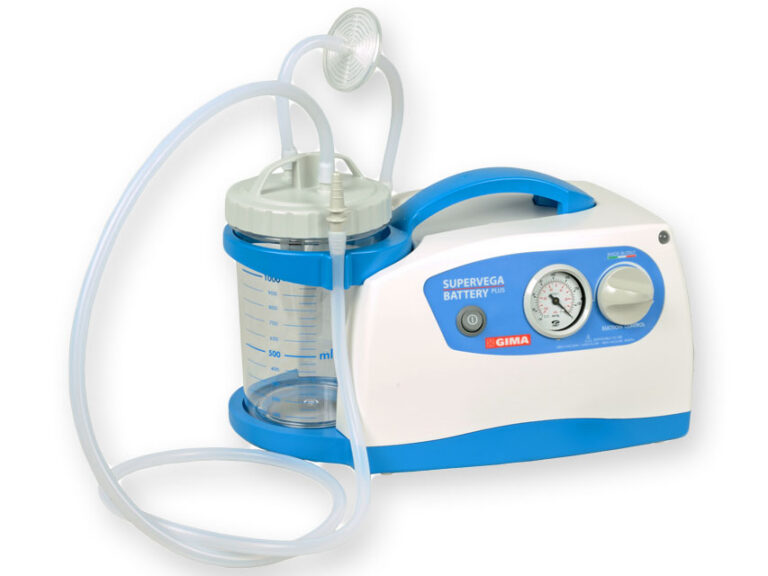
Portable suction unit for secretions Super Vega Battery 36 – Nasal, oral and tracheal suction unit with rechargeable battery, 36 l/min (Ref. 28190)
446,50 € In stockAdd to basket -
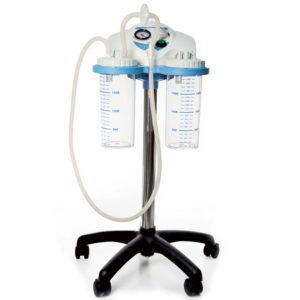
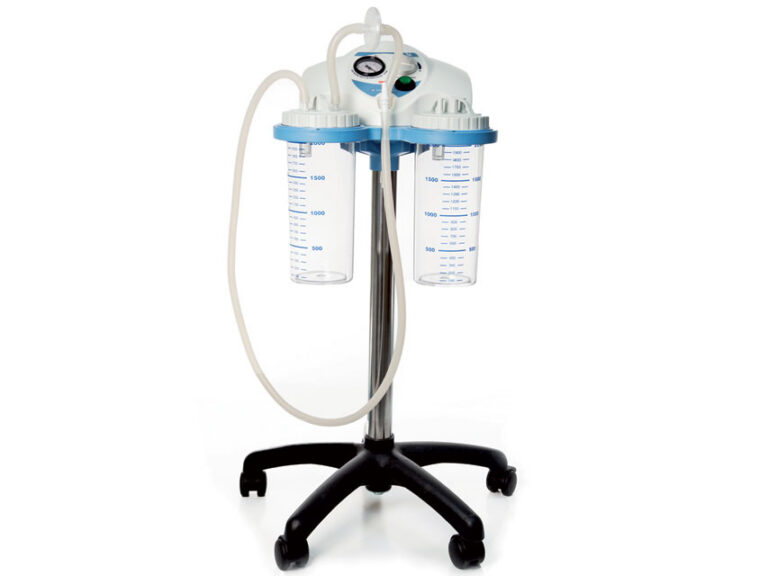
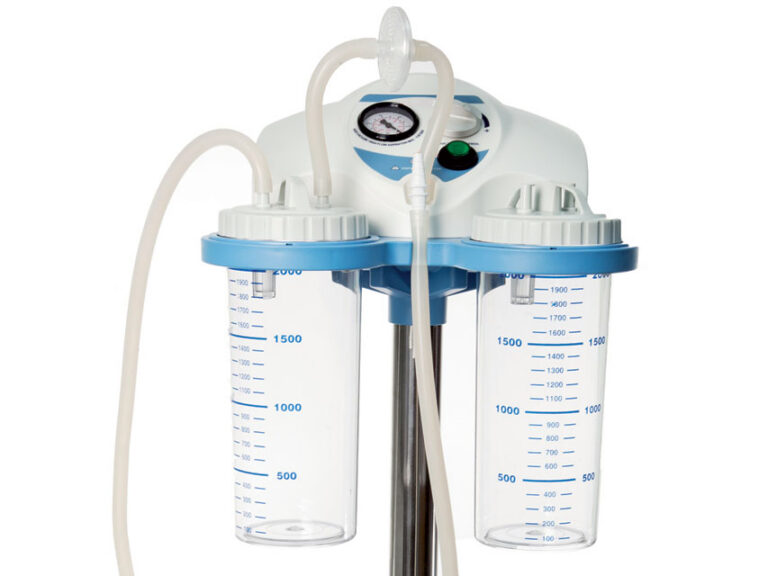
Super Vega secretion suction unit on trolley – Suction unit with twin 2×2 l jar, 40 l/min and adjustable vacuum (Ref. 28191)
432,25 € In stockAdd to basket -
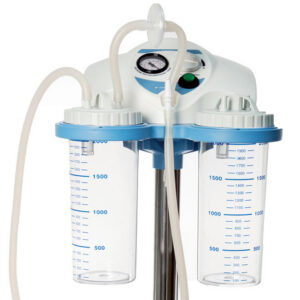
Super Vega secretion suction unit on trolley with foot pedal – Suction unit with double 2×2 l jar and flow rate of 40 l/min (Ref. 28192)
608,00 € On orderAdd to basket -
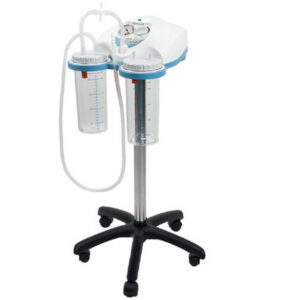
Portable secretion suction unit Super Vega Battery on trolley (trolley) – Suction unit with double bottle 2×2 l and rechargeable battery, 36 l/min (Ref. 28193)
693,50 € On orderAdd to basket -
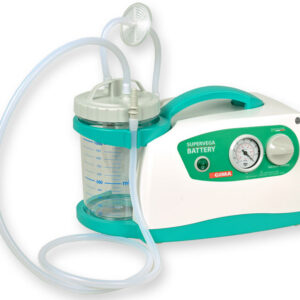
Portable secretion suction unit Super Vega Battery – Battery-powered suction unit, plastic case, 16 l/min (Ref. 28243)
370,50 € On orderAdd to basket -
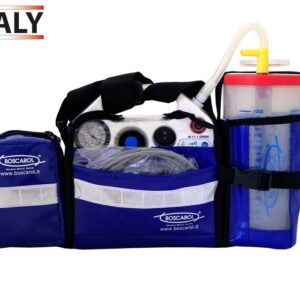
Portable medical suction unit for secretions OB MINI FA MSU EU – Suction 850 mbar · 25 L/min · Autoclavable jar 1000 ml · Removable lithium battery (Ref. BSU364EU / BRLBSU364EU)
In stockRequest a quote
Buying and selection tips
-
Choose the power supply according to where it will be used
A unit with a rechargeable battery lets you work without a socket nearby and move it easily; compare the stated battery life and whether it can be used while plugged in. If the device is going to stay in one room or consulting room, a mains-powered model avoids depending on battery charge.
-
Distinguish airflow from vacuum level
Flow rate is expressed in litres per minute at free-flow conditions and vacuum in bar or millibar: they are two different parameters that should not be mixed when comparing units. Compare both stated values and whether the vacuum is adjustable.
-
Check the collection jar before buying
The container determines much of the subsequent maintenance. Some units have an autoclavable jar and other configurations accept a disposable bag instead of a rigid jar. Check the capacity and the type of lid, because the replacements you will need to restock depend on them, and always follow the manufacturer's manual.
-
Plan for single-use consumables
Cannulas, manual regulators and filters are single-use or limited-life consumables, depending on the model. Estimate expected consumption so you do not run out of stock, and check the manufacturer's manual for when they should be replaced.
-
Consider the format: portable, trolley or manual
There are portable units, trolley-mounted sets with a pedal and a manual pistol-type aspirator. Choose according to whether the unit moves between workstations or stays in one place, and check the weight, stability and available space.
Compatibility
- Rigid jar or disposable bag
- Depending on the model, the suction unit accepts a reusable jar or a disposable bag. Check which configuration the chosen unit supports and do not mix components from different models.
- Antibacterial filter
- Models that include one require it for use; follow the manufacturer's manual and confirm that the replacement is available before buying.
- Power supply and charging
- Units with a built-in battery are charged with a power adapter; check the stated battery life and charging time before deciding.
Frequently asked questions
Can I use the suction unit without a collection jar or without a filter?
It must not be used without the components required by the manufacturer, including the collection jar and, on models that have one, the antibacterial filter. Always follow the unit's manual.
How do I choose between a benchtop suction unit and a portable battery-powered one?
If the unit will stay in one room and a socket is available, a mains-powered model avoids charging and battery maintenance. If you need to move it or work without a socket nearby, a rechargeable-battery model is more practical; compare the stated battery life.
How often do I need to replace the jar and tubing?
It depends on the model: check the manufacturer's manual for the service life of the container, tubing and consumables, and plan replacement before buying.
What does adjustable vacuum mean when choosing a unit?
It means the operator can adjust the suction instead of always working at the device's maximum. Check it together with the airflow before deciding.
Which single-use accessories should I keep as spares?
Depending on the model, antibacterial filters, cannulas, manual regulators and bags for the jar. It is worth sizing stock according to frequency of use.
Common questions
Believing that any jar or any bag fits any unit
The configuration of jar, lid, filter and bag depends on each model. Mixing components from different models stops the system working as intended.
Confusing airflow with jar capacity
Flow rate is measured in litres per minute at free-flow conditions and is not directly related to the volume of the container. They are two details chosen for different reasons and cannot be used to compare units with each other.
Assuming that a battery unit will last through a long uninterrupted session
Portable units state a limited battery life. The expected duration of each use should be taken into account when choosing.
More products in this guide
-
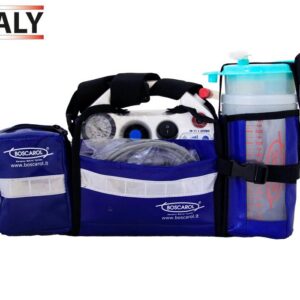
Portable medical suction unit for secretions OB MINI FM MSU EU – Suction 850 mbar · 25 L/min · Jar for SERRES® 1000 ml bags · Removable lithium battery (Ref. BSU368EU / BRLBSU368EU)
In stockRequest a quote -
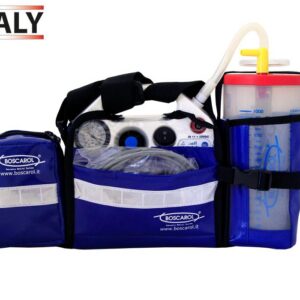
Portable medical suction unit for secretions OB MINI FA MSU EU AVIO – Suction 850 mbar · 25 L/min · Autoclavable jar 1000 ml · Compliant with RTCA DO 160 (Ref. BSU372 / BRLBSU372)
In stockRequest a quote -
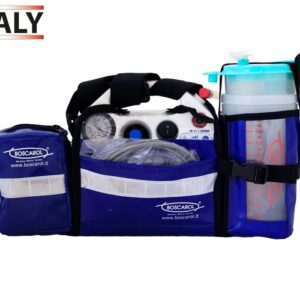
Portable medical suction unit for secretions OB MINI FM MSU EU AVIO – Suction 850 mbar · 25 L/min · Lithium battery · Compliant with RTCA DO 160 (Ref. BSU374 / BRLBSU374)
In stockRequest a quote