
Buying guide to shower and commode chairs
12 products in the catalogue
A shower and commode chair is a piece of healthcare furniture that allows a person with reduced mobility to be washed, toileted and moved within the bathroom. It combines a frame on castors with a seat with a hygiene cut-out or a raisable toilet-ring seat, and in the commode versions it adds a removable commode pan, so the same chair serves for showering, toileting and short transfers within the room. It is used in care homes, inpatient units, day centres and homes with professional care.
The purchasing decision comes down to a few parameters: the weight capacity, the seat height and the clearance over the toilet, the type of seat (toilet ring, foam with hygiene cut-out or one-piece), the diameter and brakes of the castors, and the accessories needed from day one.


Other related families
Products in this guide
- 136 kg 1
- 150 kg 7
- 175 kg 1
- 200 kg 2
- 250 kg 1
- Plastic 2
- Aluminium 1
-
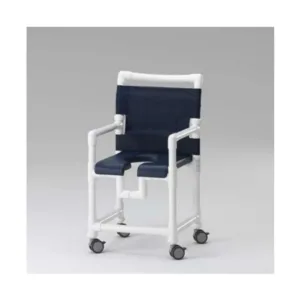
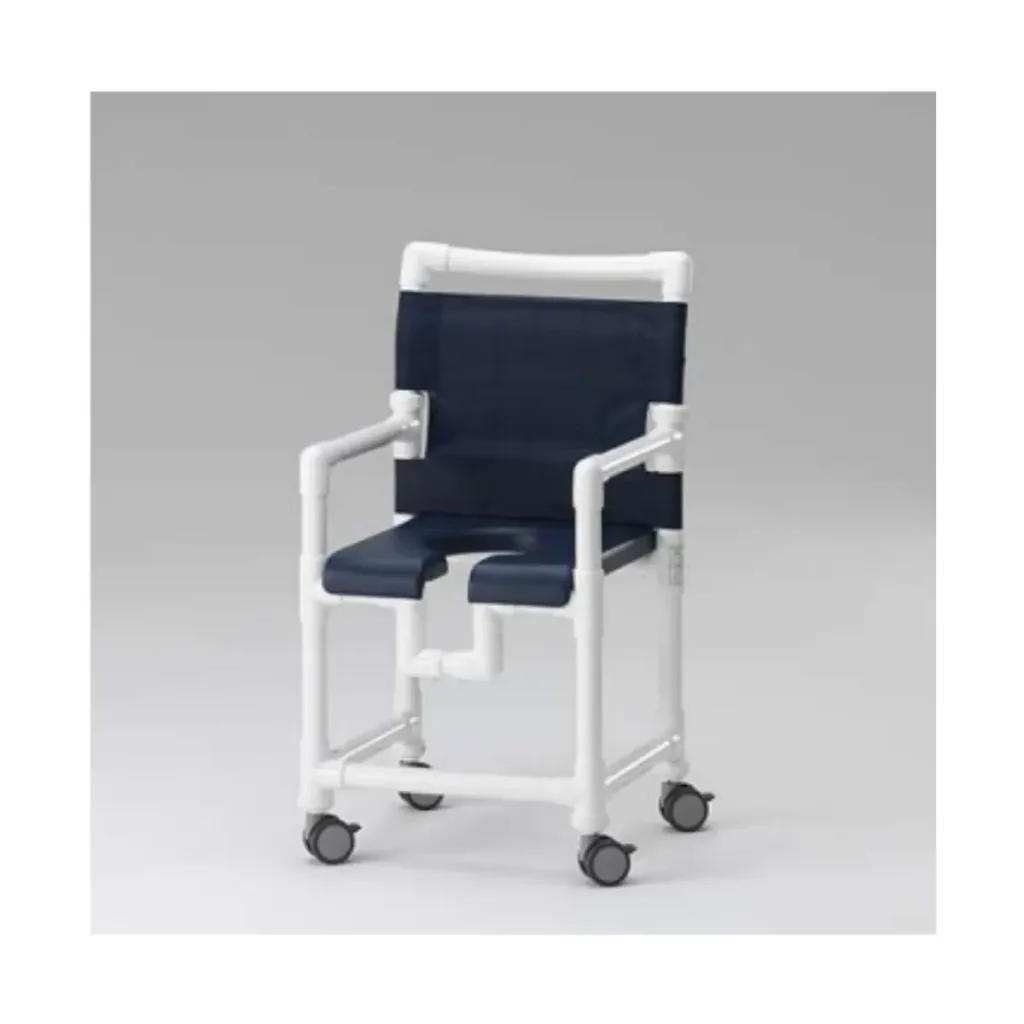
Shower and WC Sanitary Chair with Soft PU Foam Seat, Textilene® Backrest and Braked Castors – 150 kg (Ref. SC 100)
1.182,65 € In stockAdd to basket -
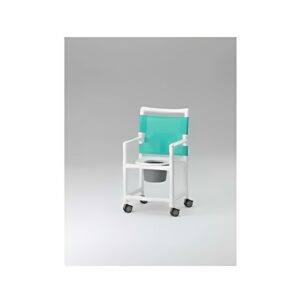
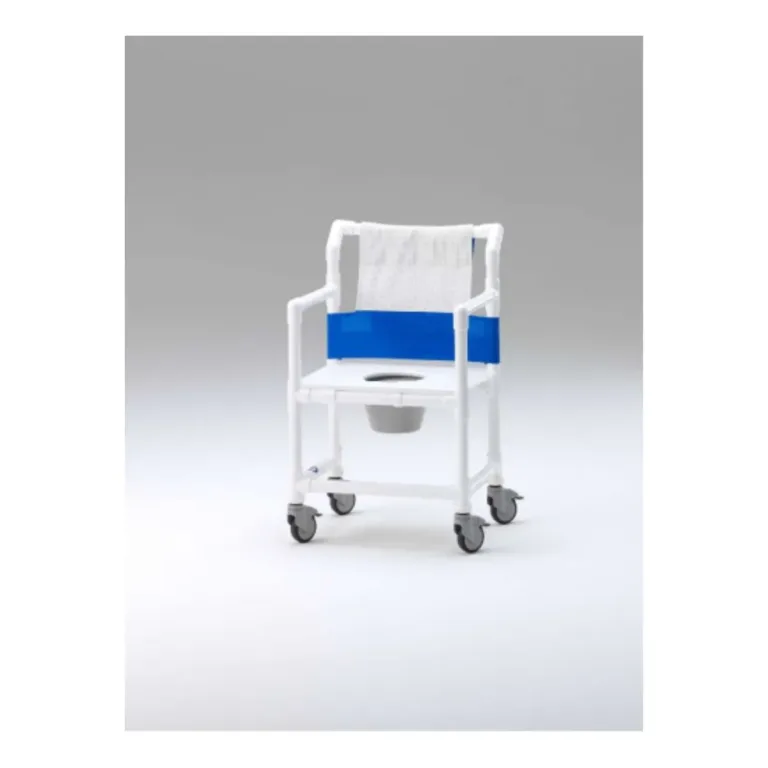
Shower and Toilet Chair SCC 250 with Liftable Toilet Seat Ring, Textilene® Backrest, Bedpan with Scale and Wheels with Brake (150 kg) – RCN
1.256,72 € In stockAdd to basket -
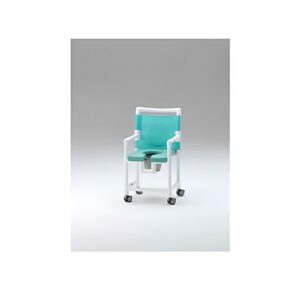
Multifunction Shower and WC Sanitary Chair SCC 250 PP with Soft PU Foam Seat, Textilene® Backrest and Wheels with Brake (150 kg)
1.551,60 € In stockAdd to basket -
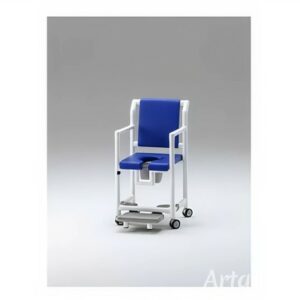
Shower and WC Sanitary Chair SCC 250 PPG with Soft Seat and Backrest in PU Foam, Bedpan and Braked Castors (150 kg) – RCN
2.100,84 € In stockAdd to basket -
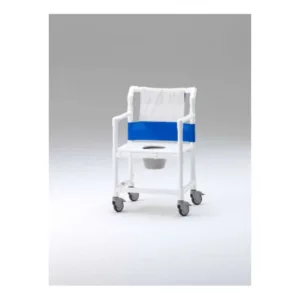
Multifunction Shower and WC Sanitary Chair for Large Users SCC 250 XL DS – Polypropylene Seat with Hygienic Opening, Textilene® Backrest and 200 kg Capacity (RCN)
2.356,59 € In stock🚚 Bulky deliveryAdd to basket -
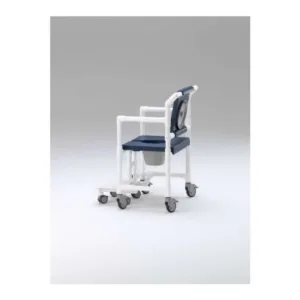
Shower and WC Sanitary Chair XXL SCC 250 OS PPG – PU Foam Seat with Hygienic Opening, Removable Armrest and 250 kg Capacity
4.606,65 € In stockAdd to basket -
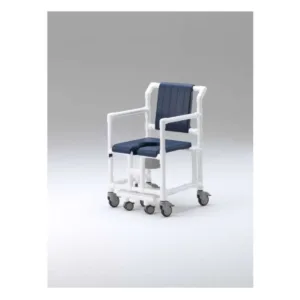
XL Shower and WC Sanitary Chair SCC 250 XL PPG with Soft PU Foam Seat and Backrest, Removable Armrest, Retractable Footrest and Wheels with Brake (200 kg)
3.463,45 € In stock🚚 Bulky deliveryAdd to basket -
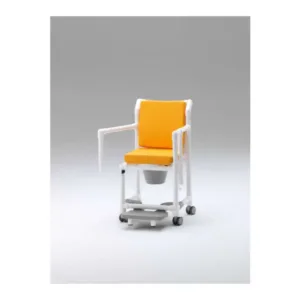
Shower and Toilet Sanitary Chair SCC 250 D SB with Trunk Safety Bar, Waterproof Padded Seat and Braked Castors (150 kg)
1.991,83 € In stockAdd to basket
Buying and selection tips
-
Match the weight capacity to the user
Some models state a safe working load of 150 kg and others, reinforced, higher limits designed for bariatric users. Choose the margin according to the user's actual weight and check the figure on each model.
-
Check the clearance over the toilet
Before closing the order, measure the height of the toilet and compare it with the maximum clearance height stated for each model. The chair must be able to be positioned over the toilet without hitting the rim and without being too high for the intended use.
-
Choose the type of seat according to use
A toilet-ring seat in solid plastic, raisable and removable, is the most direct solution for toileting over the toilet. Foam seats with a hygiene cut-out add comfort. A closed padded seat is more comfortable as a chair in a room, although it is not suitable for toileting.
-
Check the castors, brakes and floor type
Some models have Ø 75 mm twin castors with brakes and others Ø 100 mm castors, also braked, which are better suited if the bathroom has small thresholds. Check that the brake is available on all castors and consider the larger diameter if there are level changes or drain gratings.
-
Define the accessories before ordering
A safety trunk bar, a removable armrest on one or both sides, a removable footrest and height adjustment change the final configuration. On some models, fitting armrests reduces the available height adjustment positions. Settling these options at the outset avoids having to redo the order.
Compatibility
- Seat height adjustment
- On some models it allows the seat to be adapted to the toilet; with armrests fitted there are fewer positions than without them.
Frequently asked questions
What is the difference between a shower chair and a shower commode chair?
The commode version includes a commode pan and a seat that may be a raisable toilet ring or foam with a hygiene cut-out. The shower chair has no commode pan. Check which elements each model includes.
Can the same chair be used as a raised toilet seat and as a shower chair?
Yes, on models designed for this, which combine a seat with a hygiene cut-out or a raisable toilet ring and a clearance height compatible with the toilet. Check the maximum clearance height of each model.
Can the castors be locked while the person is seated?
On models that state brakes on the castors, yes. Check that the brake is present on all of them and that it corresponds to the castor diameter chosen.
What is the difference between a toilet-ring seat and a padded one?
The toilet ring is solid plastic, raisable and removable, and is designed for toileting over the toilet. The closed padded seat provides comfort as a chair in a room, but is not suitable for toileting. Choose according to the chair's main use.
Common questions
Thinking that any chair with castors is suitable for toileting
This is not the case. For toileting you need a seat with a hygiene cut-out or a raisable, removable toilet ring and, if you want to collect waste, a commode pan. Without those elements the chair is only suitable for showering, even if it has castors and a backrest.
Assuming that the seat height is fixed
Some models have height adjustment in several positions, which may be fewer if armrests are fitted. Measure the height of the toilet and confirm the range of each model before ordering.
Believing that padded seats are the most suitable for the shower
A toilet-ring seat or one with a hygiene cut-out is more suitable for the shower area than a padded one. Check which type of seat each model includes.
Supposing that all frames are made of the same material
Some models have a resin frame, others combine other materials. Check the material and finish of each model and follow the manufacturer's instructions for cleaning.
More products in this guide
-
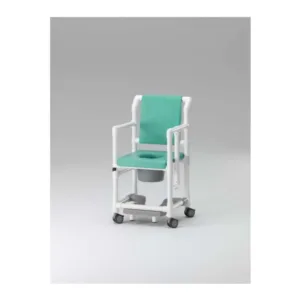
Shower and WC Commode Chair SCC 250 PSG SB with Trunk Safety Bar, Soft PU Foam Seat with Circular Opening and Wheels with Brakes (150 kg)
2.132,98 € In stockAdd to basket -
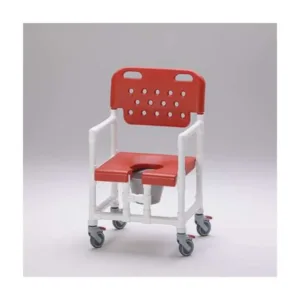
Shower and WC Chair XL for Large Sizes with Monobloc Synthetic Seat and Backrest, Wheels with Brake and Capacity 175 kg – Ref. SCC 220 MS
1.912,17 € In stockAdd to basket -
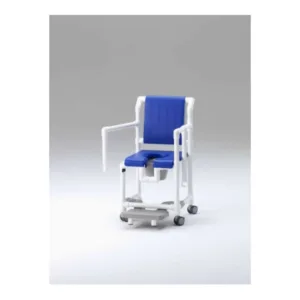
Shower and WC Chair SCC 250 PPG SB with Trunk Safety Bar, Soft PU Foam Seat and Braked Castors (150 kg)
2.132,98 € In stockAdd to basket -
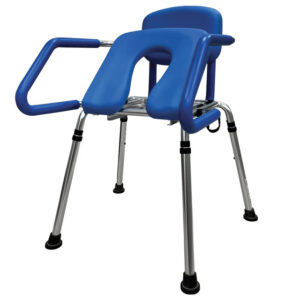
3-in-1 Shower, Toilet and WC Raiser Chair with Spring Lift Mechanism and Anti-Corrosion Aluminium Structure (Ref. 43193)
285,00 € In stockAdd to basket