
Ostomy flanges: buying guide
11 products in the catalogue
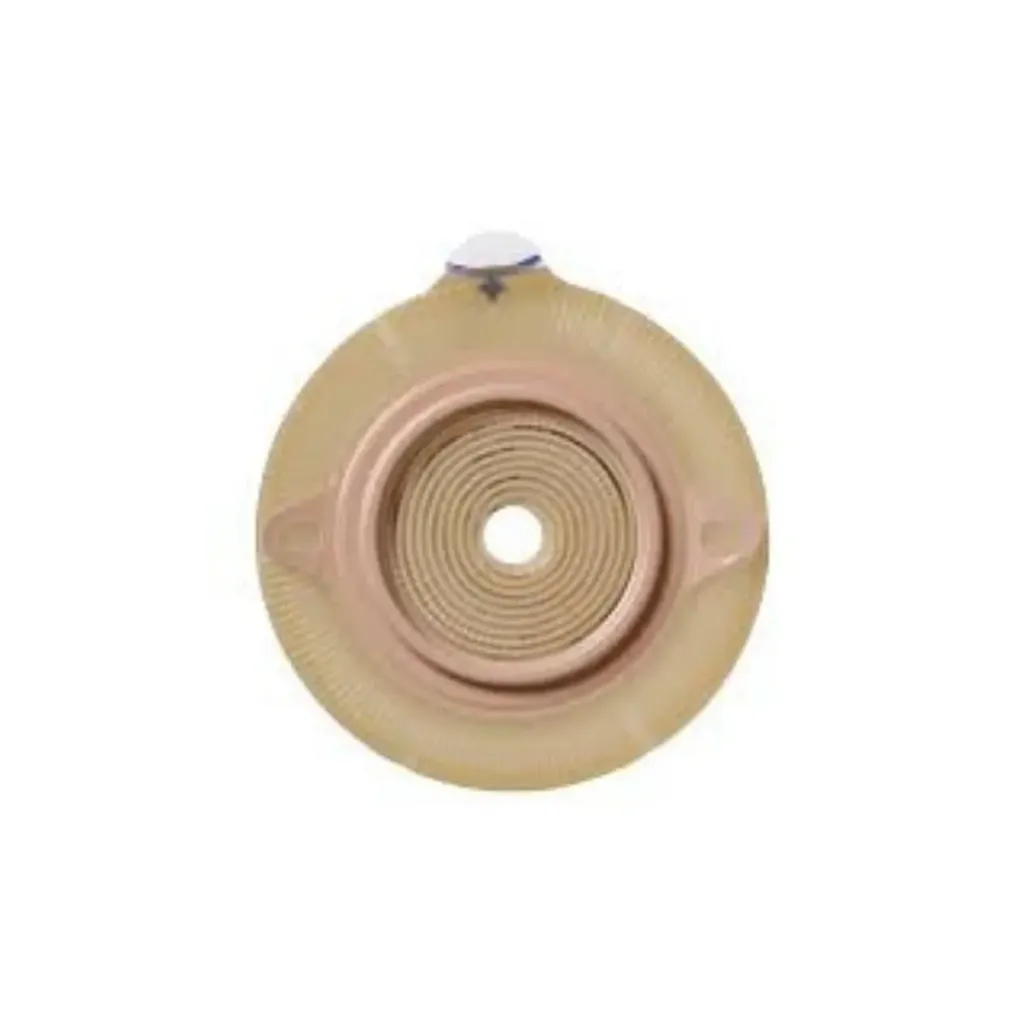
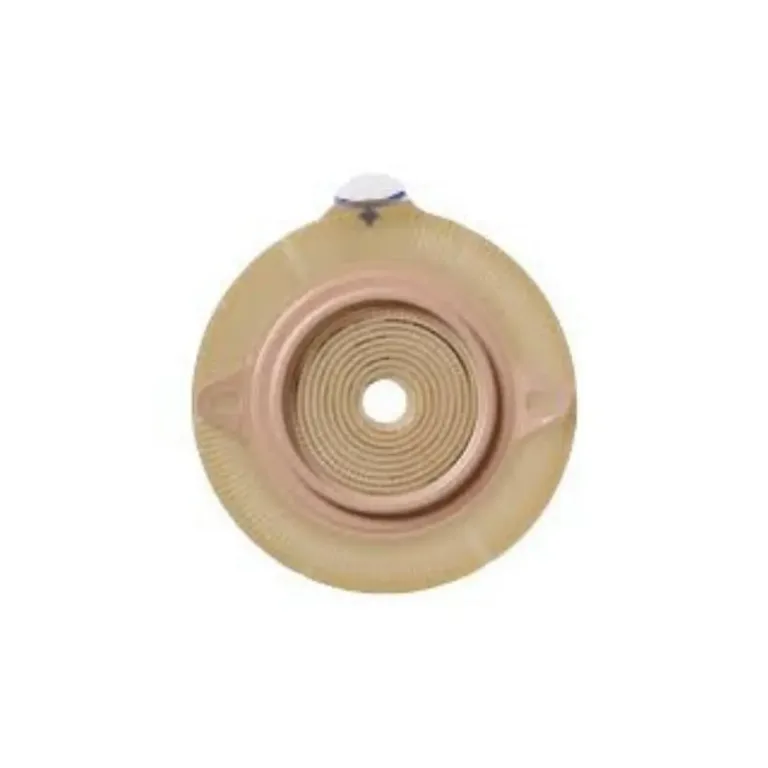
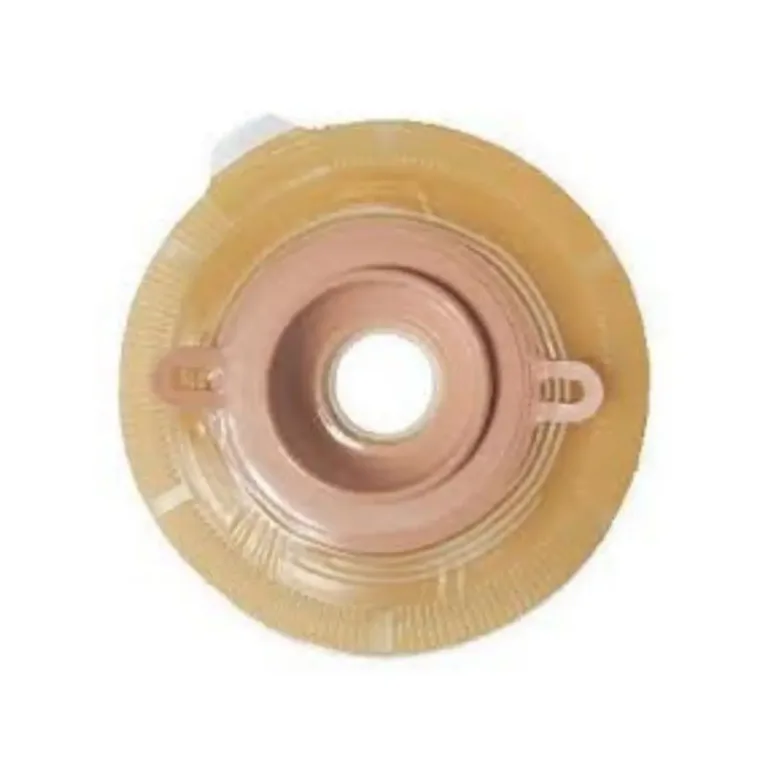
The ostomy flange or adhesive baseplate is the component that adheres to the skin and to which the collection pouch is attached in two-piece systems. The range includes long-wear flanges, transparent flanges, cut-to-fit flanges, some convex flanges, paediatric flanges and larger self-adhesive cut-to-fit plates.
Flanges differ in the shape of the disc, the type of adhesive, the diameter of the coupling or ring and the way the opening is adjusted: cut-to-fit up to a size, pre-cut or adjustable. In a healthcare setting the flange is chosen together with the pouch. This guide sets out the criteria that a professional buyer should check before reordering this type of product.
Other related families
-
 Attachment Discs
Groups two-piece coupling flanges, the component that attaches to the pouch and the focus of this guide.
-
 Paediatric ostomy
Covers paediatric flanges, with small rings and adjustable openings compared with adult ones.
-
 Ostomia Hospitalaria
Useful for initial hospital stock and reorders, where several rings and convexities are handled at once.
Products in this guide
- Box OF 5 9
- Box OF 10 1
-
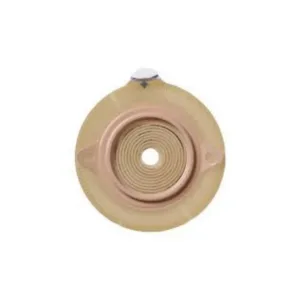
Extra Flexible Long-lasting Adhesive Coupling Disc for 2-Piece Ostomy, 50 mm Flange, Adjustable Opening 10-45 mm | Box of 5 units Ref. 17706
18,82 € In stockAdd to basket -
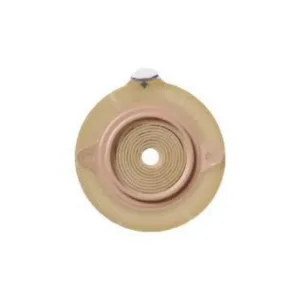
Long-Lasting Extra Flexible Adhesive Coupling Disc for 2-Piece Ostomy, 60 mm Ring, Adjustable Opening 10-55 mm | Box of 5 units Ref. 17710
18,82 € In stockAdd to basket -
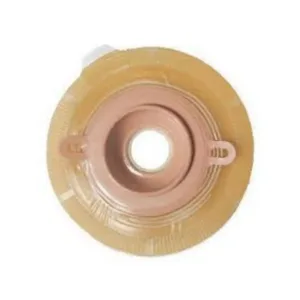
Cut-to-fit Convex Adhesive Disc for Ostomy, 60 mm Ring and 15-43 mm Opening – Box of 5 Units (Ref. 17750)
18,79 € In stockAdd to basket -
Long-lasting Extra Flexible Adhesive Disc for Ostomy, 60 mm Ring, Adjustable Opening 10-55 mm | Box of 5 units Ref. 17710-O
18,82 € In stockAdd to basket -
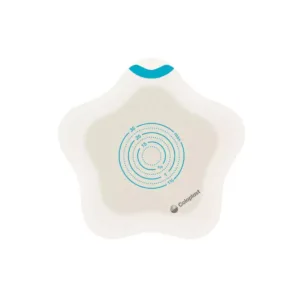
Paediatric adhesive discs for ostomy and continence, 40 mm ring, adjustable opening 0-35 mm | Coloplast | Box of 5 units
18,82 € In stockAdd to basket -
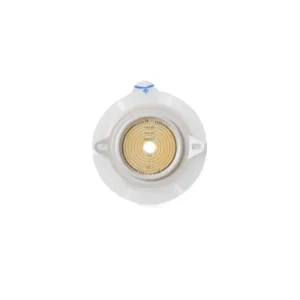
Transparent Extra Flexible Adhesive Disc for Ostomy | 40 mm Flange, Adjustable Aperture 10-35 mm | Coloplast 2-Piece (Ref. 17716)
18,82 € In stockAdd to basket -
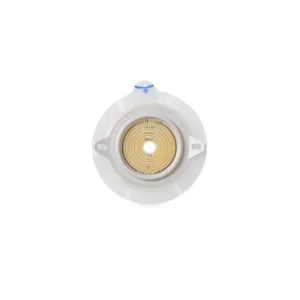
Transparent Extra Flexible Adhesive Discs for 2-Piece Ostomy | 50 mm Coupling Ring, Adjustable Opening 10-45 mm | Coloplast – Box of 5 units (Ref. 17719)
18,82 € In stockAdd to basket -
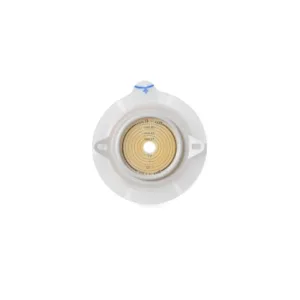
Extra Flexible Transparent Adhesive Disc for Ostomy | 60 mm Coupling Ring, Adjustable Opening 10-55 mm | Coloplast 2-Piece (Ref. 17720)
18,82 € In stockAdd to basket
Buying and selection tips
-
Separate the coupling diameter from the stoma diameter
The coupling or ring is the ring that joins the flange and the pouch, and is expressed in millimetres; the range includes rings of 17, 40 and 60 mm, among others. It is not the size of the stoma: each coupling admits a maximum cutting range given in the manufacturer's instructions. Confusing the two measurements is a common error when reordering.
-
Decide between cut-to-fit, pre-cut or mouldable
A cut-to-fit flange allows the opening to be adjusted up to a maximum size; a pre-cut one has a fixed opening, and one with an adjustable opening adapts within a range. They are not equivalent to one another.
-
Flat or convex
Flanges may be flat or convex. The range includes one convex cut-to-fit reference; check in the description of each product the shape of the disc and the depth of the convexity, and order it separately.
-
Adhesive and wear time
Some references declare a long-wear, extra-flexible adhesive, and others are transparent. Compare these features between references before fixing the reorder.
-
Check the paediatric sizes
The paediatric references in this guide have small rings, such as 17 mm, and reduced adjustable openings. Before reordering, check the ring and the opening of each reference against the adult ones.
Compatibility
- Flange ring with the pouch ring
- Even if two manufacturers share the same coupling size, the couplings do not fit each other. Check manufacturer, range and diameter.
Frequently asked questions
Can I attach a pouch from another brand if the ring matches in millimetres?
No. In two-piece systems the flange and the pouch are only compatible within the same manufacturer, the same range and the same coupling diameter; matching the number of millimetres is not enough.
How do I tell whether I need a flat or a convex flange?
It is a characteristic of each reference: check in the description whether the disc is flat or convex and the depth of the convexity. Fix the department's criterion before ordering.
What is the practical difference between a cut-to-fit and a pre-cut flange?
The cut-to-fit flange is adjusted to the stoma up to a maximum size, whereas the pre-cut one has a fixed opening. They are not equivalent: one allows the cut to be adapted and the other does not.
Does the ring's number of millimetres help me choose the cut size?
No. The coupling is the ring that joins flange and pouch, and the cut is the opening in the flange; each coupling admits a maximum cutting range given in the manufacturer's instructions.
Are the same rings used in paediatrics as in adults?
The paediatric flanges in this guide come with small rings, such as 17 mm, and reduced adjustable openings, so the size should be checked before reordering.
Common questions
Taking the coupling diameter for the stoma diameter
The coupling measures the ring that joins flange and pouch, not the opening in the flange. Each coupling admits a maximum cutting range given in the manufacturer's instructions, and that range is what should be checked.
Treating a pre-cut and a cut-to-fit flange as equivalent
They are not: one has a fixed opening and the other is cut to size, so they cannot simply be interchanged.
Assuming that two rings of the same size fit across brands
Even if the same size appears in several ranges, the couplings are not compatible with each other; compatibility is limited to the same manufacturer, the same range and the same coupling diameter.
More products in this guide
-
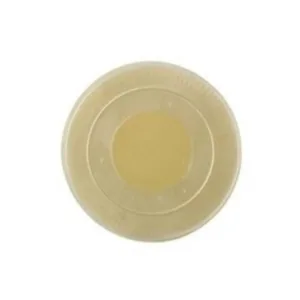
Paediatric Adhesive Disc for Ostomy, 17 mm Ring, Adjustable Opening 0-15 mm – Coloplast (Box of 10 units)
58,83 € In stockAdd to basket -

Cut-to-fit Self-Adhesive Plates 15 x 15 cm for Ostomy – Coloplast (Ref. 3215)
33,81 € In stockAdd to basket -

Cuttable Self-Adhesive Plates 20 x 20 cm for Ostomy – Skin Reinforcement Coloplast (Ref. 3220)
56,62 € In stockAdd to basket