
Buying guide: infrared thermometers
6 products in the catalogue
An infrared thermometer is a handheld device that measures temperature by capturing the thermal radiation emitted by the skin, without contact in most models. In healthcare settings it is used in clinics, on wards and in triage to obtain a quick reading, and many devices also include a surface mode for checking the temperature of objects or liquids.
Depending on the model, the measurement is taken on the forehead, in the ear canal or both, and some devices declare a response time of around one second. Before deciding, check the measuring site, the working distance, the declared range and accuracy, the memory capacity, the type of power supply and the environmental conditions in which the device performs.
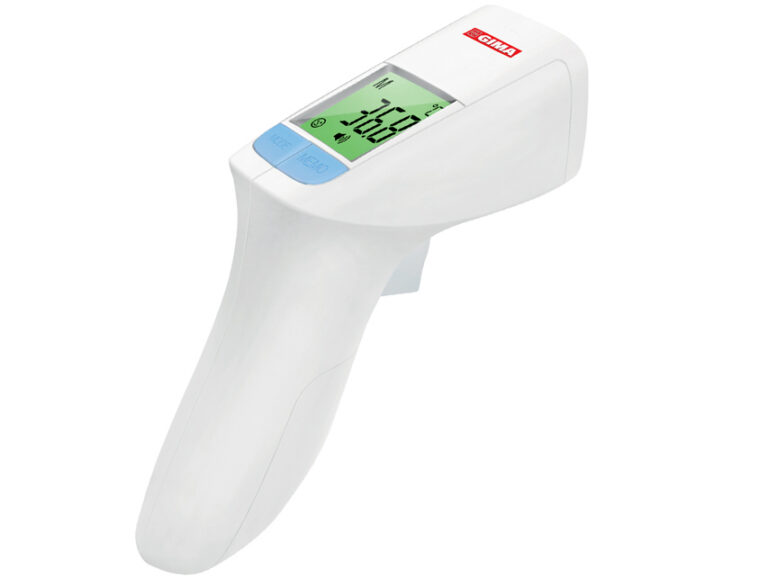
Other related families
- DIAGNOSTIC DEVICES The family that groups diagnostic devices, the natural place for the thermometer as a measuring instrument.
-
 Vital Signs Monitors
Body temperature is one of the vital signs, so it may be of interest when choosing monitoring equipment.
-
 Vital Signs Monitor Accessories
Spare parts and probe accessories for vital signs monitors.
Products in this guide
- Batteries 5
- Rechargeable battery 1
-
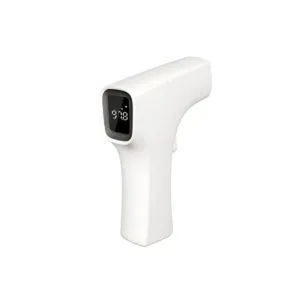
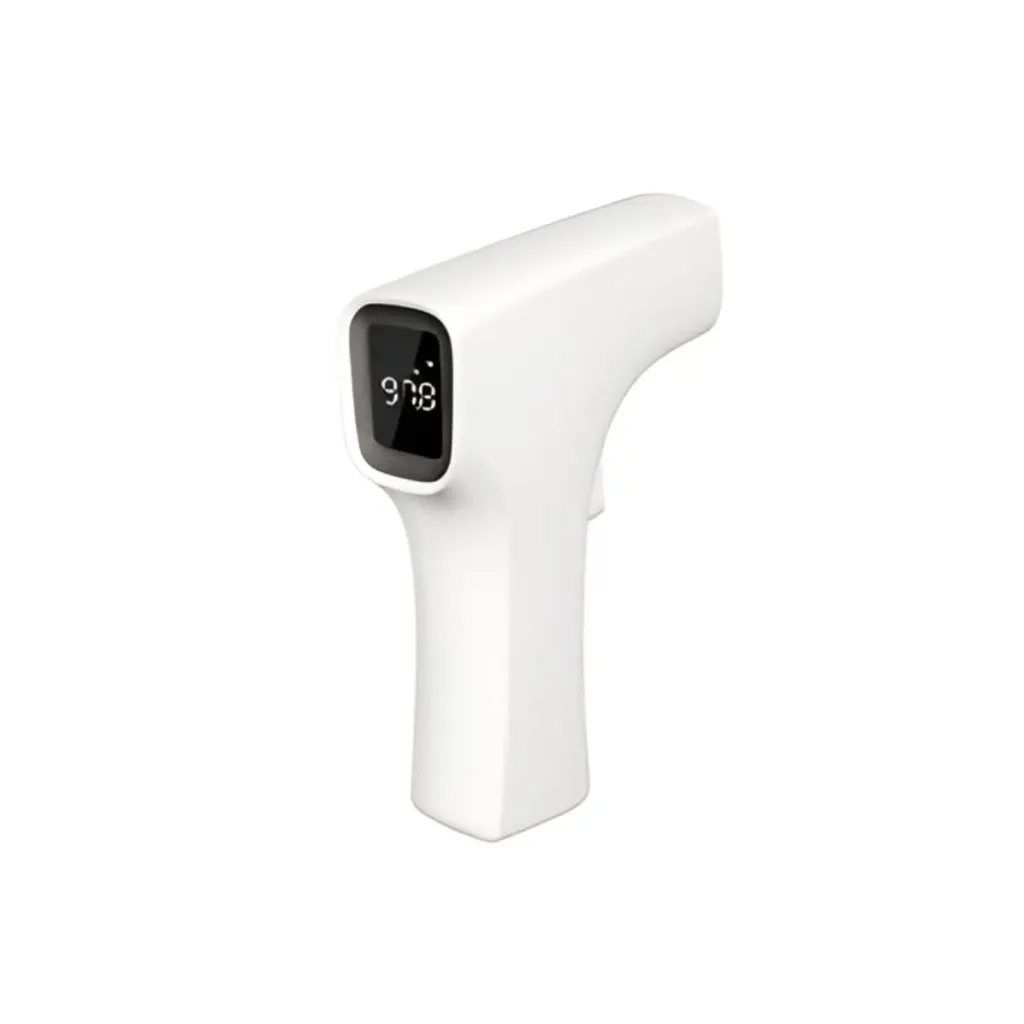
Non-contact infrared forehead thermometer Cahnos Alicn — Measurement in 1 second, hygienic, clinical and domestic use (Ref. 658073)
15,00 € In stockAdd to basket -
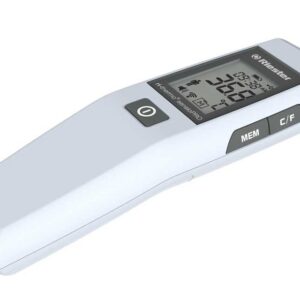
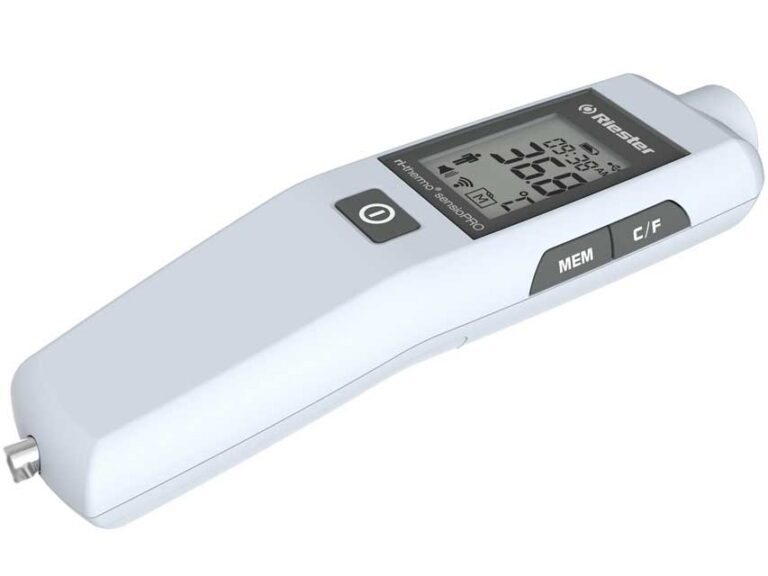
Non-contact infrared thermometer RI-THERMO SENSIOPRO (Ref. 25540) – Clinical forehead temperature for professional use
100,70 € In stockAdd to basket -
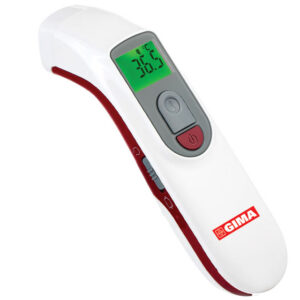
Non-contact infrared thermometer AEON A200 – Body and surface temperature in 1 second (Ref. 25582, class II A, box and manual GB, FR, IT, ES)
17,10 € On orderAdd to basket -
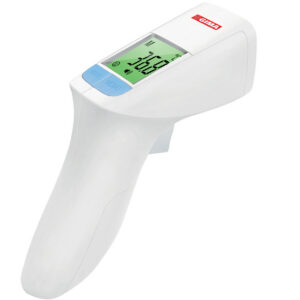
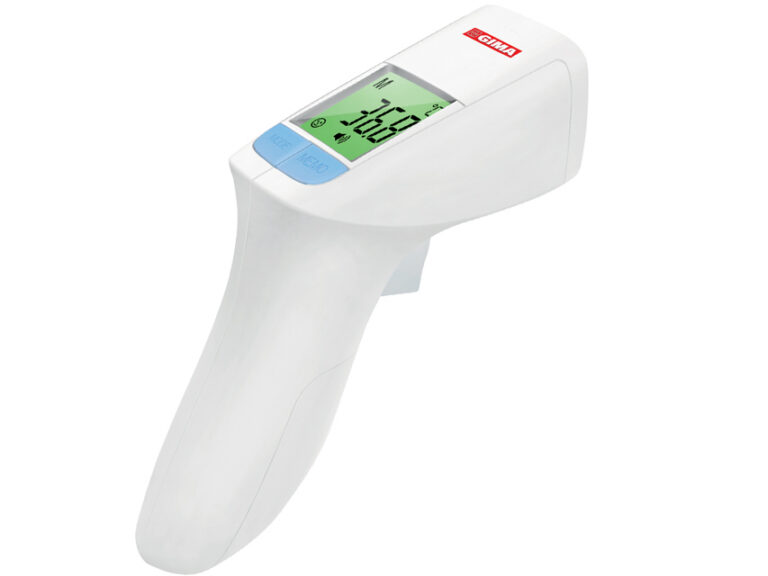
GIMATEMP Non-Contact Infrared Thermometer – 4-in-1 Multifunction: body, liquids, foods and ambient (Ref. 25583, class II A) – Box and manual in GB, FR, IT, ES
15,68 € In stockAdd to basket -
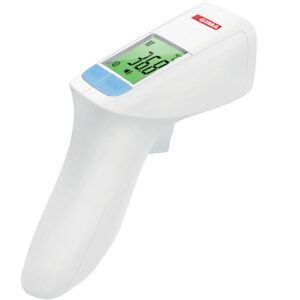
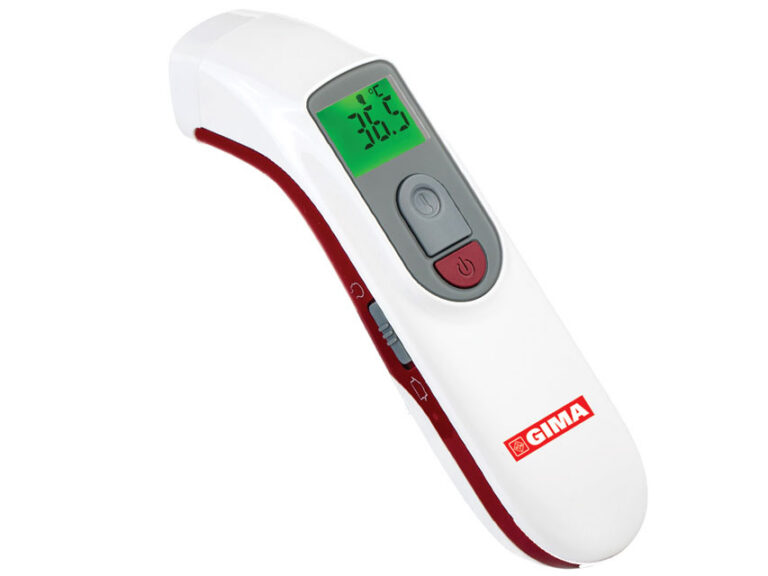
Non-contact infrared thermometer GIMATEMP – Multifunction 4-in-1: body, liquids, food and ambient (Ref. 25584, class II A)
15,68 € In stockAdd to basket -
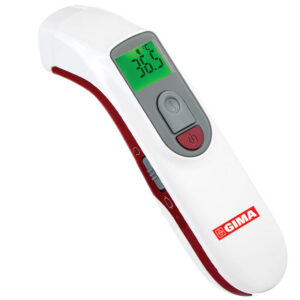
AEON A200 Non-Contact Infrared Thermometer – Body and Surface Temperature in 1 Second (Ref. 25590, EAN 8023279255904)
17,10 € On orderAdd to basket
Buying and selection tips
-
Define the measuring site
A forehead device is not the same as an ear canal one, and some models cover forehead, ear and surface in a single device. Check which modes your department needs so as not to pay for functions that will not be used.
-
Check the working distance
The distance between the sensor and the skin is set by the manufacturer and affects the reading. Some devices require measuring at a distance of 3 to 7 cm. If staff will be taking many measurements in succession, a distance that is easy to repeat reduces variability between operators.
-
Look at the accuracy, not just the display
Some ear thermometers declare an accuracy of ±0.2 °C and a measurement time of about one second. These are the values to compare between models before deciding, along with the measuring range.
-
Consider the measurement memory
The memory allows previous measurements to be reviewed without noting down each reading. Some devices store the last 32 measurements and show them with the up and down buttons.
-
Check the power supply and its replacement
The battery format changes from one model to another and affects the consumable that has to be kept in stock. Some thermometers run on a 9 V battery of the 6F22 type. Confirming the format before purchase avoids surprises in the store.
-
Think about cleaning between uses
Some ear thermometers use disposable protective covers; check that the chosen model accepts them and that replacements can be found. For cleaning any model, follow the manufacturer's instructions.
Compatibility
- 1.5 V AAA alkaline batteries
- Some forehead devices run on two AAA batteries; plan for this consumable before setting your stock levels.
Frequently asked questions
What is the difference between a forehead and an ear thermometer when buying?
The forehead one measures the thermal radiation of the skin of the forehead; the ear one measures in the ear canal and usually uses disposable covers. Some models combine both modes and even add surface measurement.
What accuracy should I require of an infrared thermometer?
Some forehead devices declare ±0.2 °C between 35.0 and 42.0 °C and ±0.3 °C outside that interval, and ±1 °C in surface mode. Compare these values between models and confirm the range of each.
How many measurements can I store and how are they reviewed?
It depends on the model: some devices store the last 32 measurements and show them with the up or down buttons.
What durability should I expect with intensive professional use?
A device designed for intensive professional use may declare a durability of 40,000 measurements. It is a useful figure for calculating equipment replacement in high-volume departments.
Can it also be used to measure the temperature of objects or liquids?
Many models include a surface mode with a range different from the body range, which on some devices goes up to 100 °C, with an accuracy of ±1 °C in that mode. Check that the chosen device includes it.
What is the difference between a non-contact forehead thermometer and a contact one?
The non-contact one measures at the distance set by the manufacturer; the contact one rests on the forehead. Check the measurement method and the cleaning between uses for each reference, following the manufacturer's instructions.
Common questions
Confusing display resolution with accuracy
The fact that the display shows tenths, with a resolution of 0.1 °C, does not mean the device has that margin of error: the declared accuracy is a separate figure and must be checked.
Assuming they all measure at the same site
There are forehead, ear and combined forehead-and-ear devices. The measuring site determines the type of use, so it should be fixed before comparing.
Thinking any measuring distance will do
Each model sets its own working distance: some devices require measuring at 3-7 cm. Moving the sensor closer or further outside that range can alter the result.