
Examination lights: how to choose
17 products in the catalogue
An examination light is the lighting equipment placed next to the clinician to illuminate the working field during an examination, dressing or minor procedure. It is used in consulting rooms, dressing rooms and examination areas where detail has to be seen clearly and without shadows.
The products include LED and halogen lights, on a stand, tabletop or battery-powered, with a flexible arm, with a magnifier and with cold light. The choice is not limited to power: working distance, uniformity of the light spot, colour rendering, colour temperature and the way it is mounted all matter. This guide sets out the criteria worth settling before comparing.
Other related families
Products in this guide
- Medical device 16
- Non-medical 1
- Italy 5
- Spain 5
- Germany 2
-
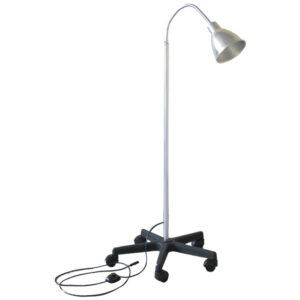
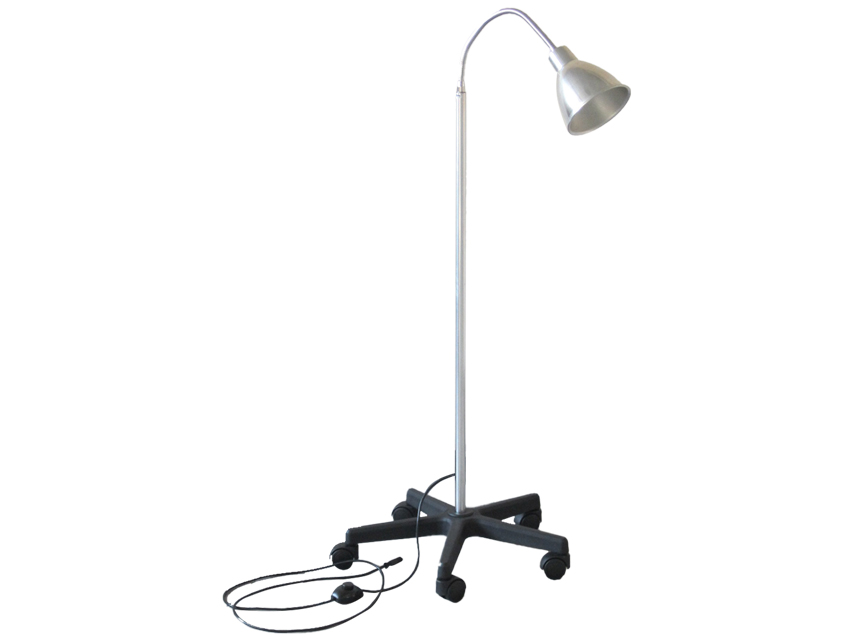
STUDIO LIGHT 100 W Halogen Examination Lamp with Trolley and Flexible Arm (Ref. 27990, SKU GM27990)
189,05 € In stockAdd to basket -
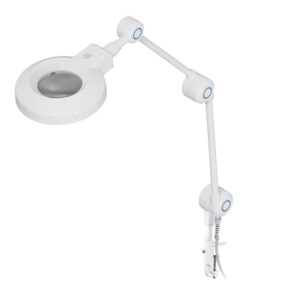
GIMANORD LED PLUS Tunable White examination light with magnifier | Adjustable cold LED light 4-100 %, CRI 95 Ra, tabletop with clamp (Ref. GM30714)
Price range: 893,00 € through 1.073,50 € In stockSelect options This product has multiple variants. The options may be chosen on the product page -
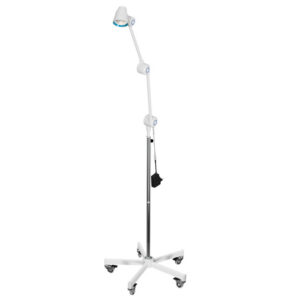
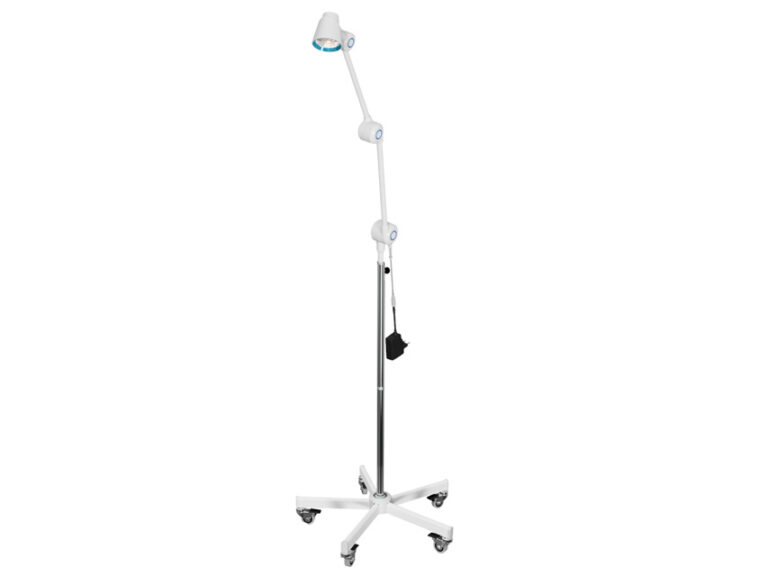
Alfa-Fix LED examination light with trolley – Triple LED with touch control (Ref. GM30726)
Price range: 902,50 € through 1.273,00 € In stockSelect options This product has multiple variants. The options may be chosen on the product page -
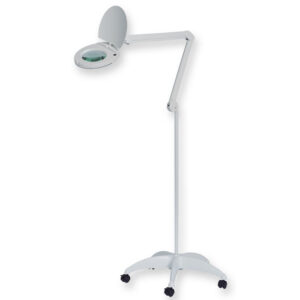
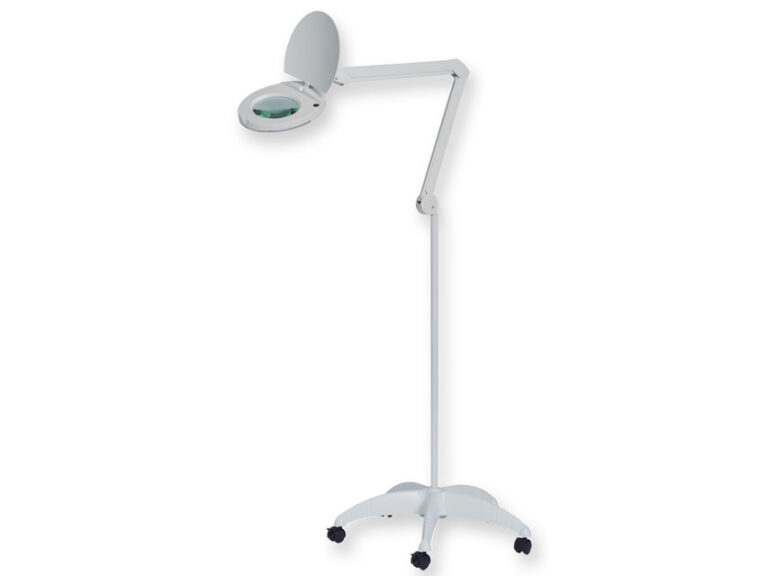
LED magnifying examination light with 5 dioptres and cool light on a 5-wheel trolley with articulated arm (Ref. 30737)
342,00 € In stockAdd to basket -
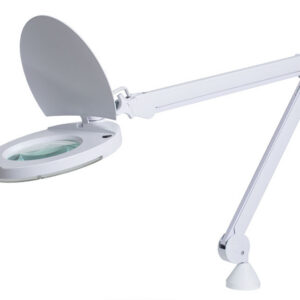
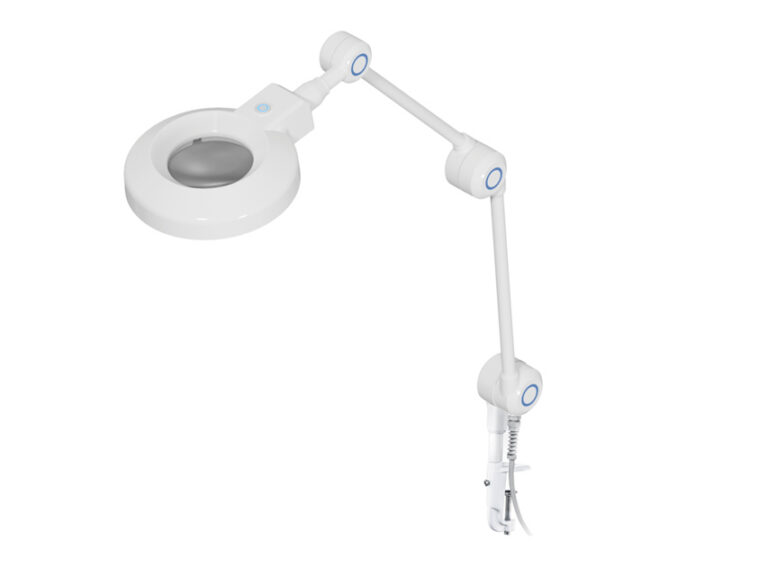
5 dioptre LED magnifying examination light with cold light and desk clamp (Ref. 30739)
213,75 € In stockAdd to basket -
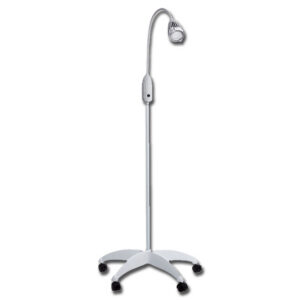
LUXIFLEX halogen examination light on mobile trolley | Ref. 30754
378,10 € In stockAdd to basket -
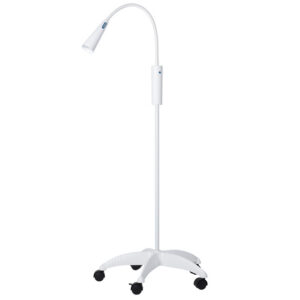
LED examination light LUXIFLEX II 25,000 lux with mobile trolley (trolley) | Ref. 49020
408,50 € In stockAdd to basket -
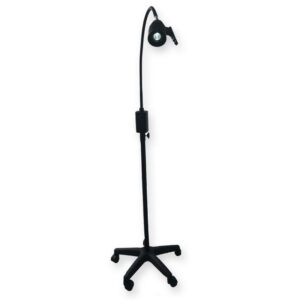
LED examination light on trolley LUMINA | Cold light 6,000 K, flexible 360° arm and base with brake (Ref. 49035)
175,75 € On orderAdd to basket
Buying and selection tips
-
Always compare intensity at the same distance
Luminous intensity is expressed in lux and is only comparable if it refers to the same working distance. Before comparing two models, find out at what distance the figure is measured.
-
Fix the real examination distance
The diameter of the light spot changes with distance and with the beam setting. Define at what distance you will be working and check that the model offers a suitable beam for it.
-
Consider colour rendering
A high colour rendering index (CRI) makes it easier to distinguish the colours in the working area. It is a figure worth looking at together with the intensity, not separately.
-
Decide between LED and halogen
LED technology has low consumption and a long stated service life. Halogen depends on replacement bulbs. If the light will be on for many hours, maintenance weighs in the decision.
-
Choose the mounting and stand
There are lights on a stand, tabletop and battery-powered. Decide where the light will be and how it will be moved before choosing, because it determines the model.
-
Magnifier and cold light
Some lights incorporate a magnifier with dioptres or cold light. Consider them only if the department needs them for detailed work.
Frequently asked questions
Why can't I compare two lights by their lux figure alone?
Because the figure depends on the distance at which it is measured. The reference distance has to be equalised before comparing.
What colour rendering value should I require?
The higher it is, the better colours can be distinguished. Compare the stated CRI of each reference together with the intensity.
Can I mount the light on the wall instead of on a stand?
Some units offer alternative mounting. Decide the mounting before buying, because it determines the model.
What changes between an LED light and a halogen one in day-to-day use?
The LED states long service lives and low consumption; the halogen requires replacing bulbs, which adds maintenance.
Does colour temperature change the amount of light I receive?
No. Colour temperature describes the tone of the light and is independent of intensity. You can have plenty of light with a warm tone or with a cooler one.
Common questions
Confusing lumens with lux
Luminous flux (lm) describes the light emitted by the source. Illuminance in lux describes how much light reaches a surface at a specific distance. They are different quantities and one does not replace the other.
Thinking that more LEDs means more light
This is not a rule. What decides is the illuminance stated at the working distance, not the LED count.
Assuming that any light is suitable for any room
The conditions of the room (space, mounting, sockets) determine the model. Review the location before choosing.
Supposing that the light source is never replaced
In some units the light source is replaced and has a stated life expectancy. It is worth knowing this before buying so as to plan for maintenance.
More products in this guide
-
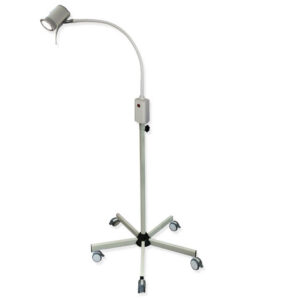
LED examination light HYRIDIA 7 LED (10 W) on trolley with 76 cm flexible arm – Ref. 49040
332,50 € In stockAdd to basket -
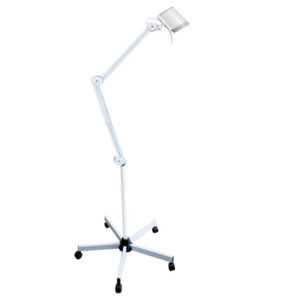
HYRIDIA 7 LED 10W examination light with metal pantograph arm and trolley (Ref. 49041)
332,50 € In stockAdd to basket -
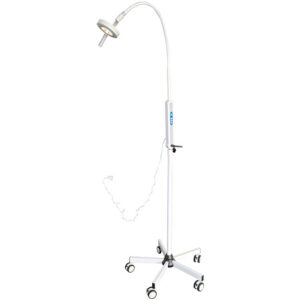
LUMEX LED examination light with sterilisable directional handle on trolley (Ref. 49045)
370,50 € In stockAdd to basket -
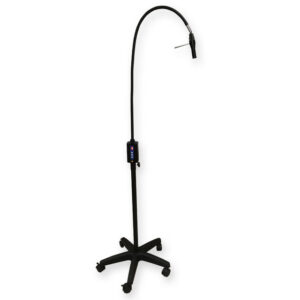
LED examination light on trolley, adjustable spot and 100 cm flexible arm | Ref. 49047
275,50 € In stockAdd to basket -
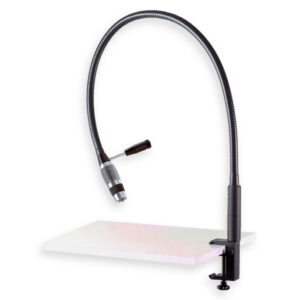
RI-MAGIC® HP LED examination light, tabletop — cold light 6,000 K, up to 15,000 lux, fully flexible arm (Ref. 49050) | Class I medical device
Price range: 513,00 € through 584,25 € In stockSelect options This product has multiple variants. The options may be chosen on the product page -
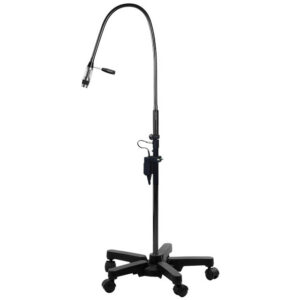
RI-MAGIC HP LED Examination Light on Trolley with Support and Power Pack, Ref. 49053 (Model 6252)
750,50 € In stockAdd to basket -
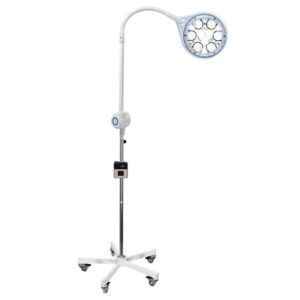
LED examination light PRIMALED-FLEX LIGHT with trolley and battery | Cold light 105,000 lux | Ref. GM49124
Price range: 1.187,50 € through 1.662,50 € In stockSelect options This product has multiple variants. The options may be chosen on the product page -
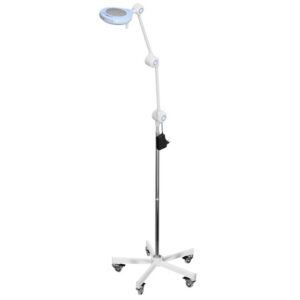
Cold-Light LED Examination Light PRIMALED-FIX LIGHT on Wheeled Stand – 9 LED Lenses, 105,000 Lux, CRI 95 Ra | Ref. GM49125
Price range: 1.282,50 € through 1.330,00 € In stockSelect options This product has multiple variants. The options may be chosen on the product page