
Disposable latex gloves: buying guide
14 products in the catalogue
The disposable latex glove is a medical device designed for examinations, sample collection and care tasks where tactile sensitivity and a snug fit to the hand are needed. It is made of natural rubber and is presented as a non-sterile, ambidextrous, single-use examination glove, powdered or powder-free and in sizes from XS to XL.
The purchasing decision rests on the powder, the size, the cuff length, the thickness and, above all, on the tests that back up the product: absence of pinholes (AQL), physical properties and biological evaluation. Two gloves that look very similar can differ in AQL or cuff length, so it is worth reading the label and the declared specifications before completing the order.

Other related families
Products in this guide
- Latex 14
- Rubber 13
- L 6
- S 6
- XL 5
- M 4
- XS 3
- Box OF 100 12
- Box OF 50 2
- Otros colores 2
- Marrón 1
-
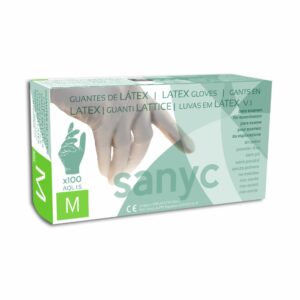
Powder-free Latex Glove SANYC Extra Strong Size S (Small) · Non-Sterile, Ambidextrous and Disposable · Box of 100 Units · SKU G001277T
11,58 € In stockAdd to basket -
Powder-Free Latex Glove SANYC Extra Strong Size G (Large) · Non-sterile, Ambidextrous and Disposable · Box of 100 Units · SKU G001281T
11,58 € In stockAdd to basket -
Powder-Free Latex Glove SANYC Extra Strong Size XS (Extra Small) – Non-Sterile, Ambidextrous and Disposable · Box of 100 Units · SKU G1278
11,58 € In stockAdd to basket -
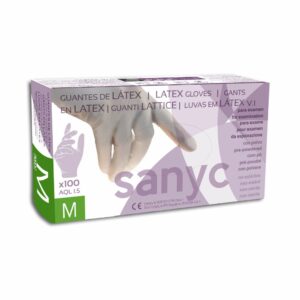
Latex Glove with Powder SANYC Extra Strong Size XS (Extra Small) · Non-Sterile, Ambidextrous and Disposable · Box of 100 Units · Reference G172
8,32 € In stockAdd to basket -
Latex Glove with Powder SANYC Extra Fuerte Size G (Large) · Non-Sterile, Ambidextrous and Disposable · Box of 100 Units · SKU G176M
8,32 € In stockAdd to basket -
SANYC Extra Strong Powdered Latex Glove Size XG (Extra Large) · Non-Sterile, Ambidextrous and Disposable · Box of 100 Units · SKU G178
8,32 € In stockAdd to basket -
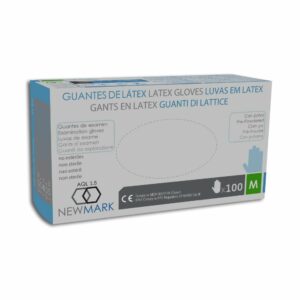
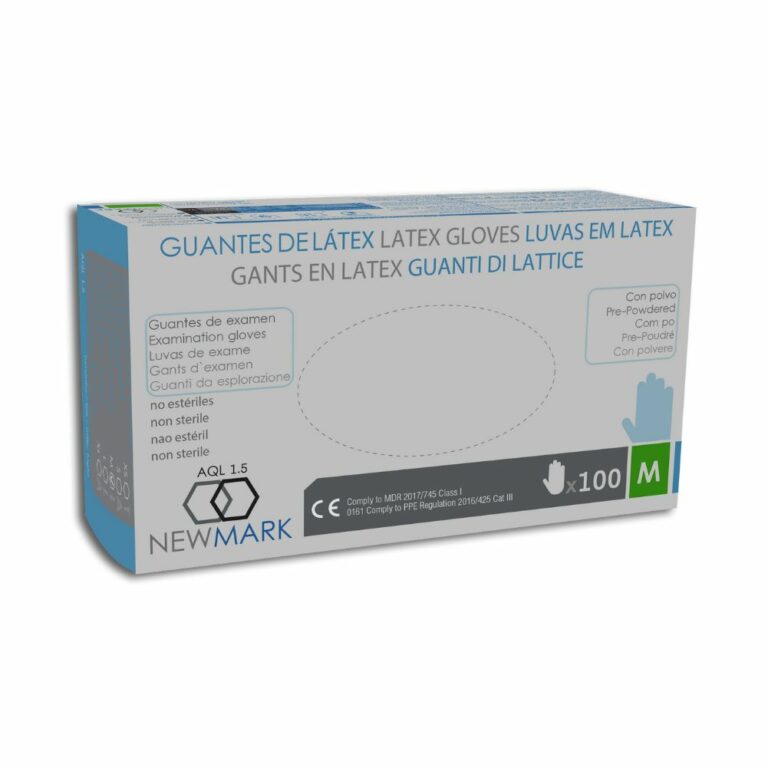
Powdered Latex Examination Glove New Mark Size XG (Extra Large) – Box of 100 Units | Ref. G17811M
4,58 € In stockAdd to basket -
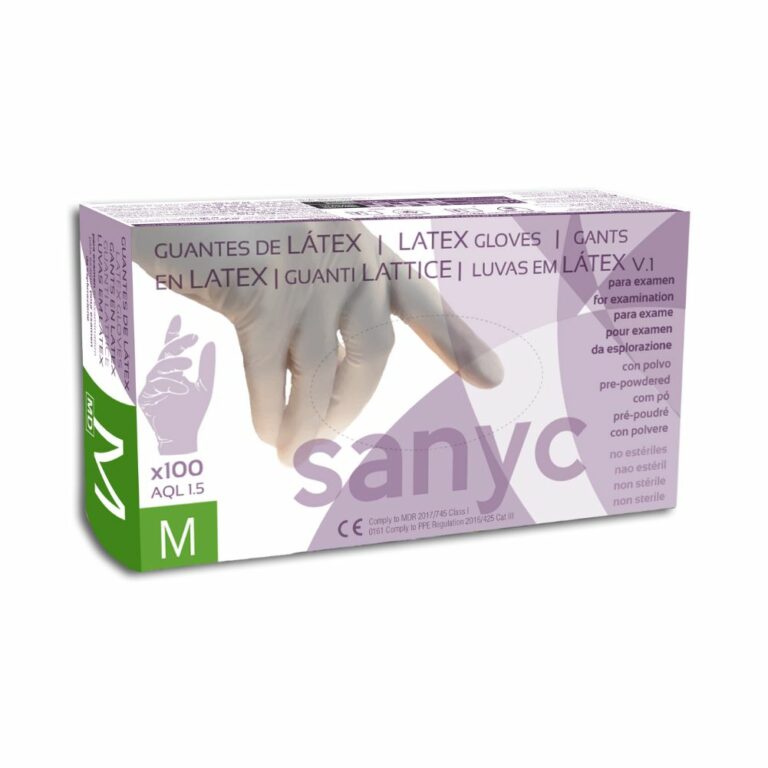
Latex Glove with Powder SANYC Extra Strong Size S (Small) · Non-Sterile, Ambidextrous and Disposable · Box of 100 Units · SKU G179M
8,32 € In stockAdd to basket
Buying and selection tips
-
Require the AQL and its standard
The absence of pinholes is measured by the AQL: the EN 455-1 standard requires an AQL ≤ 1.5. An AQL of 2.5 declared under ASTM does not equate to that requirement, so ask for the AQL and the reference standard to be declared.
-
Decide between powdered and powder-free according to the workstation
Powder makes donning easier, but it can act as a carrier for latex proteins, which is why many facilities prefer powder-free gloves. In the US the FDA banned powdered gloves in 2017.
-
Compare thickness in millimetres, not in grams
Weight per glove is not thickness. To assess the barrier you need to compare the millimetres at the palm and finger, remembering that 1 mil equals 0.0254 mm.
-
Check the cuff length
There are 28 cm references with a longer cuff than a short examination glove. If use involves a risk of splashes on the forearm, cuff length is a selection criterion and not an extra.
-
Consider type IV allergy, not just latex protein
Vulcanisation accelerators (thiurams, carbamates, MBT) cause type IV allergy and may be present even in latex-free gloves. Natural latex protein is assessed separately, under EN 455-3.
Frequently asked questions
What is the difference between a sterile examination glove and a surgical one when buying?
They are not equivalent: a sterile examination glove is not a surgical glove, because the anatomy, AQL, length and class differ. The sterile surgical glove is a class IIa medical device; the examination glove is class I, or Is if supplied sterile.
Is it enough for a glove to be latex-free for it to be considered hypoallergenic?
No. A latex-free glove may contain accelerators that cause type IV allergy, so the absence of natural latex protein does not mean there is no risk of sensitisation.
What range of sizes should I cover in an order of examination gloves?
The examination range runs from XS to XL. Match the mix of sizes to each department's real consumption instead of splitting it equally.
What should I require from a latex glove supplier before approving them?
That they demonstrate conformity with EN 455 (parts 1 to 4), the AQL applied and the medical device class.
How does powder affect the choice of a disposable latex glove?
Powder makes donning easier but can carry latex proteins. If the department prefers powder-free gloves, check that the reference expressly declares it.
Common questions
“Latex-free” means hypoallergenic
It is not the same thing: a latex-free glove may contain accelerators that cause type IV allergy, so the label must be read together with the declaration of accelerators.
A glove's weight indicates its thickness
Weight per glove is not thickness. To compare barrier you need to look at the millimetres at the palm and finger, bearing in mind that 1 mil is 0.0254 mm.
Any sterile glove works as a surgical glove
A sterile examination glove is not a surgical glove: they differ in anatomy, AQL, length and class.
Polyisoprene is latex
Polyisoprene is synthetic and contains no natural latex protein, so it should not be presented as a latex glove.
More products in this guide
-
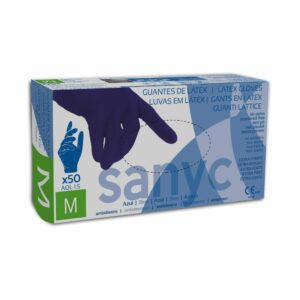
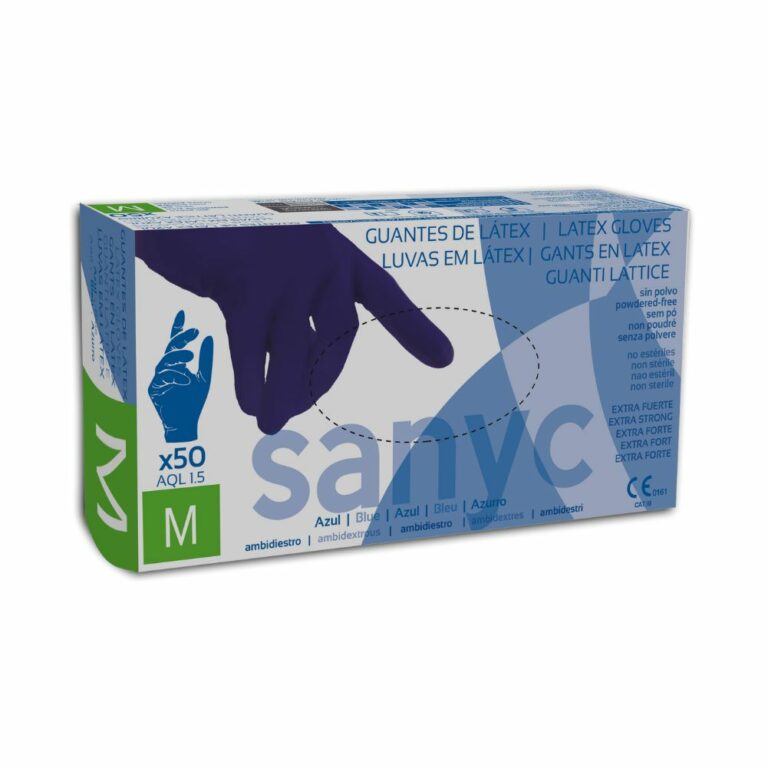
Extra Strong Powder-Free Latex Glove SANYC Blue 28 cm · Size P (Small) · Box of 50 Units
9,92 € In stockAdd to basket -
Powder-Free Latex Glove Extra Strong SANYC Blue 28 cm · Size G (Large) · Box of 50 Units
9,92 € In stockAdd to basket -
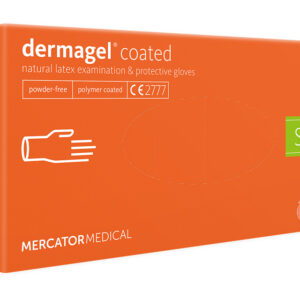
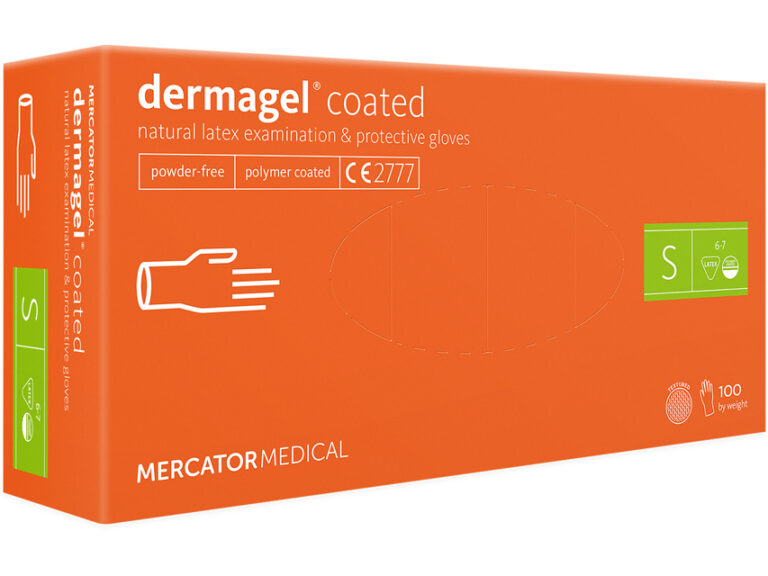
DERMAGEL® Powder-Free Latex Medical Examination Gloves – Ambidextrous, Non-Sterile, Box of 100 units (Sizes S to XL)
8,55 € In stockSelect options This product has multiple variants. The options may be chosen on the product page -
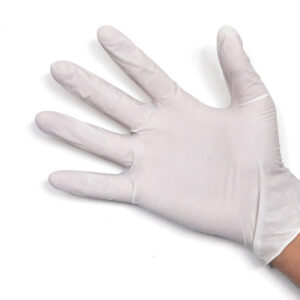
Non-Sterile Latex Medical Examination Gloves – Pre-Powdered, Ambidextrous with Beaded Cuff, Size XL (Box of 100)
7,79 € In stockSelect options This product has multiple variants. The options may be chosen on the product page -
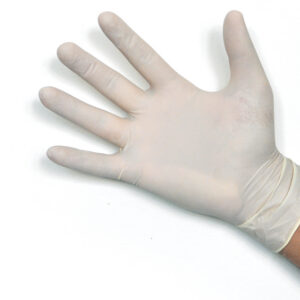
Powder-Free Latex Gloves for Medical Examination, Non-Sterile, Ambidextrous (Box of 100 Units)
8,08 € In stockSelect options This product has multiple variants. The options may be chosen on the product page -
Powder-Free Latex Glove SANYC Extra Strong Size M (Mediana) · Non-Sterile, Ambidextrous and Disposable · Box of 100 Units · SKU G001184T
11,58 € In stockAdd to basket