
Compression stockings (mmHg): buying guide
8 products in the catalogue
Compression stockings are elastic textile garments that fit the lower limb and are identified by a compression value declared in millimetres of mercury (mmHg). That value, together with the length the garment covers (knee-high, thigh-high or tights) and the size, allows references to be compared with one another.
Three data points appear in the description of a stocking and should not be confused: the compression in mmHg, the denier of the fabric and the length covered. The denier, such as 70 or 140, describes the thickness of the yarn. The range includes knee-high stockings, tights, anti-slip stockings and thigh-high anti-embolism stockings with an inspection opening. This guide gathers purchasing criteria that can be verified before the order is placed.
Other related families
Products in this guide
- M 6
- L 5
- S 5
- XL 5
- XXL 1
- Marrón 3
- Otros colores 2
- Pair 7
- Unit 1
-

Elastic compression stocking Knee-Highs size S/M, strong compression 15-21 mmHg, beige colour (Ref. GM41108)
9,98 € In stockSelect options This product has multiple variants. The options may be chosen on the product page -
Stay Ups Anti-Slip Strong Compression Stockings – Graduated Compression 15-21 mmHg at the Ankle, Silicone Band and Honeycomb Mesh Fabric | Sizes S-XL
20,43 € In stockSelect options This product has multiple variants. The options may be chosen on the product page -
Medium Graduated Compression Panty 70 den (10-14 mmHg at the Ankle) | Elastic Compression Tights for Women | Sizes S–XXL | Colour Beige and Black
15,20 € In stockSelect options This product has multiple variants. The options may be chosen on the product page -
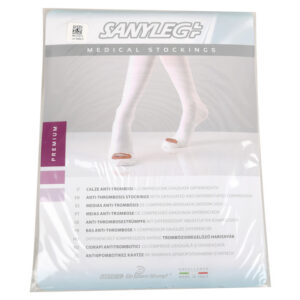
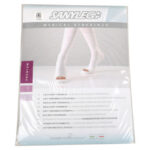
Below-knee anti-embolism stocking with inspection opening – Length 38-43 cm – Compression 18-20 mmHg
7,13 € In stockSelect options This product has multiple variants. The options may be chosen on the product page -
Thigh Anti-Embolism Stockings Length 60-70 cm with Inspection Opening and Silicone Upper Band – Compression 18-20 mmHg (Ref. GM41316)
12,35 € In stockSelect options This product has multiple variants. The options may be chosen on the product page -
Thigh-Length Anti-Embolism Stocking – Graduated Compression 18-20 mmHg, with Inspection Opening and Top Silicone Band (Size L, 60-70 cm)
12,35 € In stockSelect options This product has multiple variants. The options may be chosen on the product page -
Thigh anti-embolism compression stocking — length 70-80 cm, Small size, compression 18-20 mmHg (Ref. 41320)
12,35 € In stockAdd to basket -
Full Thigh-Length Anti-Embolism Stocking 70-80 cm – Graduated Compression 18-20 mmHg (Sizes S to XL, Ref. GM41330-33)
10,93 € In stockSelect options This product has multiple variants. The options may be chosen on the product page
Buying and selection tips
-
Compression in mmHg and denier are not the same
Compression is declared in millimetres of mercury and the references in this guide state it, for example 10-14 mmHg or 15-21 mmHg at the ankle. The denier measures the thickness of the yarn and is not equivalent to compression: always compare the value in mmHg.
-
Fix the length before comparing references
The length covered structures the range: knee-high stocking, thigh-high stocking and tights. Within each length there are variants with an anti-slip top band or with an inspection opening.
-
Size by circumference, not by letter
Sizes are built on circumferences declared in centimetres. Check the actual circumference against the size chart of the specific reference before placing the order.
-
Fabric composition and packaging details
The composition is shown on the packaging of each product and is expressed in materials such as cotton, elastane or polyamide. Check that the batch received matches the description before accepting it.
-
Care of the garment
Follow the washing and care instructions declared by the manufacturer for each reference and include them in the purchase specification if the department needs them.
Frequently asked questions
What is the difference between a 70 den and a 140 den stocking when comparing two offers?
The denier indicates the thickness of the yarn, not the pressure. To compare two references, look at the declared value in mmHg and the length covered, not just the denier.
How do I fix the size if the order covers several different people?
Sizes are graded by circumference and each reference has its own chart. It is advisable to request the size chart for each reference and check each circumference against its size before placing the order.
Which presentation should I specify in the order, pair or single?
Some references are supplied by the pair and others singly. It is advisable to specify the presentation in the order because it determines the number of packs and the count on receipt.
Which length should I choose: knee-high, thigh-high or tights?
It depends on the department's intended use. The references in this guide cover all three lengths and some have an inspection opening. Fix the length before comparing compression and size.
Common questions
Confusing denier with the level of compression
The denier measures the thickness of the yarn; compression is declared in mmHg. A 140 den garment does not automatically mean greater compression: the value in mmHg is the figure that structures the comparison.
Assuming that the letter size is universal
Sizes are defined by circumference and a size S in one range may not match the S in another. Always check the circumference against the chart of the specific reference.