
How to choose a colostomy bag
119 products in the catalogue
The colostomy bag is the collection device used in the care of a colostomy. In a healthcare setting it is handled as a product for continuous use, with periodic reordering and with size, system and presentation criteria that should be settled before purchase.
The range is organised around three axes. The first is the type of bag: closed, or open and drainable. The second is the number of pieces: one, two or three. The third is the shape of the baseplate, flat or convex, and the finish, opaque or transparent. Before reordering, be clear about the cut-to-fit diameter, the size of the bag and the presentation. This guide sets out those criteria and points out the most common purchasing errors.
Other related families
-
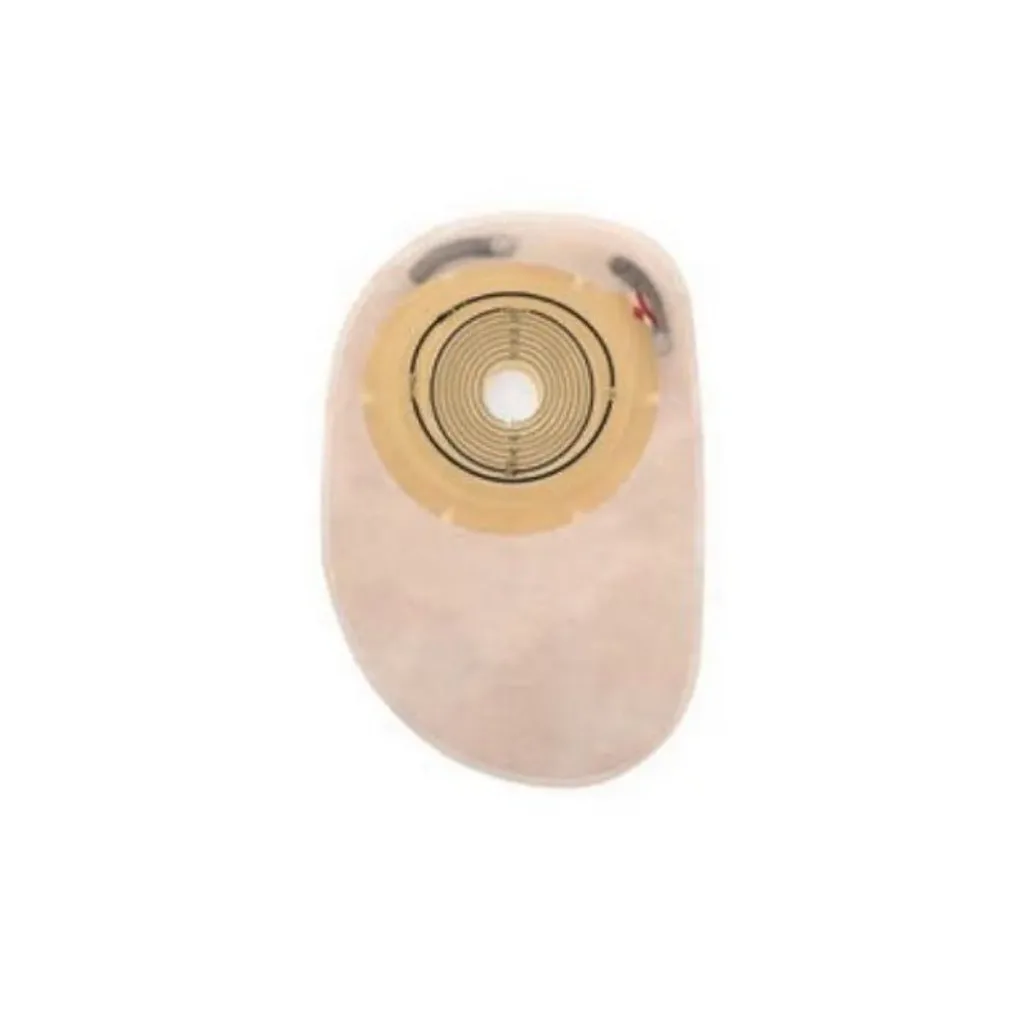
 1-Piece Colostomy Bag
Bags with an adhesive baseplate and bag forming a single unit.
-
 2-Piece Colostomy Bag
Allows the bag and the baseplate to be replaced separately.
-
 3-Piece Colostomy Bag
Systems that add an intermediate ring between the baseplate and the bag.
-
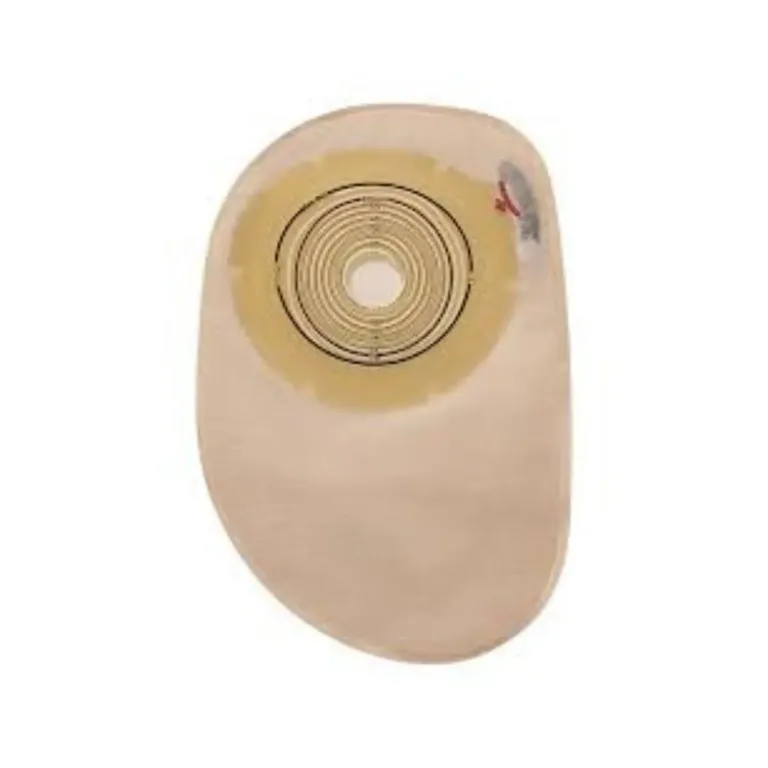
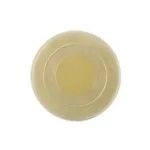 Attachment Discs
Replacement adhesive part for two- and three-piece systems.
Products in this guide
- M 43
- L 38
- Non-sterile 73
- Sterile 3
- Box OF 30 115
- Box OF 10 2
- Box OF 20 1
- Box OF 5 1
-
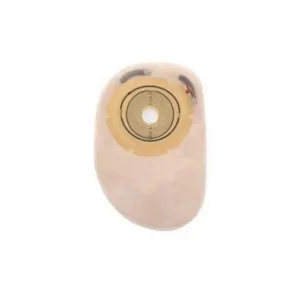
Closed 1-Piece Colostomy Bag with Double Filter, Large Size, Transparent, for Stomas from 20 to 75 mm | Ref. 13581 | Box of 30 Units
68,19 € In stockAdd to basket -
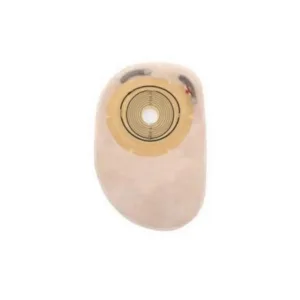
Closed 1-Piece Colostomy Bag with Double Filter, Large Size, Smooth Opaque for Stomas from 20 to 75 mm – Ref. 13582 | Box of 30 Units
68,19 € In stockAdd to basket -
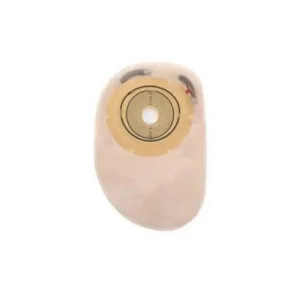
Closed 1-Piece Colostomy Bag with Double Filter, Medium Size, Opaque for Stomas 20-65 mm – Ref. 13580 | Box of 30 Units
68,19 € In stockAdd to basket -
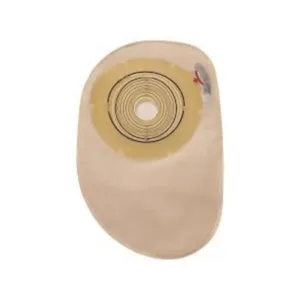
Closed 1-Piece Colostomy Bag with Filter, Small Size, Transparent, for Stoma from 20 to 65 mm | Ref. 13550 | Box of 30 units
68,19 € In stockAdd to basket -
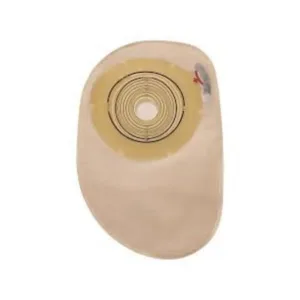
Closed 1-Piece Colostomy Bag with Carbon Filter, Medium Size, Transparent, for Stoma from 20 to 65 mm | Ref. 13560 | Box of 30 units
68,19 € In stockAdd to basket -
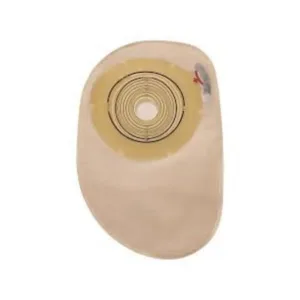
Closed 1-Piece Colostomy Bag with Single Filter, Medium Size, Transparent for 30 mm Stomas | Ref. 13562 | Box of 30 Units
68,19 € In stockAdd to basket -
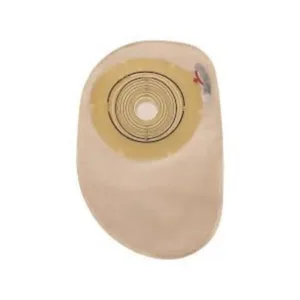
Closed 1-Piece Colostomy Bag with Single Filter, Medium Size, Transparent, for 35 mm Stoma | Ref. 13563 | Box of 30 units
68,19 € In stockAdd to basket -
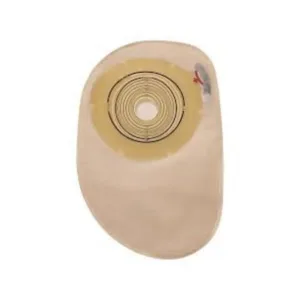
Closed 1-Piece Colostomy Bag with Single Filter, Large Size, Transparent, for 30 mm Stomas | Ref. 13571 | Box of 30 Units
68,19 € In stockAdd to basket
Buying and selection tips
-
Closed or open closure
Closed bags are changed as a whole, whereas open or drainable bags are emptied from the bottom. The range includes both types. Define the type of closure each user needs with their care team before setting the order.
-
One, two or three pieces: what changes when reordering
In a one-piece system the adhesive baseplate is joined to the bag. In two- and three-piece systems the baseplate and bag are coupled separately, which allows each component to be replaced according to its consumption. That difference determines the number of units of each component to be ordered.
-
Cut-to-fit diameter
The cut-to-fit diameter is the opening of the baseplate and does not match the diameter of the coupling of two-piece bags. There are cut-to-fit baseplates, with ranges such as 10-35 mm or 10-70 mm, and pre-cut baseplates with a fixed opening. Decide whether you work with made-to-measure cutting or with a fixed size.
-
Flat or convex baseplate
The range includes bags with a flat baseplate and with a convex baseplate, including convex light and pre-cut versions. The choice of baseplate shape is for the care team; when purchasing, simply specify the product they indicate.
-
Size and capacity
Bags are available in medium, large and extra-large sizes, as well as paediatric models. The size refers to the capacity of the bag and not to the diameter of the stoma. Settle the size together with the closure type so as not to mix criteria.
-
Opaque or transparent finish
The opaque finish provides discretion and the transparent one allows the contents to be seen. Some products include a filter. These are decisions independent of the closure type and size.
Compatibility
- Baseplate and bag in two-piece systems
- Baseplate and bag are only compatible within the same manufacturer, the same line and the same coupling diameter; check this for each product.
Frequently asked questions
What is the difference between a closed and an open bag when ordering?
Closed bags are changed as a whole and open bags are emptied from the bottom. Order the type defined by the care team and do not mix the two in the same reorder without confirming.
What is the practical difference between a one-piece bag and a two-piece one when reordering?
With a one-piece system the whole set is replaced; with a two-piece system the bag and baseplate can be replaced separately. The choice affects the number of units of each component to be ordered.
How do I check that the cut-to-fit diameter of the bag matches what has been ordered?
Distinguish the coupling diameter, which is the ring joining baseplate and bag, from the cut-to-fit diameter, which is the opening of the baseplate. Each product states its cutting range or its fixed opening.
What bag size should I order if I need greater capacity?
The size is chosen by capacity: the range includes medium, large and extra-large sizes. The size does not replace the cut-to-fit diameter, which is set separately.
What is the difference between a pre-cut bag and a cut-to-fit one?
The pre-cut one has a fixed opening and the cut-to-fit one accepts a range of diameters. They are not equivalent when reordering, so the one that corresponds to each user must be ordered.
Common questions
Taking the coupling diameter for the size of the stoma
The coupling is the ring joining baseplate and bag in two-piece systems and is measured in millimetres. The cut-to-fit diameter is a different measurement.
Assuming that two two-piece bags from different manufacturers fit if the millimetres match
In two-piece systems, compatibility requires the same manufacturer, the same line and the same coupling diameter. Even if the diameter matches, couplings are not interchangeable between manufacturers.
Confusing a pre-cut bag with a cut-to-fit one
A pre-cut one has a fixed opening, whereas a cut-to-fit one accepts a range. They are not equivalent and cannot be swapped when reordering.
Choosing the bag size by the diameter of the stoma
The size corresponds to the capacity of the bag, not to the opening of the baseplate. Mixing the two criteria leads to ordering a bag that does not match.
More products in this guide
-
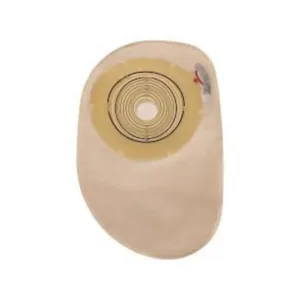
Closed 1-Piece Colostomy Bag with Single Filter, Large Size (Maxi), Transparent, for 35 mm Stomas – Ref. 13572 | Box of 30 Units
68,19 € In stockAdd to basket -
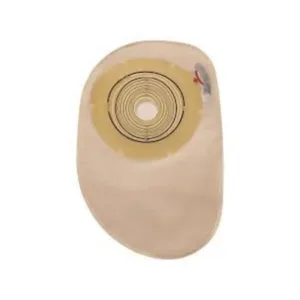
Closed 1-Piece Colostomy Bag with Filter, Large Size (Maxi), Transparent, for 40 mm Stomas – Ref. 13573 | Box of 30 Units
68,19 € In stockAdd to basket -
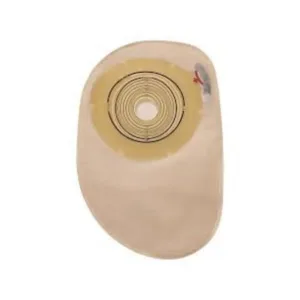
Closed 1-Piece Colostomy Bag with Single Filter, Small Size, Smooth Opaque for Stomas 20-65 mm | Ref. 13500 | Box of 30 units
68,19 € In stockAdd to basket -
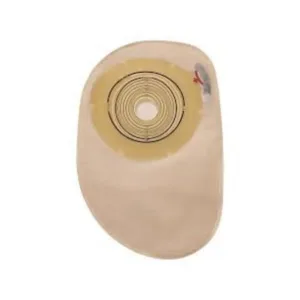
Closed 1-Piece Colostomy Bag with Single Filter, Medium Size, Smooth Opaque, for Stomas up to 25 mm | Ref. 13510 | Box of 30 units
68,19 € In stockAdd to basket -
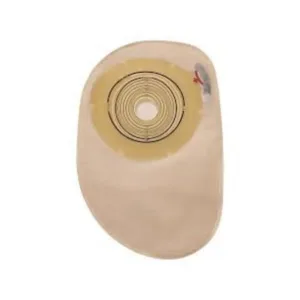
1-Piece Closed Colostomy Bag with Single Filter, Medium Size, Smooth Opaque for Stomas up to 30 mm – Ref. 13511 | Box of 30 Units
68,19 € In stockAdd to basket -
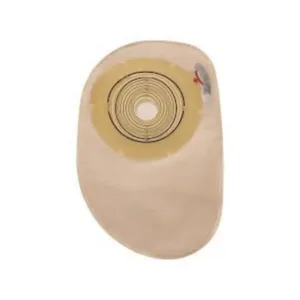
Closed 1-Piece Colostomy Bag with Filter, Medium Size, Smooth Opaque, for Stomas up to 35 mm – Ref. 13512 | Box of 30 Units
68,19 € In stockAdd to basket -
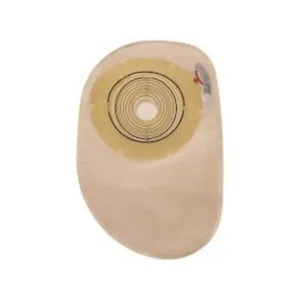
Closed 1-Piece Colostomy Bag with Filter, Medium Size, Smooth Opaque for Stomas up to 40 mm – Ref. 13513 | Box of 30 units
68,19 € In stockAdd to basket -
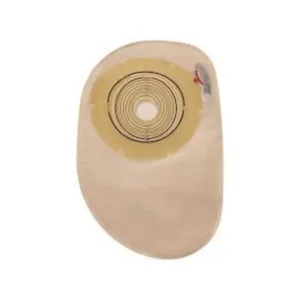
Closed 1-Piece Colostomy Bag with Filter, Medium Size, Smooth Opaque for Stomas up to 50 mm – Ref. 13515 | Box of 30 units
68,19 € In stockAdd to basket