Adult nebulisers: buying guide
10 products in the catalogue
An adult nebuliser is the device that turns a liquid solution into an aerosol so that it can be inhaled. It is used at home, in clinics, in day hospitals and in treatment rooms, and the purchase should match the real point of use and not just the power of the compressor.
This range includes piston compressors, from home-use models to higher-flow professional units, and portable vibrating-mesh nebulisers. The decision rests on four pieces of data: compressor flow rate and pressure, duty cycle, noise level and the volume of the medication cup with its residual volume. In addition there are the accessories included and the possibility of replacing medication cups, filters and tubing without changing the device.
Other related families
Products in this guide
- Mains power 4
- Rechargeable battery 2
- Batteries 1
-
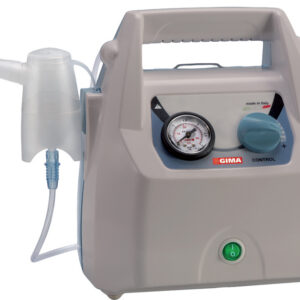
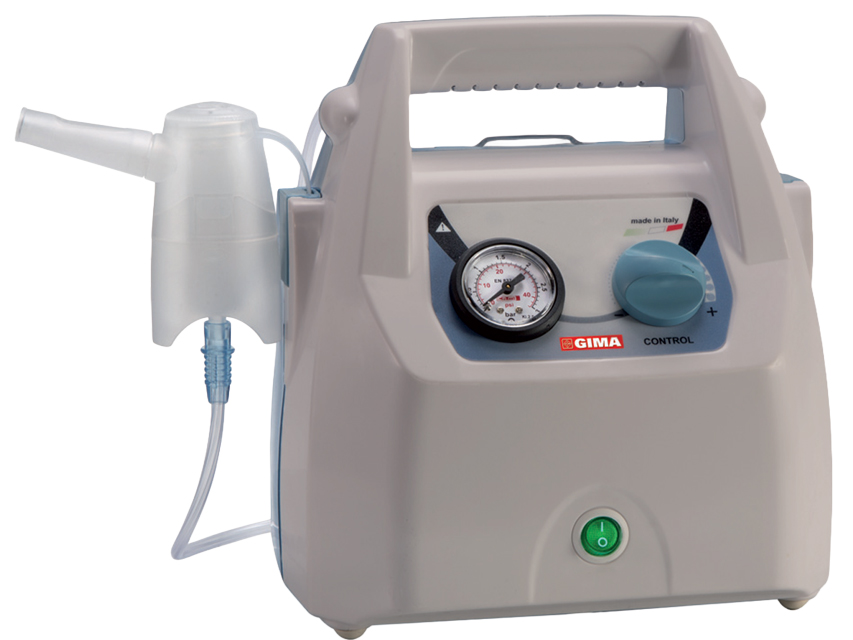
Piston compressor nebuliser CLINEB PRO (Ref. 28060) – Hospital and intensive aerosol therapy, 230 V / 16 l/min
153,90 € In stockAdd to basket -
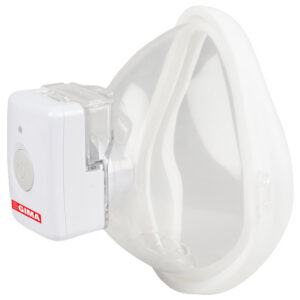
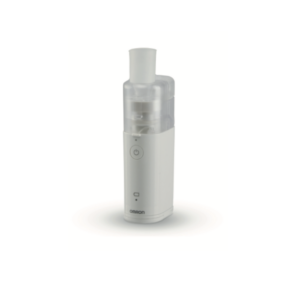
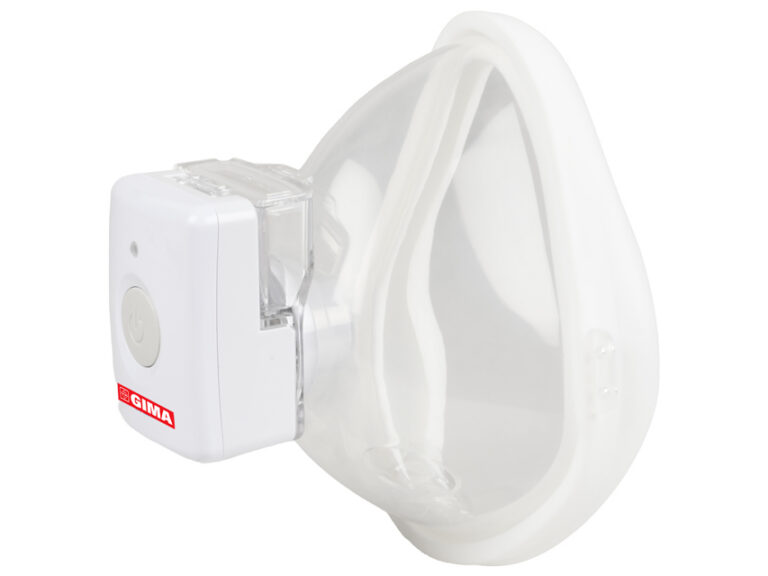
Portable ultrasonic mesh nebuliser Magic Neb 28065 – Wearable aerosol with lithium battery and USB-C charging
39,90 € In stockAdd to basket -
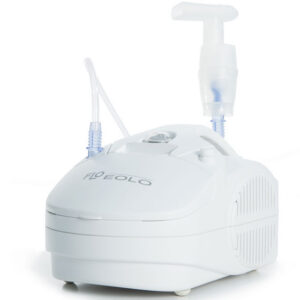
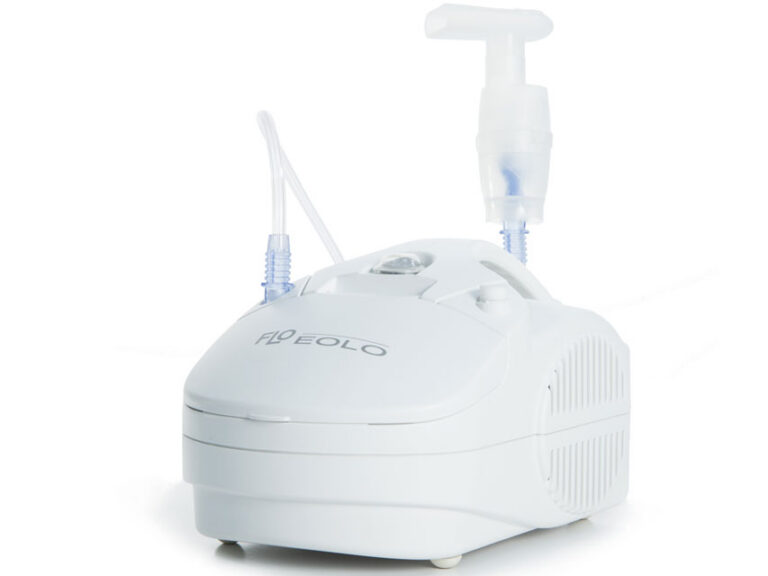
EOLO Piston Compressor Nebuliser – 230 V Aerosol for Home Use (Refs. GM28091 / GM28097)
Price range: 38,00 € through 39,90 € In stockSelect options This product has multiple variants. The options may be chosen on the product page -
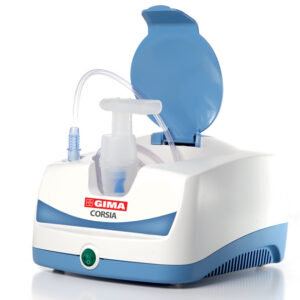
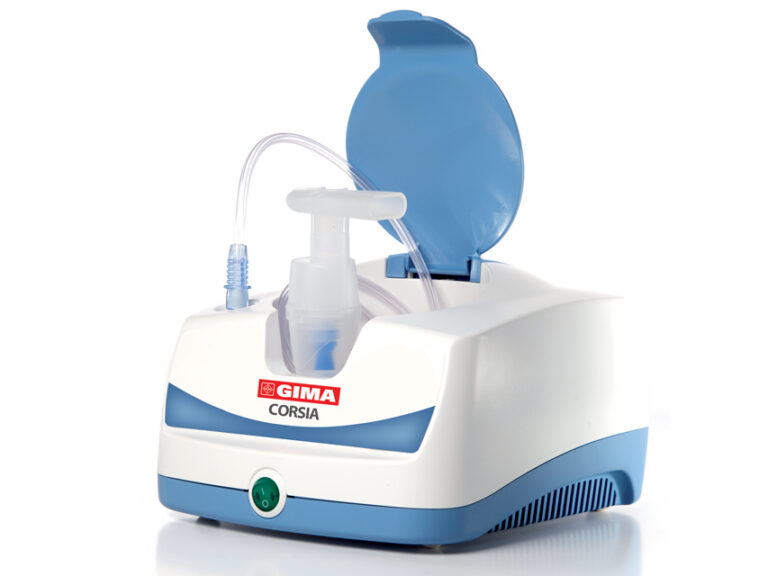
Professional Compressor Nebuliser Corsia Professional 230V Without Manometer (Ref. 28092) for Continuous Use in Clinical and Hospital Settings
Price range: 94,05 € through 125,40 € In stockSelect options This product has multiple variants. The options may be chosen on the product page -
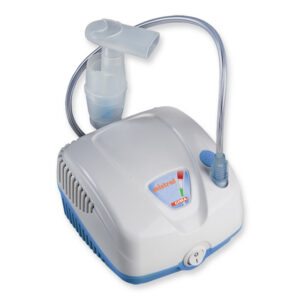
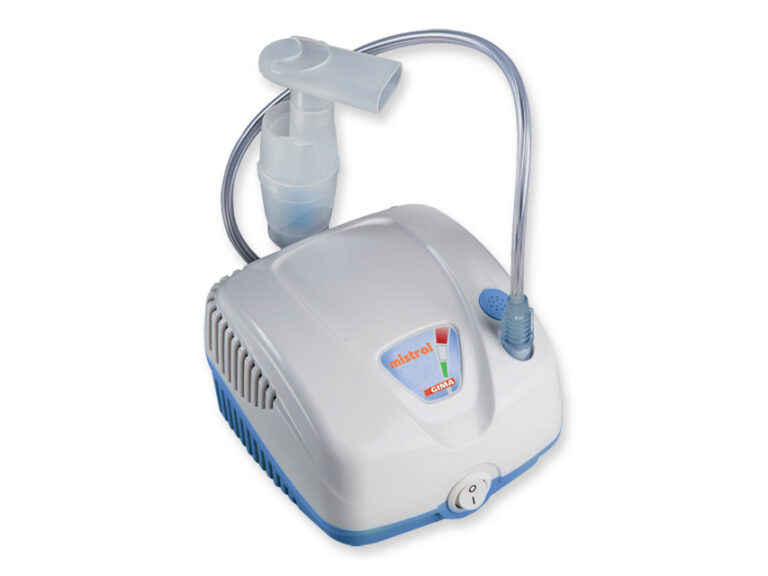
Mistral Piston Compressor Nebuliser (Ref. 28102) – Portable Aerosol Therapy for Home Use
33,73 € In stockAdd to basket -
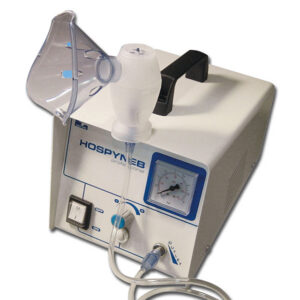
Piston compressor nebuliser HOSPYNEB PROFESSIONAL 230 V (Ref. 28134) – Professional and home aerosol therapy
261,25 € In stockAdd to basket -
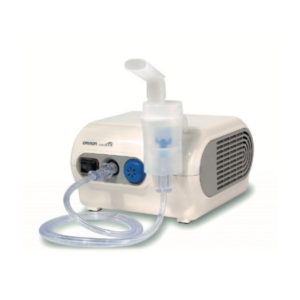
Compressor Nebuliser Omron CompAIR C28P (NE-C105-E) for Lower Respiratory Tract Aerosol Therapy | Home Use
70,57 € In stockAdd to basket -
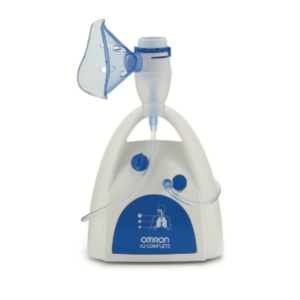
Compressor Nebuliser Omron A3 Complete (NE-C300-E) for 3-in-1 Aerosol Therapy | Particle Selector 10/5/3 µm for Upper, Middle and Lower Airways | Home Use
70,57 € In stockAdd to basket
Buying and selection tips
-
Prioritise duty cycle and flow rate
For daily use at home, the duty cycle affects the purchase: some home piston compressors are rated for continuous operation and others require rest breaks. Also compare the declared flow rate and maximum pressure, which vary between models, and choose according to how many sessions in a row will be run.
-
Read the noise level alongside the rest schedule
A compact compressor may declare a low noise level and light weight, but limit use to 30-minute periods with 30-minute breaks. If the device is used several times a day in the same room, that rest cycle is as decisive as the noise. Compare both figures before deciding.
-
Particle size changes with flow rate
The particle size of the aerosol depends on the operating flow rate: the same medication cup declares different MMAD values at 5 and at 7.5 l/min. When comparing devices, ask at what flow rate the particles were measured, because the figure on its own is not comparable between compressors with different flow rates.
-
Check the accessories included
Check what each device comes with: adult mask, mouthpiece, air tube and spare filter. Mask, mouthpiece and filter are wear parts that are replaced separately, so confirm their availability before buying.
-
Consider the portable mesh format
Vibrating-mesh nebulisers are compact and may run on a battery or batteries, which makes them easier to use away from home. Compare size, power supply type, medication cup volume and declared nebulisation rate, and relate them to the intended use.
-
Plan for spare parts
Medication cups, filters and tubing wear with use. For maintenance and cleaning, follow the manufacturer's instructions, and make sure replacement parts from the same set are available before choosing a device.
Compatibility
- Adult mask, mouthpiece and air tube
- The fittings must correspond to the same nebulisation set: mixing accessories from different systems may prevent a correct fit and alter aerosol performance.
- Spare filter and medication cup
- Filters and medication cups are replaced separately, and the set to which the device belongs determines the valid reference for the replacement.
Frequently asked questions
How do I assess the noise level if the device is used in a shared room?
The figure to compare is the declared noise level in dBA. The lower the figure and the better the duty cycle matches actual use, the less disruptive the session is for other occupants.
What should I compare between a compressor nebuliser and a portable mesh one?
The piston compressor is assessed by flow rate, pressure, duty cycle, noise and weight. The portable mesh device is assessed by size, power supply type and medication cup volume. The choice depends on whether use is fixed or mobile.
How do I check that the spare medication cup fits my compressor?
The valve system and the fit of the cup must match, as well as the declared capacity and residual volume. The replacement reference is chosen by set, not just by capacity.
What distinguishes a home compressor from a professional high-flow one?
In some professional models the declared flow rate and maximum pressure are higher and operation is continuous, at the cost of more weight and bulk. This is a factor to consider if the device is moved daily.
Common questions
More flow does not automatically mean a better aerosol
Particle size depends on the operating flow. Before choosing on flow rate, check at what flow the particle size and respirable fraction declared by the device were measured.
A very light device is not always the best for continuous use
Some compact compressors limit use to 30 minutes with 30 minutes of rest. Low weight makes transport easier, but the duty cycle determines whether the device can handle several sessions in a row.
Believing all nebulisers work with the same technology
There are piston compressors and vibrating-mesh devices, with different advantages in portability, noise and maintenance. Compare the technologies before comparing the other features.